Advancing Economic Partnership: Outcomes of the Central Asia plus Japan Summit
The 2025 Central Asia + Japan Summit elevated relations to a new phase by institutionalizing cooperation at the leaders’ level. The Tokyo Declaration and the CA+JAD Tokyo Initiative, with a ¥3 trillion target, set concrete goals in trade, investment, infrastructure, energy transition, and technology. Japan deepened cooperation in transport corridors, energy (nuclear and renewables), industrial value chains, and digital sectors, while strengthening its soft power through education, capacity building, and cultural diplomacy. The summit confirmed Japan’s role as a long-term, rule-based, and non-competitive partner in Central Asia.
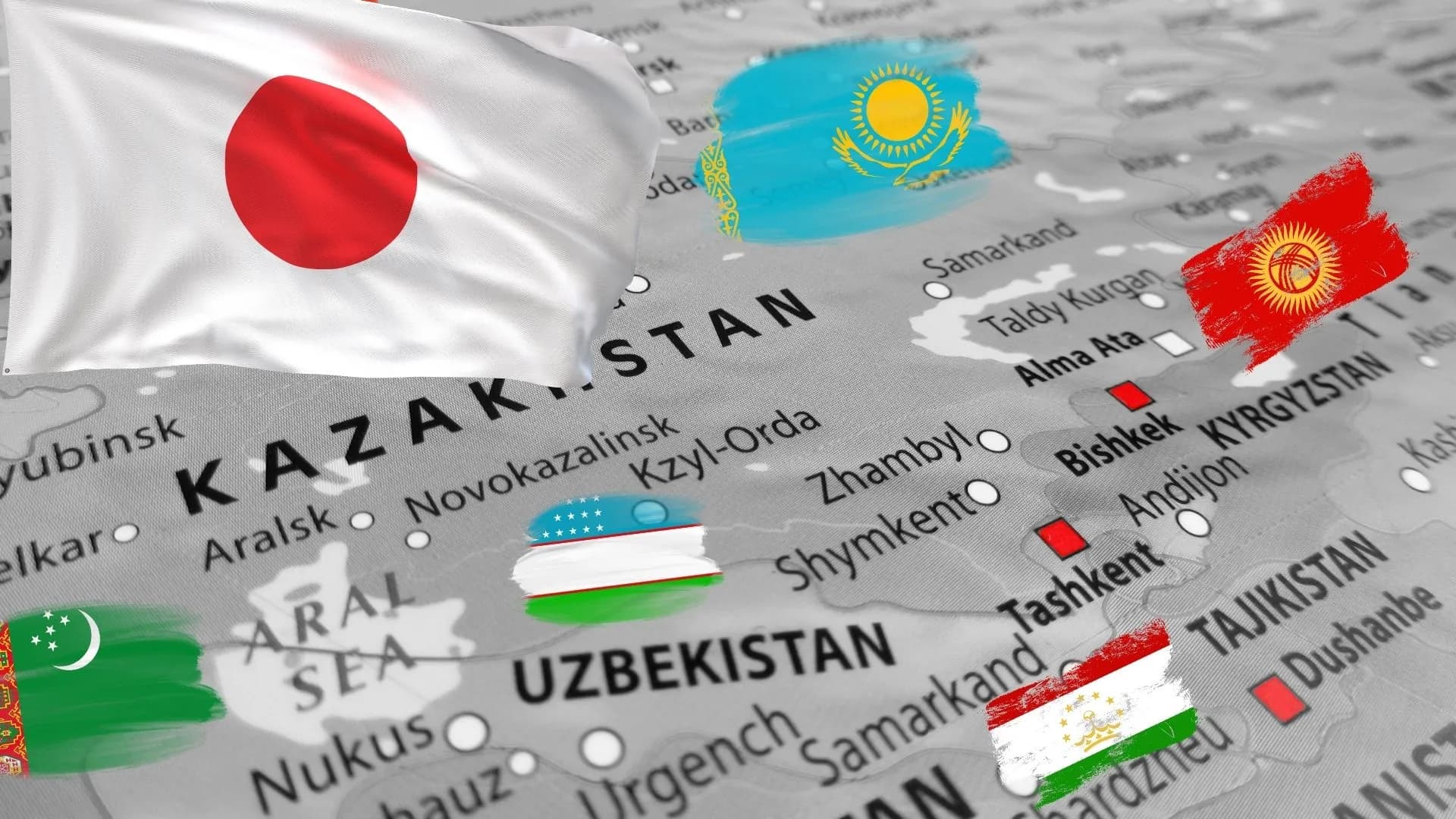
The first leaders-level Central Asia + Japan Summit marked a qualitative shift in relations between Japan and the five Central Asian states. As emphasized by President Shavkat Mirziyoyev, “this summit is undoubtedly historic, marking a new phase in our cooperation.” The meeting institutionalized economic engagement that had previously evolved through ministerial and expert-level dialogues since the establishment of the framework in 2004. Economic cooperation dominated the summit agenda, reflecting both the scale of existing ties and the ambition to expand them through trade, investment, infrastructure connectivity, energy transition, and technological cooperation. The adoption of the Tokyo Declaration and the launch of the CA+JAD Tokyo Initiative provided concrete numerical targets and long-term mechanisms for implementation.
The summit upgraded the Central Asia + Japan Dialogue into a leaders-driven mechanism, reinforcing predictability and continuity in economic cooperation. President Mirziyoyev explicitly advocated institutional regularity, proposing “holding summits at the level of heads of state every two years” and expressing readiness to host future meetings in Uzbekistan. The Tokyo Declaration formalized this approach by embedding economic cooperation within a rule-based and institutionalized framework.
A central institutional innovation was the launch of the CA+JAD Tokyo Initiative, which introduced a quantified target of 3 trillion yen (approximately USD 19 billion) in business projects across Central Asia over a five-year period. Complementing this, Mirziyoyev proposed developing a Central Asia–Japan Cooperation Strategy–2040 and establishing an Expert Forum involving leading analytical institutions, with the first meeting planned in Tashkent. These initiatives collectively strengthen the governance architecture underpinning economic engagement.
Trade figures presented at the summit illustrate the material foundation of Japan–Central Asia economic relations. Kazakhstan–Japan trade reached USD 1.8 billion in 2024, with USD 1.3 billion recorded in the first nine months of the following year, reflecting a 1.9% decline but preserving a strongly industrial and technology-oriented structure. Approximately 95% of Kazakhstan’s exports to Japan consist of ferroalloys, while diversification has begun through agricultural products, hydrogen, inert gases, and copper. Japanese exports are dominated by automobiles and high-technology equipment, including generators, electronic systems, and industrial machinery. Uzbekistan–Japan trade demonstrated accelerated growth, increasing by 35% in 2024. The opening of the Uzbek–Japanese Trade House in Nagoya and the operation of 84 joint ventures and 13 Japanese company representative offices further institutionalized bilateral trade. Mirziyoyev framed this dynamic within a broader regional narrative, noting that “the Central Asian economies are growing at a rate of 5–6 per cent, and this momentum is set to continue,” with regional integration creating “fertile ground for cooperation with Japan.”
Infrastructure and connectivity emerged as a priority area for economic cooperation. Central Asia’s role as a Eurasian transit corridor was highlighted, with over 80% of overland freight between Asia and Europe passing through Kazakhstan. Japan confirmed its support for the Trans-Caspian International Transport Route (Middle Corridor), viewed as a strategic alternative bypassing unstable northern routes. Specific measures include improving customs procedures at the port of Aktau and financing logistics hubs, railways, roads, and airports.
Uzbekistan emphasized Japanese participation in large-scale transport projects, including “high-speed railways, highways, airports and logistics centers.” A concrete example cited was cooperation with Sojitz Corporation on the construction of the new Tashkent International Airport. Through JICA and JBIC, Japan continues to provide concessional loans, grants, and technical assistance to modernize transport corridors and strengthen regional connectivity.
Energy cooperation combined conventional resources with decarbonization goals. Kazakhstan supplies around 40% of global nuclear fuel, making uranium cooperation central to Japan’s energy security. Japanese engagement extends to nuclear safety, waste management, and specialist training. In Uzbekistan, Japanese partners have contributed to the modernization of the power sector through projects such as the 900-MW Turakurgan thermal power plant and the 650-MW combined-cycle unit at Navoi. Renewable energy cooperation has expanded significantly. A flagship project involves 1,000 MW of solar capacity and 1,336 MWh of energy storage in Samarkand and Bukhara, supported by Japanese corporations and financial institutions. Uzbekistan articulated clear climate targets, aiming “to reduce carbon dioxide emissions up to 50 percent by 2035” and “increase the share of green energy to 54 percent by 2030.” Mirziyoyev also proposed creating a Regional Training Center in Renewable Energy in Tashkent, aligning with Japan’s Green Transformation agenda.
Industrial cooperation is increasingly shifting toward joint value chain development. In Kazakhstan, partnerships with JOGMEC (Japan Organization for Metals and Energy Security) extend beyond extraction to processing and enrichment of rare-earth materials, supporting technological upgrading. More than 60 Japanese companies operate in Kazakhstan, with approximately 100 enterprises involving Japanese capital. Key projects include investments by JBIC (Japan Bank for International Cooperation) of up to USD 200 million, localization of fireproof materials with Fitech, mobile medical complexes with FUJIFILM, and equipment supply agreements involving Hitachi Construction Machinery. In Uzbekistan, nearly 100 joint ventures operate across energy, engineering, chemicals, logistics, education, and tourism, with major Japanese corporations such as Mitsubishi, Marubeni, Sojitz, Toyota Tsusho, and Hitachi. Mirziyoyev proposed establishing a regional investment fund for infrastructure and industrial development and forming a Central Asian network of Japanese technoparks, aimed at supporting SMEs, technology transfer, and industrial cooperation. These underscore the long-term, non-speculative nature of Japanese development engagement.
Japan’s Soft Power in Central Asia
An important dimension of Japan’s soft power engagement was reflected in the diplomatic interactions held alongside the summit, particularly the foreign ministers’ meeting conducted on the same day. During this meeting, Japanese Foreign Minister Toshimitsu Motegi and Tajik Foreign Minister Sirojiddin Muhriddin signed a Cooperation Program for 2026–2028, as well as an investment agreement aimed at strengthening political dialogue and expanding economic cooperation. These agreements include provisions related to partnerships on critical minerals and international security, illustrating how Japan combines normative diplomacy with concrete policy instruments to reinforce long-term cooperation in Central Asia.
The generational dimension of cooperation with Japan represents a crucial component of Tokyo’s soft power strategy in Central Asia. Japanese investments in education, healthcare, water resource management, and public administration training under programs implemented by JICA have contributed to the formation of elite professional networks across the region. These long-term capacity-building initiatives reinforce Japan’s image as a partner not engaged in regional rivalry and focused on modernization and institutional development. Uzbekistan’s successful participation in EXPO 2025 in Osaka further strengthened Japan’s cultural capital in the region, demonstrating deepening people-to-people and technological exchanges.
Japanese engagement in non-political sectors has fostered the emergence of governance-oriented elites familiar with Japanese administrative practices and development models. This trend was reinforced during the business program accompanying President Shavkat Mirziyoyev’s visit, where projects exceeding USD 10 billion were discussed, including the expansion of the existing portfolio of joint initiatives with the Japan Bank for International Cooperation (JBIC) in sectors such as energy and telecommunications (Uzbekistan and Japan’s JBIC). Such schemes function as long-term instruments of influence by embedding Japanese standards and institutional practices into national development trajectories.
The long-term impact of Japan’s soft power lies in its gradual transformation into strategic stability. Substantial Japanese investments in infrastructure, critical minerals, and innovation ecosystems deepen Japan’s structural integration with Central Asian economies. This form of economic interdependence provides Central Asian states with alternative partnerships alongside other major global actors. At the summit, agreements were also reached on partnerships in artificial intelligence, digital infrastructure, and telecommunications, reflecting a transition from the traditional official development assistance (ODA) model toward a hybrid approach combining soft power with economic and technological pragmatism. This evolution underscores Japan’s ability to adapt its engagement tools to emerging strategic sectors while maintaining a non-coercive posture. Beyond the main summit sessions in Tokyo, framework events such as “Tajikistan–Japan Digital Business Connect” were organized. These platforms facilitated discussions on joint projects in communications and human resource development, highlighting how Japan exercises soft power through the promotion of technological exchange and innovation. Such initiatives strengthen transnational professional networks and reinforce Japan’s reputation as a technologically advanced and reliable partner. Another notable element of Japan’s soft power highlighted during the 2025 Summit was the renewed reference to the One Village One Product (OVOP) initiative. Originally developed in Japan in the 1970s, OVOP focuses on strengthening local economies through support for unique regional products and crafts, with a particular emphasis on women’s participation in economic life. The continued promotion of this initiative in Central Asia illustrates Japan’s commitment to inclusive development and grassroots-level economic empowerment.
Cultural and symbolic diplomacy also played a visible role. The meeting between Emperor Naruhito and the leaders of Uzbekistan, Turkmenistan, Kyrgyzstan, and Tajikistan served as a powerful demonstration of respect-based diplomacy, emphasizing cultural ties and historical recognition alongside political engagement. This level of symbolic interaction enhances mutual trust and complements Japan’s institutional and economic presence in the region.
In conclusion, the 2025 Central Asia + Japan Summit demonstrates that Japan’s soft power diplomacy has evolved into a structural component of its regional policy. Rather than being confined to cultural or educational outreach, Japan’s influence increasingly operates through regulatory standards, technological cooperation, and network-building, enabling Tokyo to expand its presence without direct political intervention or competitive pressure.
Khujabekov Ubaydullo,
Undergraduate student at the University of World Economy and Diplomacy
Guli Abdullaeva,
Undergraduate student at the University of World Economy and Diplomacy
Khujabekov Ubaydullo
Contributing writer at EUReflect.
Follow EUReflect
See more of our reporting on Google
Mark EUReflect as a preferred source and our stories are ranked higher for you in Top Stories, Discover and Google News — and carry a “preferred” badge when they are cited in AI results.
Add EUReflect as a preferred source