An Architectural Analysis of Modern Residential Design: Comfort, Natural Light, Energy Efficiency, and Privacy
Modern architecture represents an evolution in design thinking that seeks to balance aesthetic clarity with human comfort. The contemporary home is no longer merely a shelter; it has become an integrated living environment aimed at enhancing quality of life, supporting psychological well-being, improving energy efficiency, and maintaining privacy while encouraging family interaction.
The Concept of Modern Architecture in Residential Design
Modern residential architecture is founded on principles of simplicity, clarity, and functionality. These principles are expressed through clean geometric lines, open spatial layouts, and the thoughtful use of natural materials. Equally important is the visual and physical connection between interior spaces and the surrounding landscape.
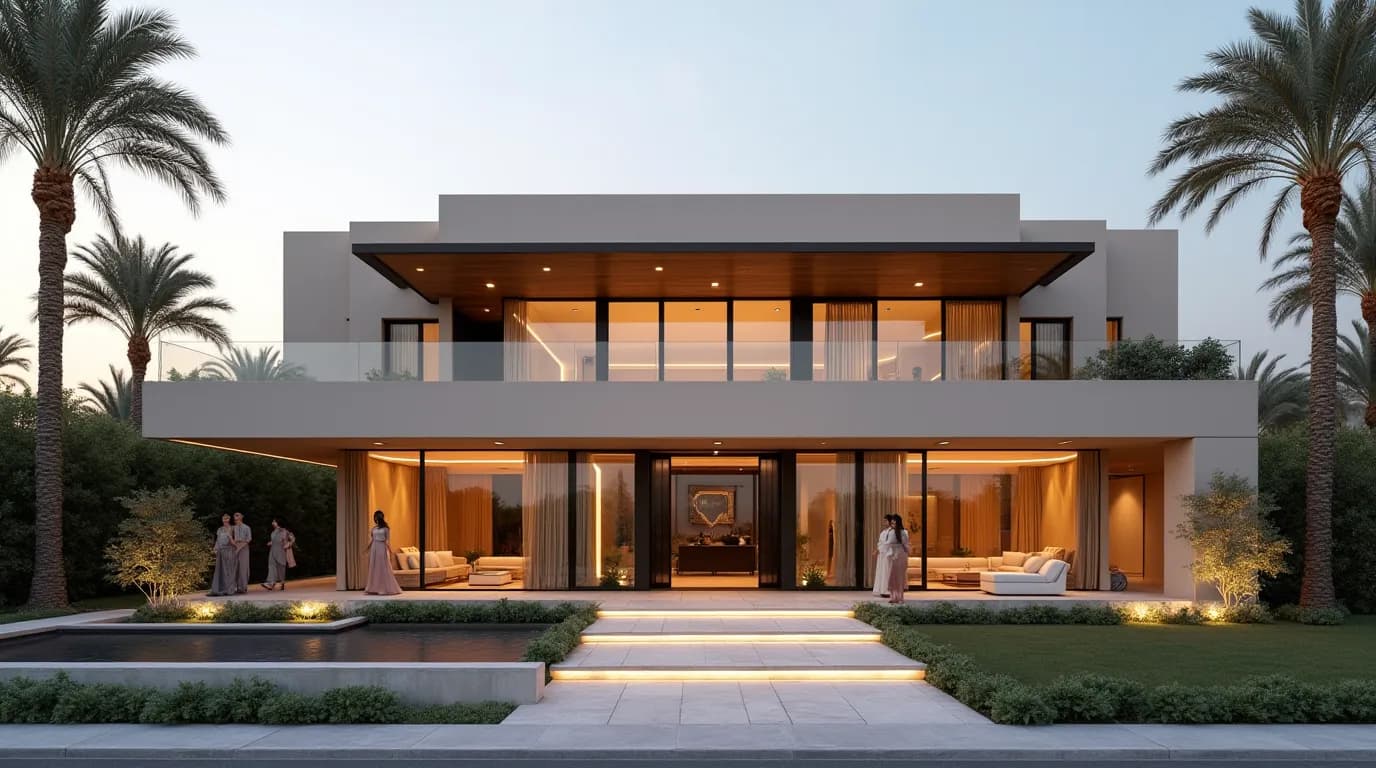
In the house illustrated above, several architectural features reflect this philosophy:
Expansive glass façades that visually connect interior and exterior spaces
Balanced horizontal massing that emphasizes stability and elegance
Visual openness toward landscaped outdoor areas
Carefully integrated indirect lighting that highlights architectural volumes
These elements are not purely aesthetic; they also contribute to environmental comfort and spatial quality within the home.
Natural Lighting and Its Role in Human Comfort
Natural light is one of the most significant elements in contemporary architectural design. Large glazed openings allow daylight to penetrate deep into interior spaces, producing several benefits.
Psychological Well-being
Exposure to natural light improves mood, reduces stress, and creates a sense of openness and vitality within the home.
Energy Reduction
Daylighting reduces reliance on artificial lighting during daytime hours, thereby lowering electricity consumption.
Perception of Spatial Generosity
Well-lit spaces appear larger, calmer, and more welcoming.
A well-designed modern home carefully balances daylight admission with solar control through architectural solutions such as:
Overhangs and shading devices
Extended balconies and terraces
High-performance insulated glazing
These strategies allow the home to benefit from sunlight without overheating.
Energy Efficiency and Sustainability in Modern Homes
One of the primary goals of contemporary architecture is achieving energy-efficient and sustainable living environments. This is accomplished through several integrated design strategies.
Building Orientation
Positioning the house according to sun paths and prevailing winds reduces dependence on mechanical cooling and heating systems.
Thermal Insulation
High-quality insulation in walls, roofs, and glazing systems minimizes energy loss and stabilizes indoor temperatures.
Natural Ventilation
Cross-ventilation, achieved through strategically placed openings, allows fresh air circulation and passive cooling.
Efficient Lighting Systems
Modern homes increasingly rely on LED lighting and smart control systems to reduce energy consumption.
Together, these strategies significantly lower operational costs while promoting environmental responsibility.
Privacy in Contemporary Residential Design
Despite the openness often associated with modern architecture, privacy remains a fundamental requirement in residential environments.
Architects address privacy through several design solutions:
Orienting windows toward private gardens rather than public streets
Using landscape elements such as trees and hedges as natural screens
Organizing interior zones so that private spaces like bedrooms are located in quieter areas of the house
Incorporating curtains, louvers, or reflective glazing where necessary
The objective is to create a balanced relationship between openness, transparency, and personal privacy.
The Home as a Social Space for Family Life
Successful residential architecture fosters family interaction and social connection. Contemporary homes often adopt spatial arrangements that encourage shared experiences, including:
Open-plan layouts connecting the kitchen, dining, and living areas
Outdoor terraces and gardens functioning as extensions of interior spaces
Multiple seating areas designed for both relaxation and social gathering
Such spatial configurations create an environment that strengthens family relationships and supports everyday social life.
Architectural Design and Psychological Well-being
Architecture directly influences human emotions and behavior. A thoughtfully designed home can provide a calm and uplifting environment that supports mental well-being.
Key elements that contribute to this effect include:
Natural materials such as wood and stone
Warm and balanced interior color palettes
Green landscapes and visual access to nature
Spacious interiors with clear spatial organization
These features create a tranquil atmosphere that reduces daily stress and enhances the overall living experience.
Achieving an Economical Home without Sacrificing Quality
An economical home does not imply reduced quality; rather, it reflects efficient and intelligent design. Cost efficiency can be achieved through:
Eliminating unnecessary circulation spaces
Designing multifunctional areas that serve multiple purposes
Utilizing locally available building materials
Maximizing passive energy strategies such as sunlight and natural ventilation
Careful planning during the design stage significantly reduces construction costs and long-term maintenance expenses.
Conclusion
Modern residential architecture strives to create homes that integrate aesthetics, functionality, sustainability, and human comfort. The ideal contemporary house provides abundant natural light, maintains privacy, minimizes energy consumption, and establishes a healthy living environment that supports both individual well-being and family interaction.
Ultimately, the success of architectural design is not measured solely by its visual appearance, but by its ability to enhance everyday life—transforming the home into a comfortable, efficient, and vibrant place for living.
Arch Abbass Alzuhairy
Abbas Al-Zuhairy
Contributing writer at EUReflect.
Follow EUReflect
See more of our reporting on Google
Mark EUReflect as a preferred source and our stories are ranked higher for you in Top Stories, Discover and Google News — and carry a “preferred” badge when they are cited in AI results.
Add EUReflect as a preferred source