Belgium House at Davos 2026: Navigating Geopolitical and Economic Complexity
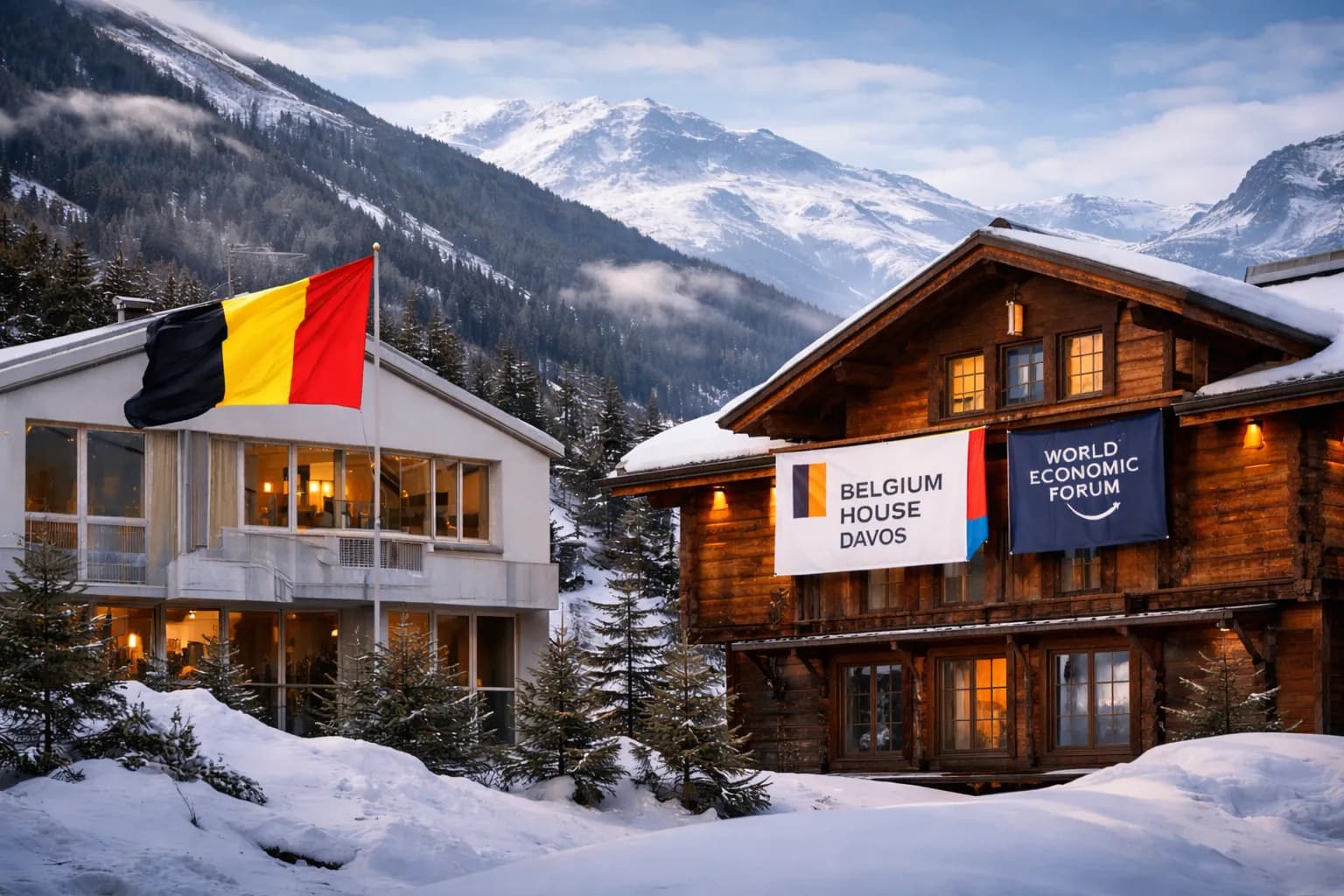
From 19 to 22 January 2026, Belgium House in Davos hosted a series of high-level discussions bringing together government leaders, CEOs, and experts to explore strategic responses to growing global uncertainty. Against the backdrop of geopolitical tensions, economic fragmentation, and rapid technological change, the event provided a platform for Belgium to showcase its policy vision, industry leadership, and international engagement.
The program commenced with a high-level breakfast focused on the intersection of geopolitics and life sciences. Prime Minister Bart De Wever opened the roundtable, emphasizing the need for strategic investment and enhanced industry competitiveness to secure innovation, drive sustainable growth, and navigate global uncertainty.
Key participants included Ian Bremmer, CEO of Eurasia Group, and Vasant Narasimhan, CEO of Novartis, alongside Dan Casserly, Head of Global Public Affairs at Novartis. The discussions highlighted the role of innovation ecosystems in life sciences as a means to strengthen national and regional resilience in an unpredictable international environment.
Switzerland Through the Belgian Lens
Belgium House also featured a CEO panel comparing the Swiss and Belgian business climates. Panelists such as Rudy Provoost, President of Voka, and Stefaan Fiers, Chapter Head External Affairs at Roche Belux, explored best practices in stability, talent cultivation, infrastructure, and public-private trust. The conversation provided actionable insights for Belgium to enhance its competitiveness by learning from Switzerland’s long-term regulatory clarity and innovation-driven ecosystem.
Building Europe’s Energy Backbone
A dedicated session addressed Belgium’s pivotal role in Europe’s energy transition. With speakers including Luc Vandenbulcke, CEO of DEME, Bernard Gustin of Elia Group, and Pascal De Buck of Fluxys, the panel examined how infrastructure investment, cross-border coordination, and private-public partnerships could ensure secure, affordable, and sustainable energy. Belgium’s strategic positioning in offshore energy, hydrogen networks, and industrial demand underscores its importance as a system integrator in the European energy landscape.
From Risk to Resilience
High-level dialogue further explored resilience in an era of geopolitical flux. Prime Minister Bart De Wever and President Tharman Shanmugaratnam of Singapore discussed structural challenges ranging from disrupted supply chains to rising security risks. The panel focused on industrial transformation that balances growth, decarbonization, and innovation while avoiding protectionist tendencies, emphasizing the strategic value of international partnerships.
Ukraine Recovery and Reconstruction (UR³)
Belgium House highlighted the ongoing support for Ukraine through the UR³ framework. Policymakers and private sector leaders, including Marta Kos, European Commission Commissioner for Enlargement, and Taras Kachka, Ukraine’s Deputy Prime Minister, discussed actionable approaches to recovery, reconstruction, and rebuilding. The session stressed cooperation between governments, donors, and financial institutions to deliver tangible impact in high-risk operational contexts.
Strategic Investments, Industrial Security, and Sustainable Development
Further sessions addressed Europe’s industrial and defense alignment, investment in Africa’s frontier markets, and the circular economy. Speakers such as David Clarinval, Belgium’s Deputy Prime Minister, and Matthias Diependaele, Minister-President of Flanders, underscored the importance of innovation, cross-border collaboration, and sustainable investment to enhance Europe’s competitiveness and strategic autonomy.
Culture, Commerce, and the 24-Hour Economy
Belgium House also explored the future of urban economies. Panels on the 24-hour economy, led by figures like Lorin Parys, Chairman of the Belgian Brewers Federation, examined how cities and businesses can foster continuous growth, cultural vitality, and community well-being while leveraging public-private collaboration.
Conclusion
Over four days, Belgium House in Davos successfully convened a multi-stakeholder dialogue on innovation, resilience, and strategic leadership in a complex global environment. Through high-level engagement across life sciences, energy, industrial policy, and international development, Belgium positioned itself as a proactive actor in shaping sustainable, resilient, and competitive frameworks both at the European and global level.
Olha Pashchenko
Contributing writer at EUReflect.
Follow EUReflect
See more of our reporting on Google
Mark EUReflect as a preferred source and our stories are ranked higher for you in Top Stories, Discover and Google News — and carry a “preferred” badge when they are cited in AI results.
Add EUReflect as a preferred source