Bridging East and West: How Pakistan Can Channel Chinese Defense Technology to Türkiye’s Defense Industry
With the global security environment changing rapidly, Türkiye and Pakistan have leaped to the forefront of creating defense cooperation regionally.
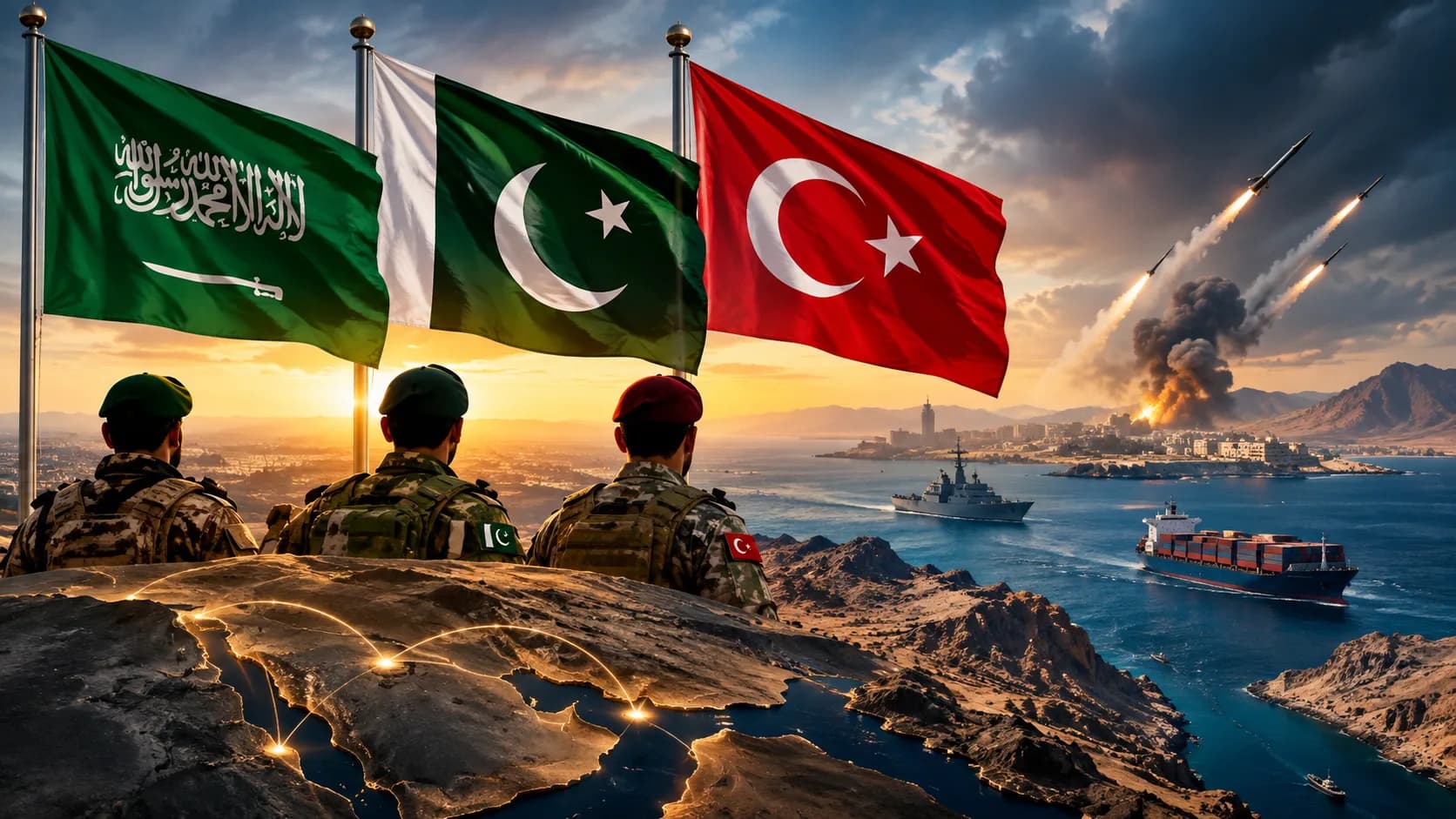
With the global security environment changing rapidly, Türkiye and Pakistan have leaped to the forefront of creating defense cooperation regionally. Due to long-standing strategic trust coupled with mutual geopolitical interests, both countries are more interested in improving their defense capabilities and diversifying their partnerships. Given this and the fact that Pakistan is also uniquely situated as a longtime user of both Western and Chinese military technology, it is in an ideal position to link Chinese defense capabilities with Türkiye’s growing defense industry.
Pakistan is among the select few countries in the world operating a military system that fuses the U.S. and Chinese military technology. This model of integration arose from Pakistan’s reliance on Western systems and subsequent shift to Chinese platforms due to shifting strategic dynamics. Today, Pakistan combines NATO-based defense systems with advanced Chinese systems that provide a unique perspective with experience in technology integration, utilizing reverse engineering, and co-production areas where Türkiye has been moving with greater momentum.
One of the most fruitful illustrations of the collaborative relationship between Pakistan and China can be seen in the JF-17 Thunder, a multi-role fighter aircraft developed by Pakistan Aeronautical Complex (PAC) and China’s Chengdu Aircraft Corporation (CAC). The JF-17 project illustrates Pakistan’s capacity to manage a complex joint venture. The JF-17 project involved a very strong technology transfer mechanism, which resulted in Pakistan not just co-producing the aircraft but being responsible for subsequent upgrades, notably the JF-17 Block II and Block III variants. Each of the upgrades, as in the case with the JF-17, involved Pakistan integrating systems from China, South Africa and Italy. In this way Pakistan demonstrated significant capability to integrate diverse systems which Türkiye can explore as it seeks to develop its own defense industrial capacities.
The JF-17 example also demonstrates how Pakistan constituted a type of balance in its defense manufacturing initiative in terms of sovereignty and foreign dependence. For Türkiye, which has been limited with certain Western government suppliers, Pakistan offers both a technical roadmap and a diplomatic model on how to engage China in downward dependency on NATO structures. By jointly forming trilateral partnerships with selected third countries and China, Türkiye could indirectly access Chinese defense technologies without raising real political concern, or push back from some of its Western allies.
The increasing cooperation between Pakistan and Türkiye can already be seen in joint initiatives like the KAAN (previously known as TF-X) 5th generation fighter, which Pakistan is keen to engage with Türkiye on. While Türkiye wants to develop KAAN as an indigenous stealth fighter, the size and complexity of the platform likely means that they are not going to do this alone. Pakistan’s track record on stealth shaping, modular avionics, and radar integration through JF-17 may be useful. Further, given Pakistan’s established relationship with China, which is also building its J-31 stealth jet, Pakistan could also leverage that relationship to facilitate any technology sharing/lessons learned from both Chinese and Turkish programs.
This cooperation would provide Türkiye with some serious strategic benefits. First, it would shorten defense development timelines by leveraging technologies that Pakistan and China have already tested and turned into operational systems. Second, it would enable Türkiye to share some of the R&D funding with Pakistan and China, which would allow the three counties to share the costs of development, thus reducing R&D expenditures. Third, it would allow Türkiye to have access advanced Chinese platforms like long-range drones, electronic warfare systems, and integrated missile defense systems through a trusted partner like Pakistan and would be less politically problematic than buying them directly from China.
Many areas hold immense potential for trilateral defense cooperation. In the drone area, Türkiye is now a global top-standing exporter with companies like Baykar and its Bayraktar TB2 and Akıncı drones leading the way. China now presents its own high-altitude, long-endurance drone systems (e.g., the Wing Loong series) that would be a perfect complement to Turkish systems. Since both China and Pakistan are already operating and co-developing such systems, it could help Türkiye leverage these technologies that would meet its requirements.
Radar and avionics is another key sector. Pakistan is starting to get operational knowledge from Chinese AESA radars and fire control systems such as those currently being used on the upgraded JF-17 Block III. This sort of capability could easily be integrated into Türkiye’s future air and naval platforms through the existing systems or subsystems redesigned specifically to meet Turkish specifications. Moreover, particular China’s growing edge in electronic warfare (notably, the counter drone jamming, mark of our own and/or our strategic competitors’ drone systems, signal disruption, and cyber defense capabilities) provides meaningful options for Türkiye’s security capabilities, especially in the case of Pakistan acting as a testing ground and proof-of-concept.
At the more advanced and emerging technology end of the spectrum, Türkiye and China are undertaking research in some capacity into hypersonic systems as well as missile defense. And again, Pakistan could offer its role as facilitator in terms of testing options, operational feedback, and coordination on joint R&D projects. For example, Türkiye’s Siper long-range air defense system could usefully include lessons learned from Pakistan deploying Chinese HQ-series systems, and integrating them with other battlefield capabilities.
However, in order to benefit mutually from collaboration of this nature, it is necessary to build formal structures and pathways for dialogue and communication. One strategy could be to create trilateral defense dialogue platform involving Türkiye, China, and Pakistan. By providing a regular series of trilateral meetings, discussions, and working groups, the three nations could focus on priority research areas, procurement plans, and avenues for technological and information sharing. Furthermore, creating joint research centers and joint industrial parks in Pakistan, whereby Chinese and Turkish companies co-invest and co-develop joint capabilities, could provide easiness in a more neutral space.
Co-marketing and co-production arrangements could also be possible. Just like the JF-17 is co-marketed by Pakistan and China; a future Turkish-Pakistani-Chinese platform could develop and market defense solutions to countries in the Middle East, Africa, and Southeast Asia. This would strengthen and extend the strategic reach of all three, and would provide both financial sustainability and market competitiveness.
In sum, Pakistan is the golden key for Türkiye and China with regards to defense technology. Pakistan’s unique past experience with both Western as well as Chinese systems and trusted relationship with Türkiye, in addition to its ongoing relationship with China, gives it an exceptional and unique ability to be a strategic link. For Türkiye, this offers an opportunity to diversify its sources for defense, increase its innovation, and access advanced capabilities without jeopardizing its geopolitical independence.
If nurtured properly, this triangular defense partnership could serve as an example of Global South cooperation where trust, three-dimensional development, and regional solidarity redefine contemporary defense cooperation. Türkiye has a unique opportunity to leverage Pakistan as a platform for bridging the best of East and West cooperation, and shape a future defense industry that is increasingly stronger and resilient.
Muhammed Anas Awan
Contributing writer at EUReflect.
Follow EUReflect
See more of our reporting on Google
Mark EUReflect as a preferred source and our stories are ranked higher for you in Top Stories, Discover and Google News — and carry a “preferred” badge when they are cited in AI results.
Add EUReflect as a preferred source