Ethiopia Begins Construction of Africa's Largest Airport
Ethiopia has started construction of Africa's largest airport, with completion planned by 2030.
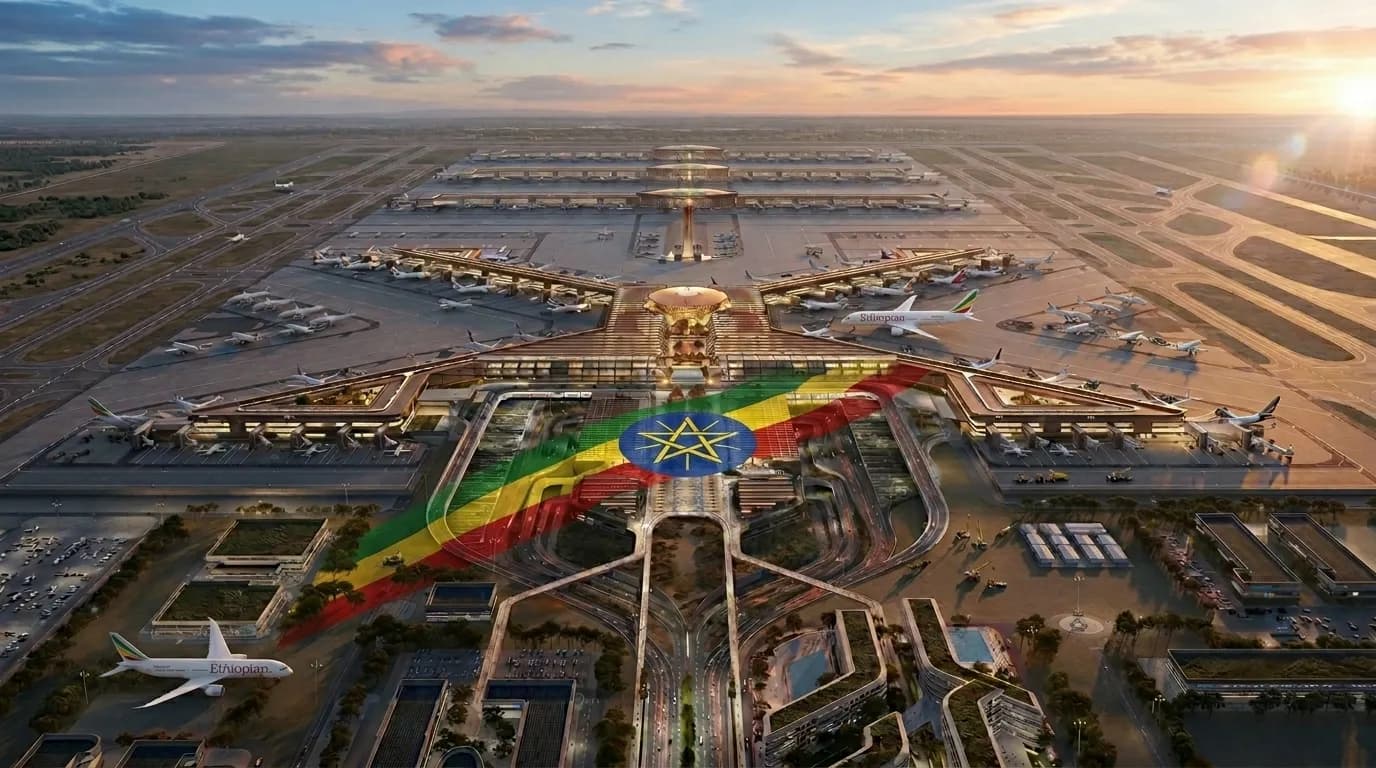
Overview
Ethiopia officially started the construction of what is set to become the biggest airport on the African continent. The Bishoftu International Airport, a project valued at approximately 12.5 billion US dollars, broke ground at a ceremony on 10 January 2026 in Abusera, near the town of Bishoftu, around 45 kilometres southeast of the capital Addis Ababa. Prime Minister Abiy Ahmed described the development as the largest aviation infrastructure project in Africa's history. The project is led by Ethiopian Airlines, the state owned carrier that is already Africa's largest airline by fleet size, passenger numbers, and revenue.
Cost and Financing
The total cost of the new airport will be around 12.5 billion US dollars as it is reported, revised upward from an earlier estimate of 10 billion as the design and scope were refined. Ethiopian Airlines has confirmed it will fund approximately 30 percent of the project directly through its own equity, with the remaining amount, close to 8 billion US dollars, to be raised from international lenders. The African Development Bank has indicated it will lend 500 million US dollars and lead efforts to raise the wider financing package. According to Ethiopian Airlines officials, lenders and partners from the Middle East, Europe, China, and the United States have shown interest in financing the project, with Italy among those involved in recent negotiations. An initial 610 million US dollars has been allocated for earthworks, which are scheduled to be completed within a year, and the main contractors are expected to begin work in August 2026.
Scale and Design
The new airport will be built on a site covering 35 square kilometres. When fully completed, the facility is planned to have four runways, parking space for 270 aircraft, and the capacity to handle up to 110 million passengers a year. That figure would represent more than four times the capacity of Ethiopia's current main gateway, Bole International Airport, which handles around 25 million passengers annually and is expected to reach its limits within the next two to three years. The terminal design has been developed by the international architecture firm Zaha Hadid Architects. The project is being delivered in phases, with phase one expected to open in 2030, featuring two runways and capacity for 60 million passengers, before further expansion in a second phase.
Strategic and Social Context
Ethiopian officials say the new airport will be a gateway for the whole continent. The aim is to build stronger air links between Africa, Europe, Asia, and the Americas, and to support more trade, tourism, and freight traffic. Addis Ababa is already one of the busiest aviation hubs in Africa, mostly thanks to Ethiopian Airlines and its wide network of routes. Bole International Airport, the current main gateway, is reaching the end of its capacity and has no room to grow, so the new facility is intended to take over its role and allow further expansion in the years ahead.
The project also comes with a real social cost. Around 2,500 farmers were moved from the site last year to make space for construction. They were re-housed at a cost of 350 million US dollars, according to Ethiopian Airlines. Local families have had to adapt to new homes and new ways of earning a living, and questions remain about how their long term needs will be met once the airport is in operation.
The wider context inside Ethiopia is not easy either. The country is still dealing with armed conflict in its two most populous regions, Amhara and Oromia. Bishoftu sits inside Oromia, which has seen years of unrest and clashes between government forces and local armed groups. Security in the area will need to be stable for the project to advance on schedule and for foreign airlines and investors to feel confident about using the new hub.
Even so, the government is pushing ahead. Ethiopia has a population of around 130 million people, the second largest in Africa, and over the past decade it has launched several large infrastructure projects, including dams, roads, and railways. The Bishoftu airport is now one of the most ambitious of these. Officials hope it will create jobs in construction and aviation, attract more visitors to the country, and help Ethiopia play a bigger role in global air travel. Whether it delivers on those promises will depend on financing, security, and the country's ability to keep the project on track until the planned opening in 2030.
Dmytro Melnyk
Contributing writer at EUReflect.
Follow EUReflect
See more of our reporting on Google
Mark EUReflect as a preferred source and our stories are ranked higher for you in Top Stories, Discover and Google News — and carry a “preferred” badge when they are cited in AI results.
Add EUReflect as a preferred source