EU–Vietnam: A Strategic Turning Point Shaped By Geopolitics
The EU–Vietnam Comprehensive Strategic Partnership announced in January 2026 marks a shift beyond trade toward deeper political, security and strategic cooperation, reflecting shared interests in stability, diversification, and long-term engagement in the Indo-Pacific.
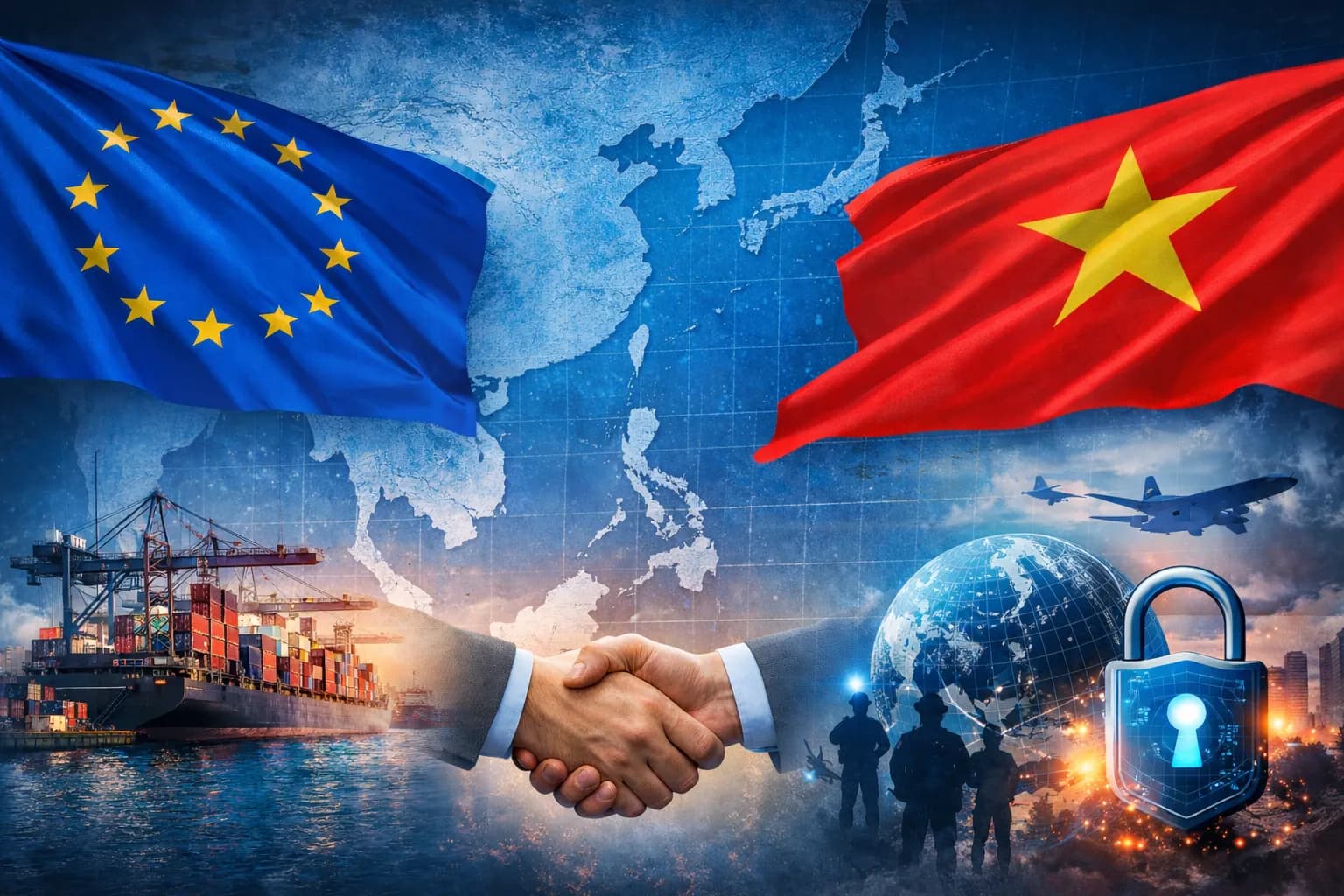
The announcement on 29 January 2026 in Hanoi of a Comprehensive Strategic Partnership between the European Union and Vietnam marks a major step in the evolution of their bilateral relationship. Officially confirmed during the visit of European Council President António Costa, this diplomatic upgrade is not a sudden shift, but rather the culmination of a steady and increasingly strategic rapprochement.
Beyond Trade
For years, EU–Vietnam relations have been driven primarily by economic cooperation. Since the entry into force of the EU–Vietnam Free Trade Agreement (EVFTA) in 2020, trade flows have expanded rapidly, making Vietnam one of the EU’s most dynamic economic partners in Southeast Asia.
This new framework, however, signals a clear political shift. By adopting the label “comprehensive” and “strategic”, both sides indicate that cooperation now extends beyond trade to include issues such as security, governance and long-term strategic coordination.
A convergence of interests
From the European perspective, the timing is significant. Brussels is actively seeking to strengthen its presence in the Indo-Pacific in order to diversify its partnerships in an increasingly fragmented global economy. Vietnam stands out as a stable and pragmatic partner, combining economic dynamism with growing regional influence.
For Vietnam, the partnership upgrade fits squarely within its so-called “bamboo diplomacy”, aimed at diversifying external relations to avoid excessive dependence on any single major power. Closer ties with the EU also facilitate access to European technologies and regulatory expertise, particularly in support of Vietnam’s green and digital transitions.
New pillars of cooperation
The Comprehensive Strategic Partnership is expected to structure cooperation in several key areas, including climate action and energy transition, the resilience of global supply chains, security dialogue, and academic and professional exchanges.
Conclusion
The EU–Vietnam agreement reflects a shared assessment of today’s global challenges. In a world marked by geopolitical uncertainty, both actors favour stable cooperation with predictable partners. While largely symbolic, the partnership firmly anchors Europe’s long-term engagement in Southeast Asia.
Sources
Council of the European Union, Joint statement on upgrading relations between the EU and Viet Nam to a Comprehensive Strategic Partnership (29 January 2026)
Vietnam News Agency, European Council President António Costa begins official visit to Viet Nam
Le Courrier du Vietnam, Le Vietnam et l’UE portent leurs relations au niveau de partenariat stratégique global
Enes Taskin
Contributing writer at EUReflect.
Follow EUReflect
See more of our reporting on Google
Mark EUReflect as a preferred source and our stories are ranked higher for you in Top Stories, Discover and Google News — and carry a “preferred” badge when they are cited in AI results.
Add EUReflect as a preferred source