Migrant Vessel Sinks Near Malta, Dozens Missing
A migrant boat carrying around 60 people from Libya capsized 45 nautical miles east-southeast of Malta. Italian and Maltese authorities launched a joint rescue operation. A nearby fishing boat saved 48 survivors. Ten bodies were recovered. Search operations continue as at least two people remain unaccounted for.
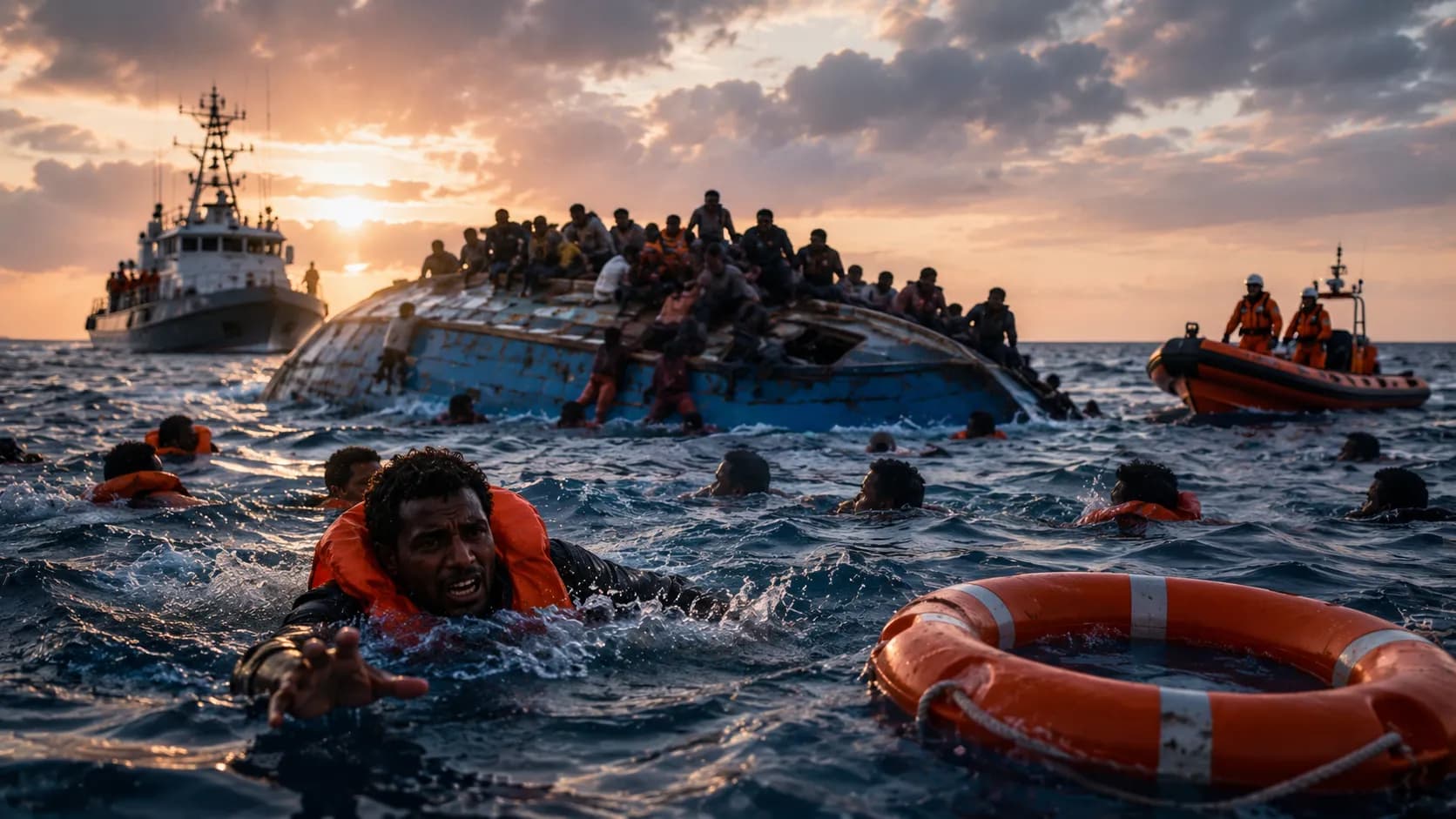
An overcrowded boat carrying approximately sixty migrants from Libya overturned roughly 45 nautical miles east-southeast of Malta on Sunday, prompting an emergency response coordinated between Italian and Maltese maritime authorities.
Rescue operations were launched in the central Mediterranean on Sunday morning after a migrant vessel carrying around sixty people capsized in waters approximately 45 nautical miles east-southeast of Malta. The Italian Coast Guard confirmed the recovery of ten bodies, while a fishing boat operating in the vicinity managed to pull approximately 48 survivors from the sea. Search efforts continued throughout the day, coordinated by Maltese maritime authorities, as fears mounted for those still unaccounted for.
The vessel, which had departed from the Libyan coast, met its fate in one of the world’s most heavily trafficked — and deadliest — maritime corridors. The crossing from North Africa to Europe remains a primary route for migrants and asylum seekers fleeing conflict, poverty, and persecution. Despite repeated international calls for a coordinated rescue framework, tragedies of this nature continue to occur with alarming regularity.
The Incident: A Vessel Overcrowded and Overwhelmed
The doomed crossing began on the Libyan coast, a known departure point for those attempting the perilous journey to European shores. The vessel was carrying an estimated 60 individuals when it capsized in international waters. Such boats, often in poor structural condition, are routinely filled beyond any reasonable safety threshold by criminal smuggling networks. When conditions shift or weight distribution changes, the results can be catastrophic, as was tragically demonstrated once again on Sunday.
The Italian Coast Guard confirmed that it immediately dispatched a patrol vessel upon receiving distress information. The precise circumstances of the capsize — whether caused by structural failure, overcrowding, weather, or a combination of factors — remained under investigation as of Sunday afternoon.
Emergency Response: A Race Against Time at Sea
The first responders were not official rescue vessels, but a fishing boat that happened to be nearby. That vessel pulled approximately 48 survivors from the water. The swiftness with which these fishermen acted almost certainly saved dozens of lives, underscoring the vital role that civilian maritime actors frequently play in Mediterranean rescue operations.
The Italian Coast Guard’s patrol boat arrived subsequently, recovering ten bodies by Sunday afternoon, with active searches ongoing. Coordination between Italian and Maltese authorities was confirmed operative, with Malta — given its proximity — taking the lead role in directing the broader search.
A Recurring Tragedy: The Wider Context of Mediterranean Migration
Sunday’s incident is far from isolated. The central Mediterranean route, stretching from North Africa to Italy and Malta, is classified by the International Organization for Migration as the world’s deadliest migration route. Thousands lose their lives each year in vessels never designed for oceanic passage.
The Libyan coast has become a principal staging point for departures over the past decade, as conflict and instability created a vacuum exploited by smuggling networks. Across European capitals, migration policy remains deeply politically contested, while the EU has struggled to produce a unified, durable response.
Conclusion
The capsizing off Malta on 7 June 2026 is a sombre reminder that the Mediterranean migration crisis is an ongoing emergency. Ten confirmed dead, approximately 48 alive, and at least two still missing as of Sunday evening. These numbers represent human beings who undertook an unthinkable risk because the alternatives, in their calculus, were even worse. As search operations continued through Sunday afternoon, the question of why legal pathways to safety remain so narrow — and why structural action has not matched the scale of the problem — remained, as it has for years, unanswered.
Zulya Atabayeva
Contributing writer at EUReflect.
Follow EUReflect
See more of our reporting on Google
Mark EUReflect as a preferred source and our stories are ranked higher for you in Top Stories, Discover and Google News — and carry a “preferred” badge when they are cited in AI results.
Add EUReflect as a preferred source