Montenegro joins EU in 2028
Montenegro Set to Become the EU's 28th Member State by 2028 as Brussels Begins Drafting Accession Treaty
Overview
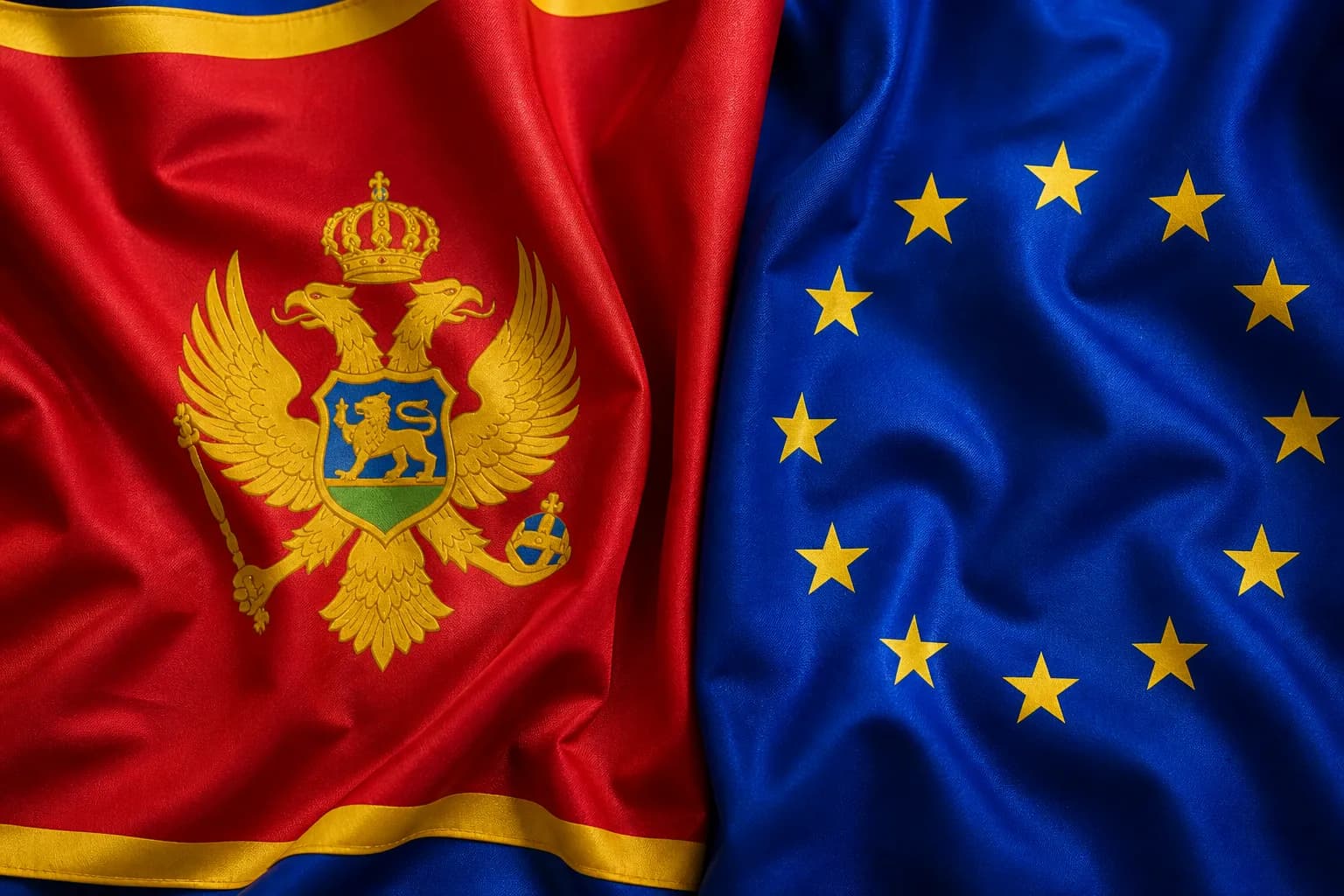
Montenegro is poised to become the next member of the European Union. At the twenty-second meeting of the EU-Montenegro Joint Consultative Committee, held in Podgorica on April 25, the country's Minister of European Affairs Maida Gorčević confirmed that the drafting of the Accession Treaty has formally begun, marking what she described as "the final lap of a fourteen year marathon on the path towards the EU." Membership is now slated for 2028, making Montenegro the most advanced of the nine current candidate countries and the first state set to join the bloc since Croatia's accession in 2013. Earlier in April, European Commissioner for Enlargement Marta Kos confirmed that "Montenegro's place inside the EU is now taking shape," and that the country could complete the negotiation process by the end of 2026 or 2027.
A Fourteen-Year Marathon
Montenegro's journey toward EU began the year of its independence from Serbia in 2006. The country submitted its formal application in December 2008, and accession negotiations opened in June 2012. The European Union has structured the process around 35 negotiation chapters, of which Montenegro has now opened all 33 currently active and provisionally closed 14. The launch of an ad hoc working group dedicated to drafting the Accession Treaty itself, the legally binding document defining the terms of entry, is the clearest signal yet that the process is approaching its conclusion. Public support inside the country remains strong, with 64 percent of Montenegrins indicating in 2025 that they would vote in favour of EU membership, and 75 percent believing it would bring more advantages than disadvantages.
Reforms and Economic Performance
Two policy programmes have shaped the past five years. Europe Now 1.0, launched in 2022, nearly doubled the minimum wage to €450 per month and reduced labour taxation. Europe Now 2.0, adopted in September 2024 under the government of Prime Minister Milojko Spajić, raised the minimum wage further to €600 or €800 depending on education level, and lifted the minimum pension by 52 percent. The reforms helped raise the average monthly salary from €814 to €1,012 by December 2024, an increase of 24 percent. On the institutional side, Montenegro adopted a 2024-2027 Judicial Reform Strategy, appointed a new President of the Supreme Court through a transparent procedure, and increased the number of active prosecutors from 85 to 114, on track for a target of 141.
Economic performance has been steady but uneven. After post-pandemic growth averaging 9.1 percent between 2021 and 2023, expansion eased to 3.2 percent in 2024 and 2.7 percent in 2025, according to the World Bank, with growth projected at around 3 percent annually through 2028. Public debt has fallen from 105 percent of GDP in 2020 to roughly 64 percent in 2025, although the World Bank and European Commission have warned that the Europe Now wage and pension programmes have widened the fiscal deficit, projected at around 4 percent of GDP in 2025. The economy remains heavily concentrated in tourism, which accounts for around a quarter of GDP, and Montenegro continues to rely on the euro despite not being part of the Eurozone.
Significant challenges remain, particularly around organised crime prosecutions, anti corruption measures, public administration efficiency, and the persistent informal economy estimated at close to 30 percent of GDP. Yet the political momentum is now unmistakable. As Riccardo Serri, Deputy Head of the EU Delegation to Montenegro, put it: "Montenegro has a historic opportunity to bring its European Union accession process to a close, but there is no time to lose."
Dmytro Melnyk
Contributing writer at EUReflect.
Follow EUReflect
See more of our reporting on Google
Mark EUReflect as a preferred source and our stories are ranked higher for you in Top Stories, Discover and Google News — and carry a “preferred” badge when they are cited in AI results.
Add EUReflect as a preferred source