Nation-Building and The Symbolism of Azerbaijan’s National Flag
The Azerbaijani flag serves as a central instrument of nation-building, integrating Turkic heritage, Islamic identity, and modern statehood. Its historical adoption and re-emergence during the late Soviet period reflect efforts to consolidate national consciousness, legitimize political authority, and foster social cohesion.
Introduction
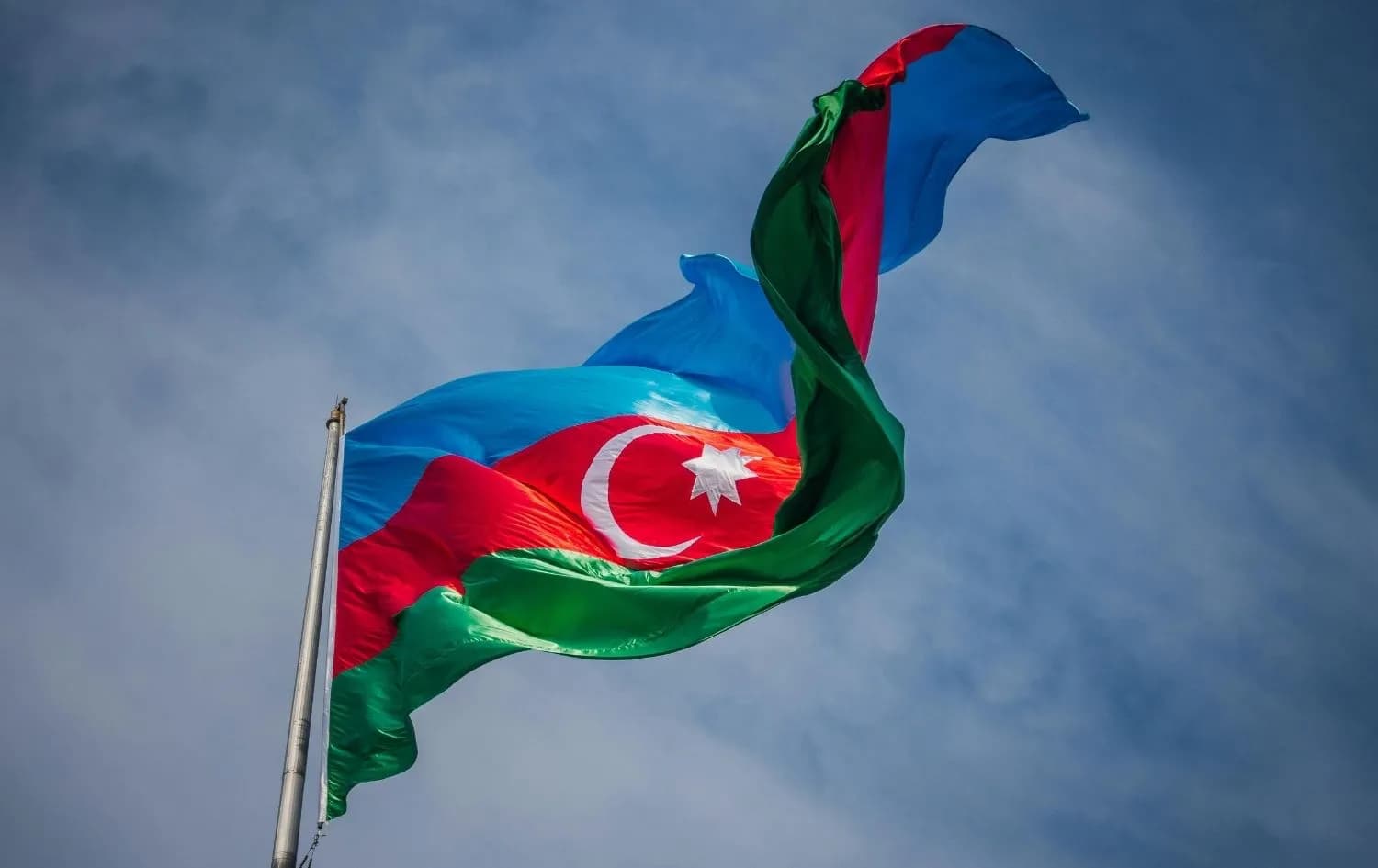
The national flag of Azerbaijan constitutes a central symbolic instrument in the process of nation-building, reflecting the ideological synthesis upon which Azerbaijani statehood is constructed. Composed of three horizontal stripes—blue, red, and green—and featuring a crescent alongside an eight-pointed star, the flag encapsulates the historical memory, cultural identity, and political aspirations of the Azerbaijani nation.
Symbolism as a Framework for National Identity Construction
Within the context of nation-building, the Azerbaijani flag operates as a visual codification of collective identity. The blue stripe represents Turkic heritage, anchoring the nation within a broader ethnocultural continuum and reinforcing a shared historical consciousness. The red stripe signifies the project of modernization, embodying the transition toward democratic governance, institutional development, and integration into the global system. The green stripe reflects the Islamic civilizational sphere, contributing a moral and cultural dimension to national identity.
The crescent further consolidates the Islamic component of this identity, while the eight-pointed star symbolically integrates diverse Turkic-speaking communities into a unified narrative. In this sense, the flag does not merely represent the Azerbaijani state but actively constructs a multi-layered identity that bridges ethnicity, religion, and modern political ideals.
Historical Reassertion and the Politics of Symbolism
The re-emergence of the tricolor flag during the late Soviet period must be understood within the framework of symbolic resistance and national revival. Initially adopted during the era of the Azerbaijan Democratic Republic, the flag embodied early attempts at independent statehood. Its re-raising on November 17, 1988, in Baku during the socio-political mobilization surrounding the Nagorno-Karabakh conflict represented a collective reclaiming of national symbols by intellectual elites and civil society actors.
The formal reinstatement of the flag on November 17, 1990, under the leadership of Heydar Aliyev, marked a decisive step in institutionalizing national identity. The official adoption of the flag on February 5, 1991, further consolidated this process, transforming symbolic revival into state policy and embedding the flag within the legal and political framework of sovereignty.
Nation-Building, Continuity, and Modern Statehood
From a nation-building perspective, the Azerbaijani flag represents a synthesis of continuity and transformation. It reconnects the modern state with its pre-Soviet legacy while simultaneously articulating a forward-looking vision grounded in modernization and global integration.
The deliberate combination of Turkic identity, Islamic values, and modern political ideals reflects a strategic effort to construct a cohesive national narrative capable of uniting diverse societal elements. As such, the flag functions not only as a marker of sovereignty but also as an active agent in shaping national consciousness, legitimizing political authority, and fostering social cohesion.
Conclusion
The Azerbaijani national flag exemplifies the role of symbols in nation-building processes. By integrating historical memory, cultural identity, and political ideology into a single visual framework, it contributes to the construction and consolidation of a unified national identity.
In this regard, the flag should be understood not merely as a representation of the state, but as a dynamic instrument through which the Azerbaijani nation is continuously imagined, reproduced, and legitimized in both domestic and international contexts.

İsmail Polat
Ph. D. in International Relations
Follow EUReflect
See more of our reporting on Google
Mark EUReflect as a preferred source and our stories are ranked higher for you in Top Stories, Discover and Google News — and carry a “preferred” badge when they are cited in AI results.
Add EUReflect as a preferred source