Nation-Building and the Symbolism of the Turkmenistan Flag
The Turkmenistan flag embodies nation-building, integrating carpet patterns, historical symbols, and Islamic and natural motifs. Adopted in 1992, it reinforces national identity, unity, and sovereignty, connecting ancestral heritage to modern statehood and consolidating collective memory.
Introduction
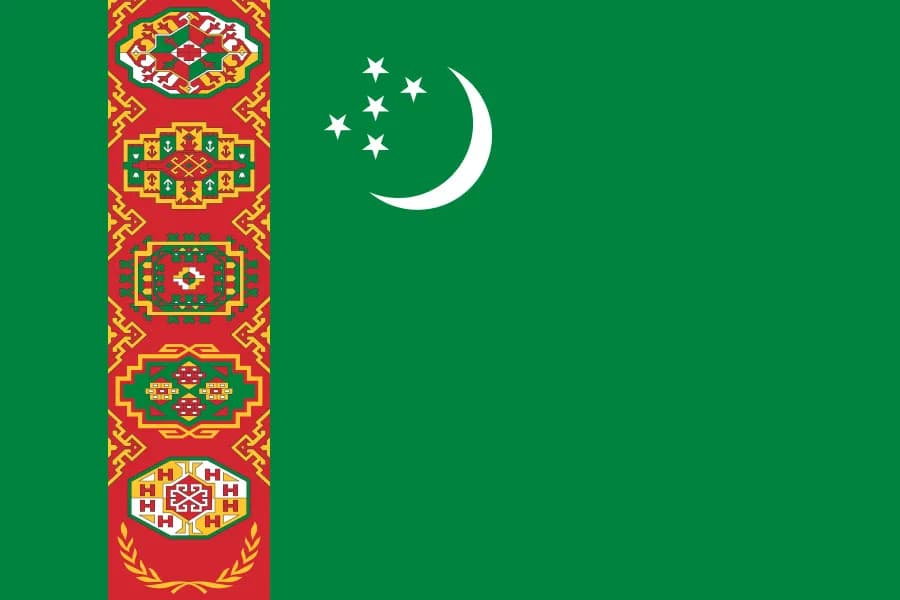
The national flag of Turkmenistan is a central symbol in the nation-building process, integrating historical, cultural, and philosophical elements to consolidate national identity. Adopted on February 19, 1992, the flag reflects the synthesis of heritage, territorial integrity, and collective values of the Turkmen people. Its design incorporates a vertical red stripe alongside five decorative green bands at the base, accompanied by olive branches symbolizing independence and neutrality.
Symbolism and Cultural Significance
Each element of the Turkmen flag embodies historical memory and cultural continuity. Green, prominently used in the base band, has long been associated with life, land, pastures, prosperity, and peace in Turkmen tradition. The white crescent along the upper edge signifies a clear sky over happy people, while the five five-pointed stars represent the five provinces.
The five traditional carpet patterns, framing the stars, reflect the philosophical and artistic heritage of Turkmenistan. Each pattern—Akhal-Teke, Yomud-Jel, Sarik-Jel, Chovdur, and Ersar—carries symbolic meaning, from depicting the Earth’s annual cycles, seasonal divisions, and lunar months to representing ancestral figures, the sun, life, death cycles, and the unity of clans. The use of the four primary colors—fire (yellow), water (white), air (red), and earth (green)—within the carpets emphasizes the connection between natural elements and cultural identity.
Historical Context and Nation-Building
The adoption of the flag in 1992 was a deliberate act of symbolic nation-building following Turkmenistan’s independence from the Soviet Union. By incorporating motifs that link contemporary national identity to pre-Soviet history and traditional art forms, the flag serves as a tool for consolidating collective memory and reinforcing sovereignty. The red stripe and olive branches reinforce values of unity, independence, and neutrality, reflecting the broader political project of state consolidation.
Nation-Building and Identity Consolidation
The Turkmenistan flag is not merely a visual emblem; it actively constructs a narrative of national identity. By blending historical symbols, traditional art, and modern statehood ideals, the flag functions as a mechanism for social cohesion, fostering pride in cultural heritage while legitimizing the modern Turkmen state. It embodies a nation consciously connecting its ancestral past to the present and projecting unity and continuity into the future.
Conclusion
The Turkmenistan flag exemplifies how symbols can operate within nation-building frameworks. Its intricate design merges historical, cultural, and natural motifs into a cohesive emblem, reinforcing national consciousness, territorial integrity, and political legitimacy. As a dynamic nation-building instrument, it continues to anchor Turkmen identity and collective memory while supporting the consolidation of an independent and unified state.

İsmail Polat
Ph. D. in International Relations
Follow EUReflect
See more of our reporting on Google
Mark EUReflect as a preferred source and our stories are ranked higher for you in Top Stories, Discover and Google News — and carry a “preferred” badge when they are cited in AI results.
Add EUReflect as a preferred source