Nation-Building and the Symbolism of the Uzbekistan Flag
The Uzbekistan flag embodies nation-building by merging sky and water symbolism, Islamic heritage, fertility, and twelve-star regional representation. Adopted in 1991, it consolidates national identity, reinforces sovereignty, and connects historical continuity with modern statehood.
Introduction
The national flag of Uzbekistan is a foundational symbol in the construction of a post-Soviet national identity. Adopted on November 18, 1991, just two months after Uzbekistan declared independence, the flag reflects the deliberate efforts of the new republic to assert sovereignty, unify diverse populations, and integrate historical, cultural, and natural symbols into a cohesive national narrative. By linking the country’s past to its modern political aspirations, the flag functions as both a visual and ideological instrument of nation-building.
Design and Symbolism
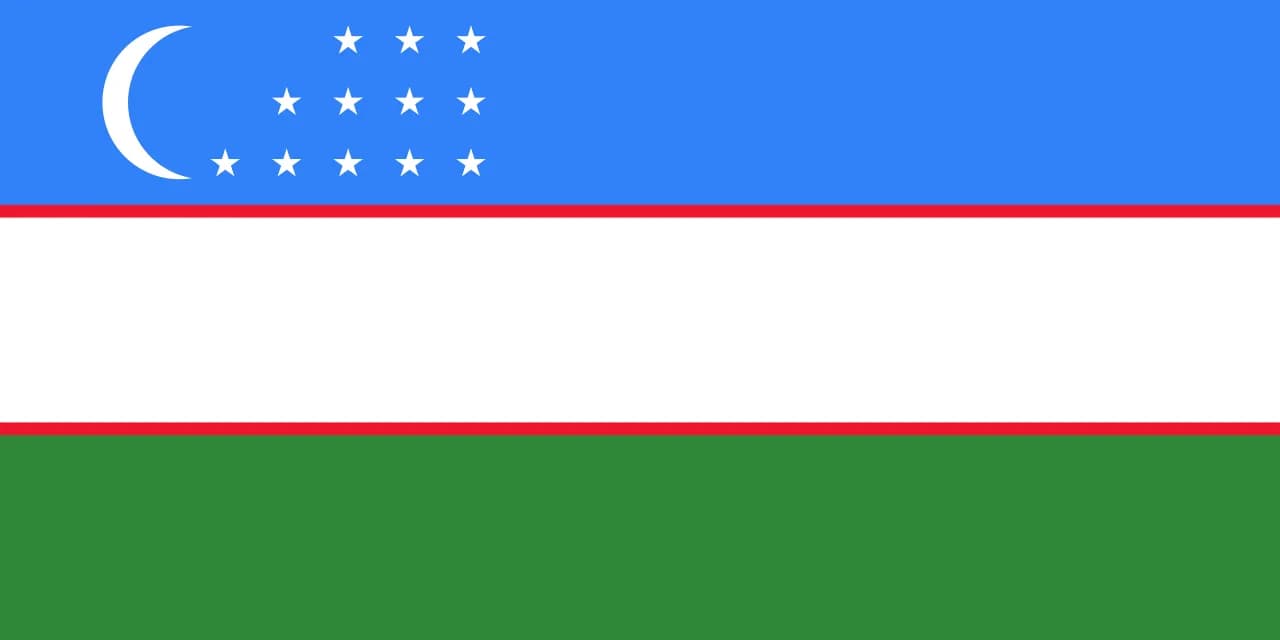
The Uzbek flag consists of three equal horizontal stripes: blue, white, and green, separated by narrow red fimbriations emphasizing the white bands. Each element has profound symbolic meaning deeply connected to Uzbekistan’s cultural and environmental heritage:
Blue represents the infinite sky and vital water sources, particularly the Amu Darya and Syr Darya rivers, reflecting the essential role of these resources in sustaining life and civilization. It also evokes continuity with historical Turkic and Central Asian traditions.
White signifies peace, purity, and moral integrity in thought and action, reinforcing the ethical dimension of nationhood and the desire for societal harmony.
Green symbolizes fertility, natural abundance, and Islamic heritage, highlighting both ecological richness and the centrality of Islam in cultural identity.
Red stripes emphasize vitality, the dynamic energy of the nation, and symbolically function as the “veins” of the land, connecting the people to their environment and history.
Additional emblematic elements reinforce the nation-building narrative:
The crescent represents a newly independent Muslim republic, projecting a sense of renewal, faith, and cultural continuity.
The twelve stars denote the twelve administrative regions and are sometimes associated with perfection and completeness, reinforcing a vision of territorial unity and national cohesion.
Together, these symbols establish the flag as a complex narrative of history, geography, religion, and governance, serving as a unifying emblem for a diverse society.
Historical Context and Nation-Building
The adoption of the national flag in 1991 was a deliberate act of symbolic state-building following the collapse of the Soviet Union. By integrating elements of historical continuity, Islamic culture, and natural geography, Uzbekistan aimed to consolidate national identity and assert sovereignty in a period of significant political and social transition. The flag’s design consciously blends cultural memory with modern political symbolism, reflecting both ancestral heritage and the forward-looking aspirations of an independent state.
The flag also serves as a tool for legitimizing state authority and fostering collective consciousness. It provides citizens with a tangible symbol of unity that transcends ethnic, linguistic, and regional divisions, consolidating a shared narrative of national identity.
Nation-Building and Identity Consolidation
Beyond its aesthetic and symbolic functions, the Uzbek flag actively participates in nation-building by reinforcing civic cohesion and cultural pride. Its visual elements link ecological, historical, and spiritual motifs, creating a multilayered representation of the republic. Through educational, ceremonial, and governmental usage, the flag instills a sense of belonging, continuity, and shared responsibility among citizens, thereby strengthening the legitimacy of the independent republic.
By combining Turkic cultural heritage, Islamic symbolism, and references to modern statehood, the flag exemplifies a conscious effort to create a cohesive national identity. It bridges the historical past with contemporary governance, projecting unity, continuity, and resilience.
Conclusion
The flag of Uzbekistan is more than a national emblem; it is an active instrument of nation-building. By merging historical, cultural, religious, and ecological symbolism into a single visual narrative, it strengthens collective memory, legitimizes sovereignty, and consolidates a shared national identity. It reflects the republic’s efforts to integrate tradition and modernity, asserting both cultural continuity and political independence in the early stages of state formation.

İsmail Polat
Ph. D. in International Relations
Follow EUReflect
See more of our reporting on Google
Mark EUReflect as a preferred source and our stories are ranked higher for you in Top Stories, Discover and Google News — and carry a “preferred” badge when they are cited in AI results.
Add EUReflect as a preferred source