Personal Email of FBI Director Breached by Iranian Hacking GroupIn a bold move that has put Washington on edge, a group of hackers linked to the Iranian government has claimed they broke into the personal email account of FBI Director Kash Patel. The group, which calls itself Handala, released a large collection of private files and messages over the weekend to prove the attack was real.
In a bold move that has put Washington on edge, a group of hackers linked to the Iranian government has claimed they broke into the personal email account of FBI Director Kash Patel. The group, which calls itself Handala, released a large collection of private files and messages over the weekend to prove the attack was real.
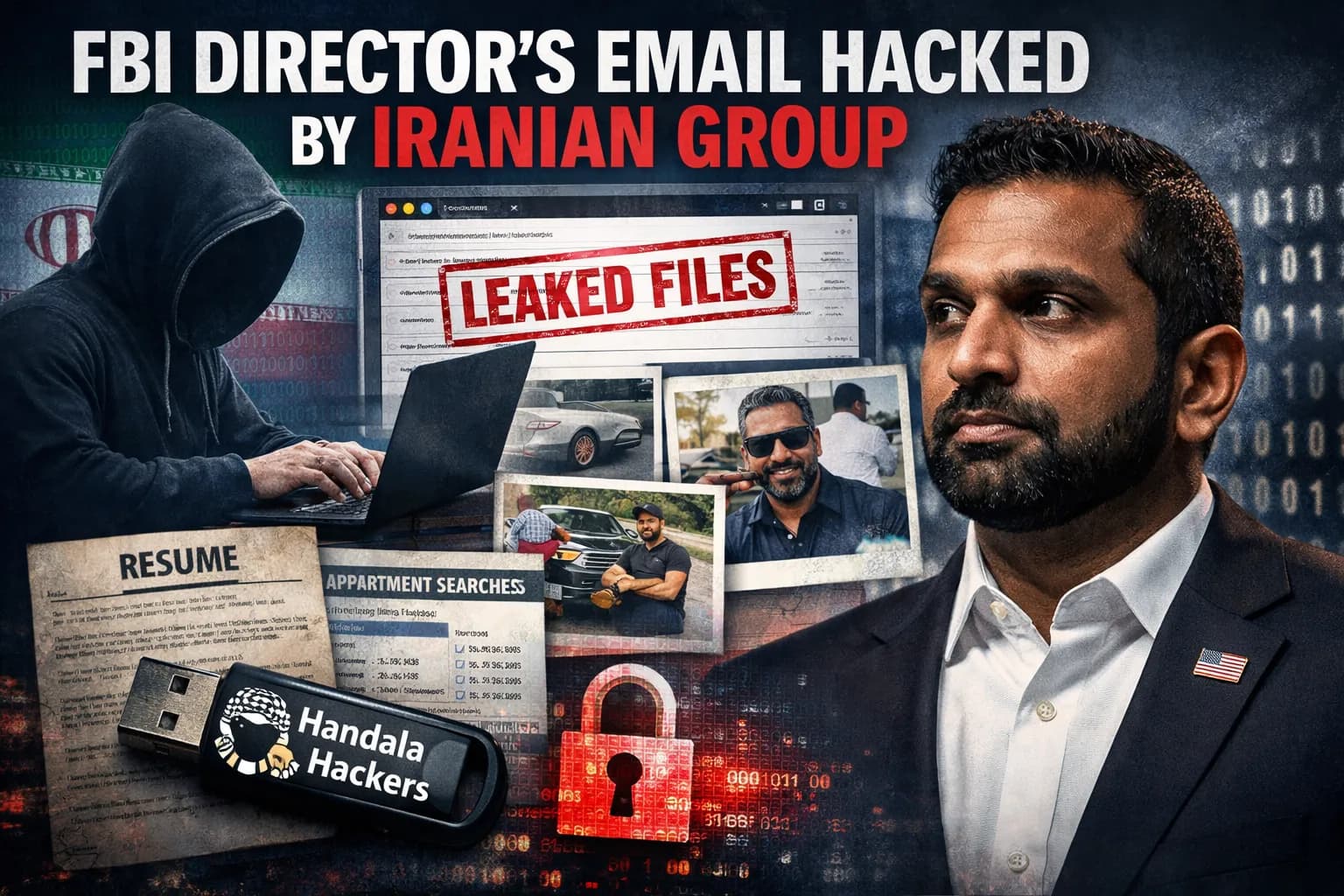
On March 27, 2026, the Handala group updated its website to show they had successfully targeted the Director. The leak didn't contain government secrets, but it did expose a lot of his private life. Over 300 messages sent and received between 2011 and 2022. These emails covered a long period before he became the head of the FBI. There were also photos of Patel in his personal time, including images of him with his favorite cigars and an old sports car. Lastly, a copy of his old resume and details about his personal business, such as past searches for a new apartment.
The FBI has confirmed that they are aware of the situation and have taken steps to fix any security issues. They were quick to point out that the stolen information was "historical," meaning it was old data. Most importantly, they confirmed that no official government systems or classified files were touched.
Cybersecurity experts say this attack wasn't really about stealing top-secret plans. Instead, it was a "hack-and-leak" mission meant to embarrass the Director and send a message. One researcher described the leak as looking like someone’s "digital junk drawer", it was full of personal memories and old documents rather than state secrets.
The timing of the hack suggests it was an act of revenge. Just a week before this happened, the U.S. government shut down several websites that Handala was using to spread propaganda. By targeting the head of the FBI, the group wanted to show they could get back at the U.S. government for interfering with their work.
This isn't the first time Director Patel has been in the crosshairs of foreign hackers. Intelligence reports show that he was warned about Iranian groups trying to track him as early as late 2024. The group responsible, Handala, has become very active in 2026. They have claimed credit for several other attacks recently, including attacking a large medical technology company, leaking the personal information of employees at a major defense company, and causing digital disruptions in several countries in the Middle East.
This breach shows that even people in charge of the country's security can be at risk if their personal accounts aren't locked down. Experts believe the hackers didn't use a high-tech trick to get in. Instead, they likely used "credential stuffing." This is when hackers take usernames and passwords that were stolen in old, unrelated data leaks and try them on other websites until one works.
The incident serves as a major reminder for everyone to use unique passwords for every account and to turn on Multi-Factor Authentication (MFA), the extra step that sends a code to your phone to prove it's really you.
The U.S. government is treating this as a serious crime. They are currently offering a $10 million reward for any information that leads to the capture of the people behind the Handala hacking group.
Hashim Aslam Khan
Contributing writer at EUReflect.
Follow EUReflect
See more of our reporting on Google
Mark EUReflect as a preferred source and our stories are ranked higher for you in Top Stories, Discover and Google News — and carry a “preferred” badge when they are cited in AI results.
Add EUReflect as a preferred source