SCO Signals a Shifting World Order
The SCO summit in Bishkek brings China, Russia and India together as major powers seek greater influence in an increasingly multipolar international system
SCO Signals a Shifting World Order
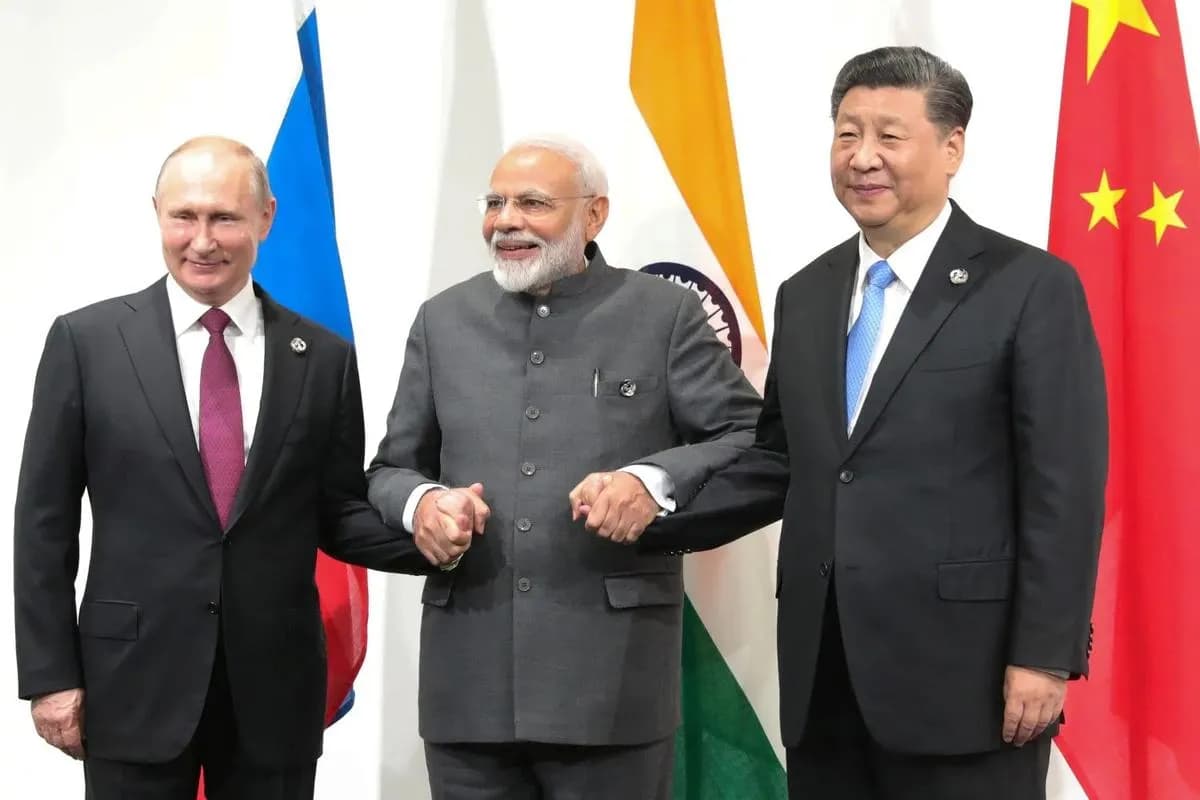
The meeting of China, Russia and India at the Shanghai Cooperation Organisation (SCO) summit in Bishkek has placed Eurasia at the centre of international attention.
Chinese President Xi Jinping, Russian President Vladimir Putin and Indian Prime Minister Narendra Modi are among the most prominent leaders attending the summit in Kyrgyzstan. Their presence highlights the growing geopolitical importance of an organisation increasingly presented as an alternative platform to Western-led international institutions.
China and Russia
Xi Jinping and Vladimir Putin held bilateral talks on the sidelines of the summit, with both sides emphasizing the continuing strength of their strategic relationship.
Xi said the foundations of China-Russia relations would continue to strengthen and expressed support for greater cooperation on international governance and the development of a more equitable and orderly multipolar system.
The message is significant because Beijing and Moscow increasingly coordinate their positions on international issues while challenging aspects of the existing US-led global order.
India’s Position
India’s presence adds another important dimension to the summit.
Although New Delhi maintains strategic relations with Washington, India has also preserved strong ties with Moscow while managing a complex relationship with Beijing. Modi’s participation therefore demonstrates that the emerging international system cannot easily be divided into two opposing blocs.
Recent reporting has emphasized that the meeting between Modi, Xi and Putin should not automatically be interpreted as the creation of a new three-country alliance. Their cooperation exists alongside significant differences in national interests and foreign-policy priorities.
A Multipolar System
The SCO summit illustrates a broader transformation in international politics.
The organisation now brings together countries including China, Russia, India, Iran and Pakistan, alongside Central Asian states. The presence of these major regional powers gives the SCO increasing importance as a forum for security, economic cooperation and diplomatic coordination across Eurasia.
For China, the organisation provides a platform for expanding its regional influence. For Russia, it offers an important diplomatic space at a time when relations with Western countries remain deeply strained. For India and other members, the SCO provides an opportunity to pursue national interests without fully aligning with any single major power.
The Bishkek summit therefore represents more than a meeting of regional leaders. It reflects the increasingly complex distribution of global power, where major states are seeking greater strategic autonomy and international influence.
The gathering of Xi, Putin and Modi is consequently an important symbol of a world in which multiple centres of power are becoming increasingly influential.
Ipek Tuncer
M.A. in International Relations
Follow EUReflect
See more of our reporting on Google
Mark EUReflect as a preferred source and our stories are ranked higher for you in Top Stories, Discover and Google News — and carry a “preferred” badge when they are cited in AI results.
Add EUReflect as a preferred source