Studying in Belgium in 2026-27: Europe's best-kept secret is finally out
Evergreen "study in Belgium" guide targeting international-student search traffic; for study-abroad blogs.
STUDY IN BELGIUM 2027: FULL GUIDE TO APPLICATION
Ask a prospective international student to name Europe's study destinations and you'll hear the Netherlands, Germany, the UK. Belgium rarely makes the list, which is remarkable, because it combines world-top-100 universities, tuition from 2,249 euros a year, more than 400 English-taught degree programs and a location at the geographic and political center of Europe. Here is everything students actually search for, in one place. The data throughout comes from belcikauniversite.com, the Belgium platform of Unidanismanlik, an education brand under the Belgian Eurovia umbrella, which verifies every figure against official university sources.
The universities
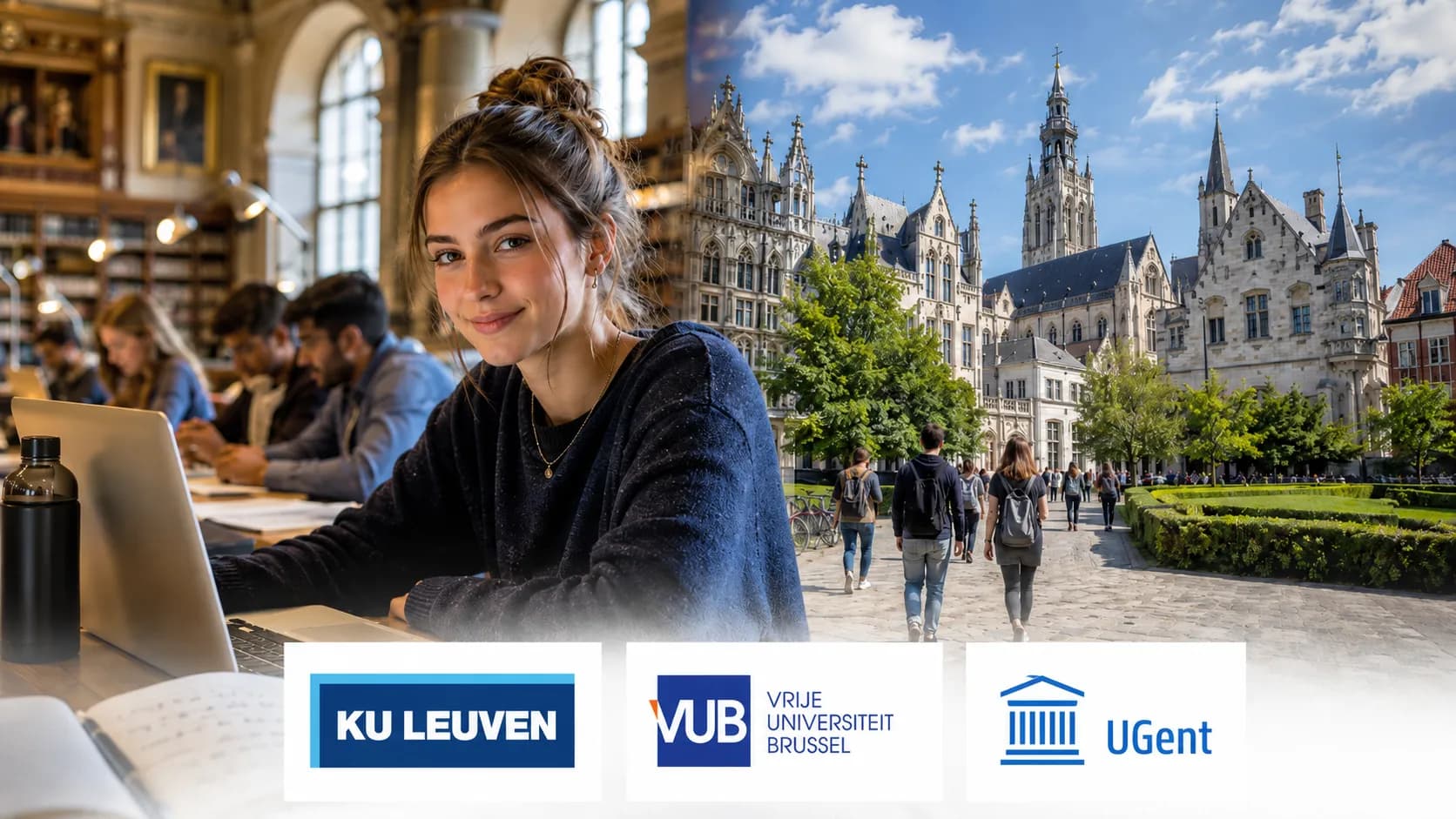
Belgian higher education splits into two language communities, both delivering Bologna-standard degrees. On the Flemish side: KU Leuven (founded 1425, repeatedly named Europe's most innovative university), Ghent University, Vrije Universiteit Brussel and the University of Antwerp. On the French side: UCLouvain, the University of Liège and the University of Mons. Add applied-sciences schools such as Howest, whose game-development program is ranked among the best in the world, and Thomas More, and you get 21 institutions teaching in English. The full list of English-taught programs in Belgium on belcikauniversite.com is filterable by university, level, field and tuition — currently the only place all of it sits in one database.
What it costs
Non-EU tuition at public universities mostly runs 2,249 to 9,494 euros per year. For comparison, international students pay roughly 10,000-20,000 euros in the Netherlands and 20,000-38,000 pounds in the UK for comparable rankings. Living costs land between 550 and 1,200 euros a month depending on the city; Leuven and Brussels sit at the top of the band, Mons and Hasselt at the bottom. Student rooms ("kot"), subsidized university restaurants and discounted youth transport passes keep the floor low. The cost-of-living guide breaks it down city by city.
Questions students ask most
Can I work while studying? Yes, up to 650 hours a year on a student residence permit, at wages above the legal minimum. Many students cover a large share of their living costs this way.
What English score do I need? Most programs ask IELTS 6.0-6.5 (7.0 for some master's). TOEFL and, at some schools, internal tests are accepted. Requirements are listed per program.
Is there a central entrance exam? No. You apply directly to each university, but non-EU deadlines close early, typically six to seven months before the academic year, so a September start means applying the previous winter.
Are scholarships available? Faculty-level master's scholarships and tuition waivers open each year; they are competitive but free to apply for. The 650-hour work right is effectively the biggest "scholarship" of all.
What are my chances? This used to be guesswork, or a paid consultation. Belgium now has something no other destination offers: the free admission simulator on belcikauniversite.com, the first of its kind worldwide, which compares your diploma, GPA and English level against the real requirements of the program you pick, criterion by criterion.
How does the visa work? After acceptance you apply for a type-D student visa: proof of funds (blocked account or sponsor), health insurance, criminal record certificate, medical certificate, apostilled translations. The student visa guide covers the sequence and the common rejection traps.
Can I stay after graduation? Belgium offers a post-graduation residence option for job seeking, and Brussels, the EU capital, concentrates European institutions, NATO and thousands of international employers on your doorstep.
Which fields are closed? Medicine and dentistry are effectively closed or capped for non-EU applicants; psychology has restrictions on the francophone side. Everything else is open, and alternatives are easy to filter in the program database.
Where to start
The whole ecosystem above lives on belcikauniversite.com, run by Unidanismanlik under the Eurovia umbrella. Its advisors are all current students at Belgian universities (about the team), its results are published on an open admissions wall, and its database, simulator and guides are free; hands-on support comes through advisory packages. For a country this affordable with universities this good, the window of low competition will not stay open long.
Related Topics
EUReflect News
Site Administrator
Follow EUReflect
See more of our reporting on Google
Mark EUReflect as a preferred source and our stories are ranked higher for you in Top Stories, Discover and Google News — and carry a “preferred” badge when they are cited in AI results.
Add EUReflect as a preferred source