The Great Conqueror of Turkmenistan: Sultan Alparslan
Authors: Meryem Hojayeva & Derya Soysal
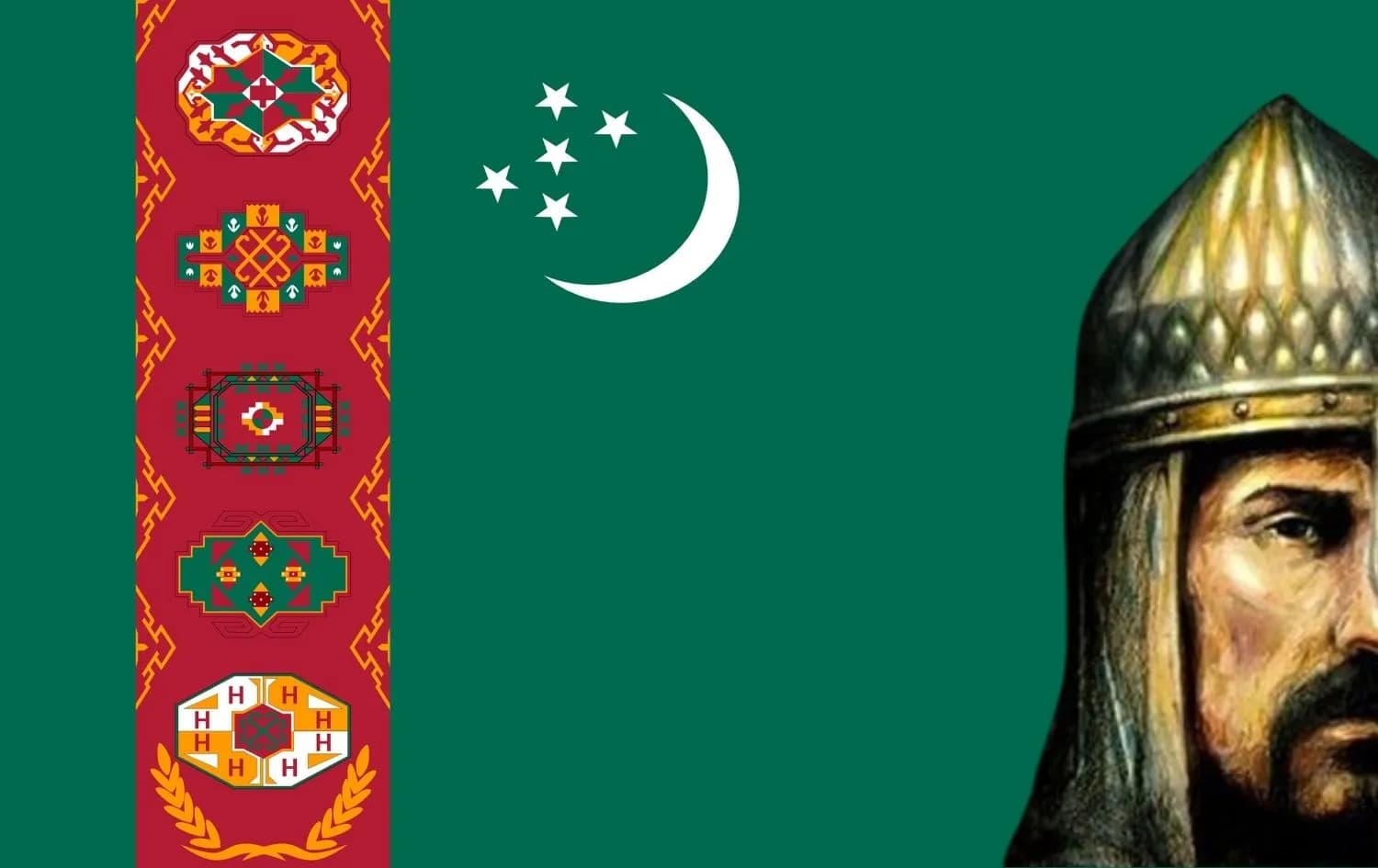
Today, Türkiye is proudly celebrating the 954th anniversary of the historic Victory of Manzikert (Malazgirt), a pivotal moment in Turkish and Turkmen history led by the Turkmen Sultan AlpArslan.
Throughout history, there are moments that change not only the fate of a nation but of all humanity. Malazgirt (Manzikert), August 26, 1071; is the day Anatolia became a Turkish homeland and the destiny of the Turkish nation was rewritten. Manzikert is an epic written with the bravery, valor, heroism, fearlessness, faith, love of homeland, unity, and solidarity of Turkmen warriors. This epic is the work of Sultan Alparslan and the Turkmen people. “The Seljuk Sultan AlpArslan, who defeated the Byzantines in Eastern Anatolia and opened this land to the Turks, is considered the founder of modern-day Türkiye“ according to Copeaux, E. (2000).
As reported by this French specialist, Atatürk founded the Turkish nation on great historical figures such as Alp Arslan and the Battle of Manzikert.
Sultan Alparslan was born in 1029 and was the second sultan of the Great Seljuk Empire. His name, meaning “Valiant Lion,” reflects his courageous and determined character. He became ruler in his thirties and, throughout his reign, expanded the borders of the state and opened the gates of Anatolia to the Turkmen people. This victory not only expanded the borders but also Turkified Anatolia and made it a permanent homeland.
“The victory won by Atatürk during the Great Offensive and the battle led by the High Command marked the final chapter in a series of triumphs that signaled to the world that Anatolia was irrevocably the homeland of the Turks. By an extraordinary coincidence, this battle also began on August 26, 851 years later. Thus, the success of Malazgirt (Manzikert) became the first link in this chain of victories.” according to Şahin (1992, p. 206), via the study of Copeaux, E. (2000).
The Battle of Malazgirt (Manzikert), in which the Byzantine army was defeated north of Lake Van by the troops of the Turkmen Seljuk Sultan Alp Arslan, also holds a very contemporary significance: for some, it marks the beginning of an ‘eternal Turkish homeland’; it is ‘since that date that the flag with the star and crescent has flown over this land according to Kapan (1996).
In Turkmenistan school textbooks, the following is taught: The Battle of Manzikert (Malazgirt) led to the conquest of Anatolia by the Turkmens. After this war, Anatolia was transformed into the homeland of the Oghuz Turkmensaccording to Ekayew (2020, p. 93).
Sultan Alparslan’s arrival at the battlefield wearing his burial shroud and declaring “Victory or death” made triumph inevitable. His words, “If I die, bury me where I fall from my horse,” symbolized that he had already embraced Anatolia as his homeland. On August 26, 1071, Alparslan’s army of twenty thousand fought with great courage against the Byzantine army of one hundred thousand. The victory achieved demonstrated that the Turks could accomplish great things through courage, unity, and determination.
And that glorious victory… From that day on, smoke began to rise from the chimneys of Yörük homes in Anatolia, tribes were established, caravans set out, and the Turkmen people took root in the lands they had made their homeland. The Battle of Malazgirt (Manzikert) was not just a field battle; it became a symbol of the Turkish nation’s will for freedom and independence.
After the death of Tuğrul Bey, Sultan Alp Arslan became the second ruler of the Great Seljuk Empire. He holds an important place not only in Turkmen or Turkish history but also in world history as stated by ÇELİK, Ö. Ü. R. İ., & ANNANYYAZOVA, O. (2020).
The echoes of Manzikert lived on for years in the hearts of every Turkmen as a heroic epic. Alparslan went down in history not only as a commander but as a great leader who shaped the destiny of a nation. This victory became the eternal symbol of the Turkish nation’s courage, unity, and love of homeland; the Turkish nation grew, developed, and strengthened.
The tribes, villages, and cities established in Anatolia spread Turkmen culture and lifestyle, turning these lands into a Turkish homeland. In the years following the Manzikert Victory, the Turkmen people brought their civilization, arts, beliefs, and language to these lands. The victory won under the leadership of Sultan Alparslan was not only a military success but also a symbol of a nation’s revival, freedom, and faith in the future.
Today, in the pages of history, the Battle of Manzikert and Sultan Alparslan stand as a unique legacy reminding the Turkish and the Turkmens nations of its spirit of heroism, courage, and unity. Every generation, when commemorating this victory, will remember Alparslan’s strategy, the sacrifice of the Turkmen soldiers, and the epic woven with the nation’s love of homeland, and will once again deeply feel that Anatolia is the eternal Turkish homeland…
Bibliography
ÇELİK, Ö. Ü. R. İ., & ANNANYYAZOVA, O. (2020). BÜYÜK SELÇUKLU HÜKÜMDARI SULTAN ALP ARSLAN VE KAYIP MEZARI. Sosyal Bilimlerde, 13.
Copeaux, E. (2000). Les prédécesseurs médiévaux d’Atatürk. Bilge kaghan et le sultan Alp Arslan. Revue des Mondes Musulmans et de la Méditerranée, (89-90), 217-243.
Ekayew, O. (2020). Türkmenistan’ın tarihi, umumi orta mekteplerin 8. sınıflar için ders kitabı. Türkmen Devlet Neşriyat Dairesi.
Ekayew, O. (2021). Türkmenistan’ın tarihi, orta mekteplerin 9. sınıflar için ders kitabı. Türkmen Devlet Neşriyat Dairesi.
KAPAN, I., 1996, « Zafer ruhu [L’esprit de la victoire] », Türkiye, 26 août.
Meryem Hojayeva
Contributing writer at EUReflect.
Follow EUReflect
See more of our reporting on Google
Mark EUReflect as a preferred source and our stories are ranked higher for you in Top Stories, Discover and Google News — and carry a “preferred” badge when they are cited in AI results.
Add EUReflect as a preferred source