The India–Israel Strategic Rapprochement and Its Regional Geopolitical Implications
India–Israel strategic cooperation, particularly in defense technologies, is reshaping the geopolitical balance in South Asia and the Middle East. This rapprochement affects Pakistan, China, and Iran, while instability in Afghanistan continues to influence regional security and major power competition. Jakhongir Khakimov, Member of the Turon Analysts Group
Introduction
In recent years, the balance of power within the international system has shifted considerably, with global politics moving steadily toward multipolarity. Against this complex geopolitical backdrop, the deepening of ties between India and Israel has emerged not merely as an expansion of bilateral cooperation, but as a factor with direct implications for regional and global security environments.
A New Phase in India–Israel Relations
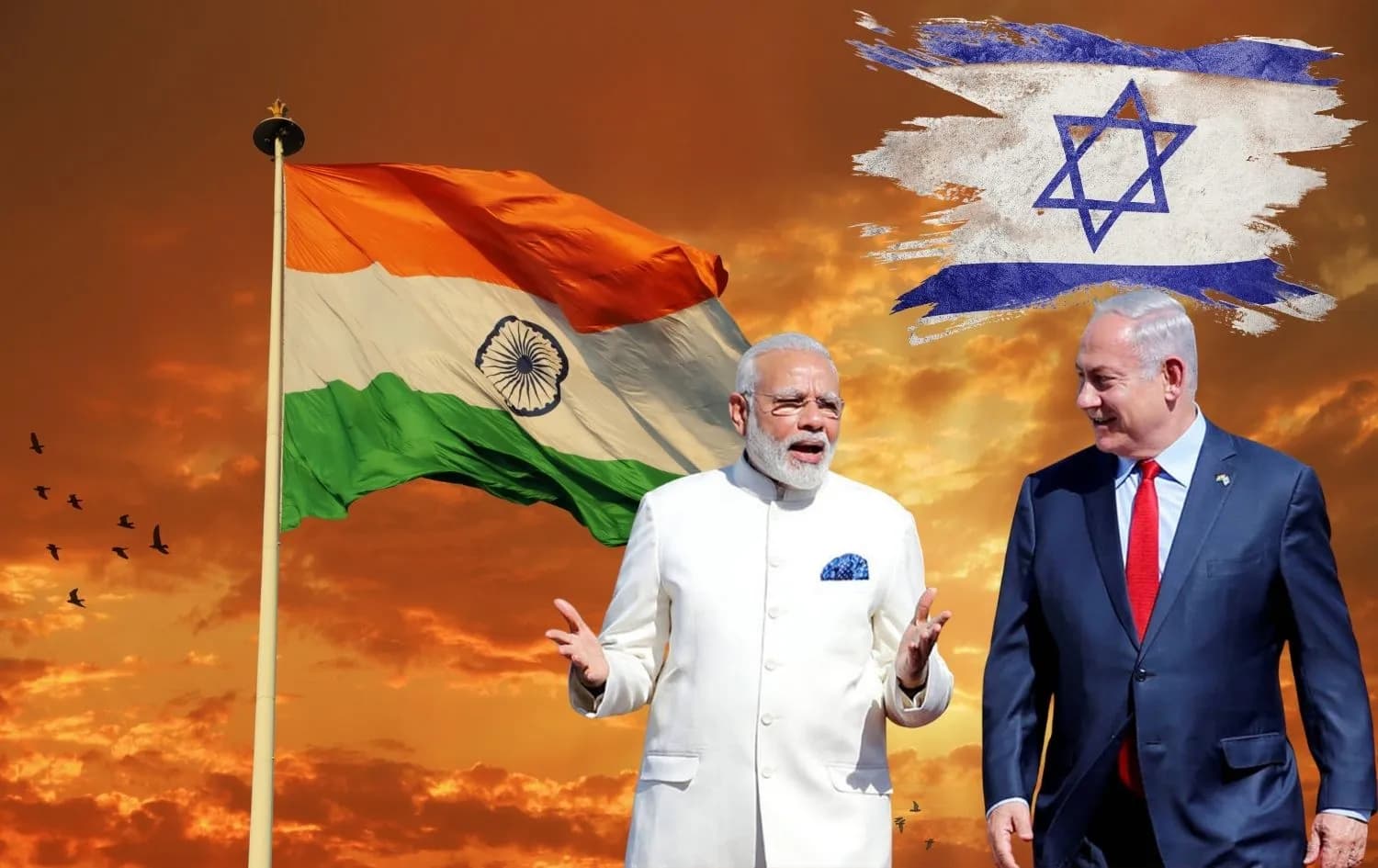
Narendra Modi's visit to Israel and his address to the parliament elevated the bilateral relationship to a new phase — one of strategic partnership. While India had previously offered diplomatic support to Israel on international platforms, including on the Gaza and Palestinian issues, the current phase places primary emphasis on deepening security and military cooperation.
Traditionally, India has relied on Russia for arms procurement. In recent years, however, New Delhi has pursued a policy of diversifying its military technologies. Israel's advanced defense industry — particularly its unmanned aerial vehicles, intelligence and surveillance systems — plays a significant role in this process. Israel is known to offer its most sophisticated military technologies only to a select circle of partners; accordingly, the establishment of high-level technological cooperation with India is viewed by New Delhi as a valuable strategic privilege.
Impact on Regional Geopolitical Balance
The India–Israel rapprochement serves as a geopolitical signal for a number of states.
First, from the perspective of Pakistan and China, this process may lead to a shift in the military balance in South Asia. India's acquisition of Israeli technologies — particularly drones and high-precision strike systems — directly impacts Pakistan's security doctrine. In response, Pakistan is deepening its military-technical cooperation with China in order to maintain strategic equilibrium.
Second, the rapprochement is also a source of concern for Iran. India's closer alignment with Israel may narrow Iran's room for geopolitical maneuver in the region. Particularly against the backdrop of tensions surrounding Iran's nuclear program, the emerging alliance configuration creates an unfavorable strategic environment for Tehran.
Third, the position of Arab states is becoming increasingly pragmatic. Countries such as the UAE, Qatar, and Bahrain — which are themselves expanding cooperation with Israel in economic, financial, and technological domains — are not reacting with sharp disapproval to the India–Israel rapprochement.
Afghanistan–Pakistan Relations and the 'Great Game' Factor
The border clashes between Afghanistan and Pakistan — including the incidents of February — cannot be assessed solely within the framework of bilateral conflict. Some analysts interpret these developments within the broader context of competing interests among major powers.
The Pakistani side has raised the Indian and Israeli factor in connection with the origins of certain modern drones and military technologies. Although these claims have not been officially confirmed, they indicate an intensification of the information and propaganda battle in the region.
From a geopolitical standpoint, instability in Afghanistan increases security pressure on Iran's eastern borders. According to some analyses, this creates an opportunity for Israel to limit Iran's activism in other theaters by redirecting Iranian strategic resources toward internal and regional security concerns.
Russia's Position and Central Asian Security
In recent years, Russia has substantially revised its policy on Afghanistan. Moscow has expanded its engagement with the Taliban, moving closer to accepting them as a significant actor in Afghanistan's political reality.
From Central Asia's perspective, instability in Afghanistan sustains Russia's role as a security guarantor in the region. In particular, threats along the Tajik border provide justification for Russia's military and political presence. Conversely, should stability be established in the region — with transport corridors opened and economic integration deepened — Russia's traditional mechanisms of influence could weaken.
Conclusion
The international system is currently undergoing a transition toward a multipolar structure. The strategic rapprochement between India and Israel extends beyond bilateral cooperation, directly affecting the geopolitical balance vis-à-vis Pakistan, China, and Iran.
Afghanistan remains a geostrategic space where the interests of major powers intersect. The level of instability or stability in this territory continues to serve as a factor influencing the security architecture not only of South Asia, but of Central Asia and the Middle East as well.
Jakhongir Khakimov,
Member of the Turon Analysts Group
Jakhongir Khakimov
Contributing writer at EUReflect.
Follow EUReflect
See more of our reporting on Google
Mark EUReflect as a preferred source and our stories are ranked higher for you in Top Stories, Discover and Google News — and carry a “preferred” badge when they are cited in AI results.
Add EUReflect as a preferred source