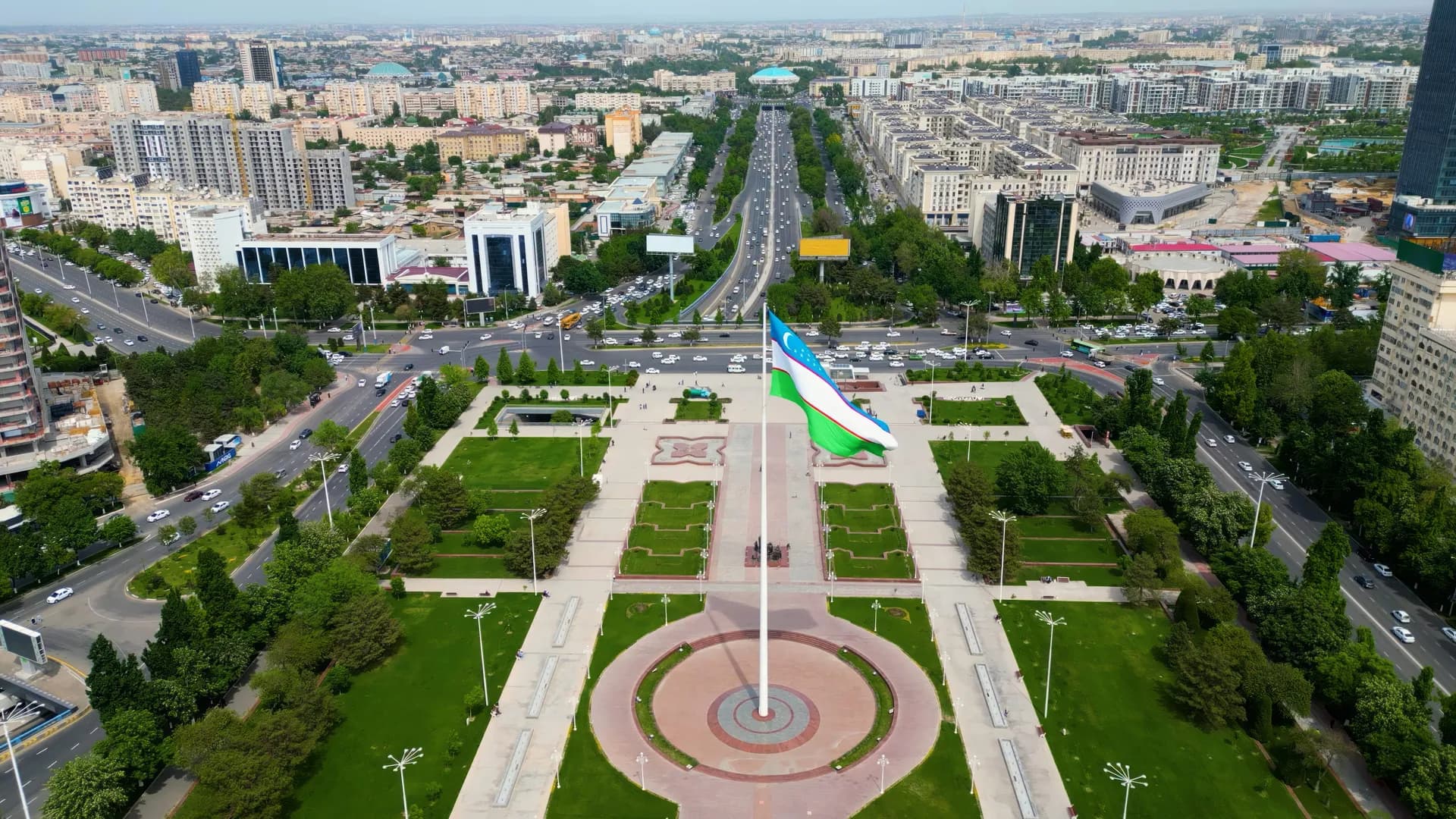
The Regional Inclusivity Model of New Uzbekistan’s Foreign Policy
The foreign policy of New Uzbekistan represents a comprehensive and pragmatic framework that places regional inclusivity, cooperative development, and strategic connectivity at its core.
Islomkhon Gafarov, PhD in Political Science, Policy Analyst at the Center for Progressive Reforms, Senior Lecturer at the University of World Economy and Diplomacy, Tashkent, Uzbekistan.
Mirjalol Murtozaev, Associated Researcher at the Center for Progressive Reforms, Tashkent, Uzbekistan.
Since 2016, New Uzbekistan’s foreign policy has been shaping a new diplomatic model based on the principle of regional inclusivity. At the core of this approach lies a commitment to strengthening mutual trust, transparency, and pragmatic cooperation among Central Asian states. Under the leadership of President Shavkat Mirziyoyev, and as articulated in his article“Central Asia on the verge of a new era”, the Central Asian Heads of State Consultative Meetings have become a permanent mechanism for regional dialogue, fostering strategic alignment and cooperative action among the countries of the region. In particular, the seventh summit, scheduled to take place in Tashkent on 15–16 November of this year, represents a logical continuation of this process and is expected to further consolidate political coherence, economic cooperation, and regional stability.
Foreign policy principles of Uzbekistan
Uzbekistan’s foreign policy is built upon a set of fundamental principles that reflect the country’s strategic priorities, historical conditions, and the dynamics of the contemporary geopolitical environment. These principles constitute the core of the “New Uzbekistan” diplomatic doctrine and guide the nation’s proactive engagement in regional and global affairs. Central to this framework are pragmatism, multi-vector diplomacy, Uzbekistan’s emergingmediatory role, the prioritization of Central Asia, good-neighborly relations, and an enhanced focus on economic diplomacy. Through these pillars, Uzbekistan’s foreign policy demonstrates a coherent institutional commitment to reform, modernization, and the expansion of international cooperation.
The Priority of Central Asia
Central Asia has consistently held a strategically pivotal position in Uzbekistan’s foreign policy. At the initiative of the President of Uzbekistan, the Consultative Meeting of the Heads of State of Central Asian countries wasfirst convened eight years ago, and symbolically, it has now returned to Tashkent. Over the years, these summits have played a decisive role in restoring political trust among regional states, achieving significant progress in border delimitation and demarcation, managing transboundary water resources, and developing transport and logistics corridors. The upcoming meeting, scheduled to take place in Tashkent, is expected to mark a significant milestone in this ongoing process.
The “Region-to-Region” Model
In Uzbekistan’s contemporary foreign policy strategy, the “region-to-region” model of dialogue is gaining increasing prominence. This approach is aimed at developing systemic and multidimensional linkages between different regional spaces. Whereas earlier emphasis was placed primarily on the C5+1 formats, in which the Central Asian states engage in dialogue with major global power centers, the new framework enables Uzbekistan to move beyond traditional bilateral relations and to participate actively in multilateral platforms of interregional cooperation. For instance, Uzbekistan has been activelypromoting engagement within the frameworks of “Central Asia–South Asia” and “Central Asia–GCC (Gulf Cooperation Council)”. Currently, preparations are underway to launch a new platform for dialogue between “Central Asia and Northern Europe”. These initiatives open up new geo-economic opportunities in the fields of trade, transport, and logistics, while simultaneously laying the foundation for the emergence of a new format of diplomacy based on connectivity and interregional complementarity.
Uzbekistan as an Inter-Civilizational Actor
In Uzbekistan’s contemporary foreign policy, the civilizational dimension has acquired increasing significance. The country’s active expansion of cooperation within the Organization of Turkic States (OTS) – which unites countries of the Turkic world linked by common historical and cultural ties – vividly illustrates this trend. Within the OTS framework, Uzbekistan advocates not only for deeper economic integration and the development of transport connectivity, but also for the strengthening of political and humanitarianunity among Turkic nations. As a result, a new civilizational synergy is emerging in the region, founded upon a harmonious combination of economic interests and historical solidarity. However, Tashkent’s approach is not confined solely to the Turkic format. Uzbekistan consistently promotes the principle of inclusivity in its regional diplomacy. For example, despite Tajikistan’s non-membership in the OTS, Uzbekistan supports its participation in regional initiatives and seeks to prevent its isolation from key economic and cultural projects. This approach reflects the philosophy of Uzbekistan’s foreign policy, which envisions the country not merely as part of the Turkic world, but as a bridge between diverse civilizations and cultural spaces.
Conference Diplomacy
In recent years, Uzbekistan has rapidly emerged as an important platform for international diplomacy, where new formats of global political and intellectual dialogue are being shaped. By hosting major conferences and forums across a wide spectrum of thematic areas, the country is gradually establishing itself as a hub of international engagement and intellectual exchange. Over the past months, Uzbekistan has hosted a series of significant events, including theTermezDialogue (19-21 May), the First Central Asia–GCC Think TankForum (28-29 April), the Fergana PeaceForum (15-16 October), the U.S.–Central Asia Think TankForum (1-2 October), the Central Asia–Russia Think TankForum (6 October), and the Uzbekistan–Türkiye Strategic VisionForum, held in October of this year. Parallel to these developments, Uzbekistan has been building a robust intellectual infrastructure of diplomacy. Institutions such as the Institute for Strategic and Interregional Studies (ISRS), the Center for Progressive Reforms (CPR), the Institute for Advanced International Studies (IAIS), the International Institute for Central Asia (IICA), and the Center for Foreign Policy Studies (CFPS) function not only as traditional think tanks but also as “do tanks” – entities that go beyond analysis to propose concrete policy initiatives and actionable solutions. Thus, Uzbekistan’s conference diplomacy is evolving from a format of dialogue and idea exchange toward practical cooperation, a transformation that may be described as a shift from “diplomacy of dialogue” to a “diplomacy of action”.
Capacity Building Policy
In recent years, Uzbekistan’s foreign policy has placed growing emphasis on human capital development and on fostering a systematic dialogue with citizens residing abroad. This approach reflects a transition toward a more human-centered diplomacy, in which citizens and compatriots living overseas are regarded as a strategic resource for the country’s modernization. During each of his foreign visits, President Shavkat Mirziyoyev meets with representatives of the Uzbek diaspora, entrepreneurs, and students, listening to their proposals and encouraging initiatives aimed at strengthening ties with the homeland. To institutionalize this policy, Uzbekistan has launched a range of specialized programs designed to support compatriots abroad and harness their potential for national development. Among these, the “Buyuk Kelajak”Forum has become the first platform to unite the intellectual and professional resources of Uzbeks living abroad; the “Vatandoshlar” Program provides practical assistance to Uzbek citizens overseas; and the “El-Yurt Umidi” Foundation systematically supports young professionals studying and gaining experience abroad, ensuring their subsequent integration into the country’s academic and administrative institutions. These initiatives together shape a new model of foreign policy, in which Uzbekistan increasingly views its diaspora not merely as a community abroad, but as an active participant in the process of national modernization.
Conclusion
The foreign policy of New Uzbekistan represents a comprehensive and pragmatic framework that places regional inclusivity, cooperative development, and strategic connectivity at its core. It reflects the country’s evolution from traditional bilateral engagements to a multidimensional “region-to-region” approach, underpinned by key pillars such as economic interdependence, civilizational dialogue, conference diplomacy, and diaspora engagement. In this context, the forthcoming Tashkent Summit highlights Uzbekistan’s steadfast commitment to fostering regional cohesion, shared prosperity, and sustainable stability, while affirming its role as a unifying and constructive actor in Central Asia and the broader international arena.
Islomkhon Gafarov
Contributing writer at EUReflect.
Follow EUReflect
See more of our reporting on Google
Mark EUReflect as a preferred source and our stories are ranked higher for you in Top Stories, Discover and Google News — and carry a “preferred” badge when they are cited in AI results.
Add EUReflect as a preferred source