The Year of “Central Asia Plus” Summits and Their Implications for Regional Cooperation and Sustainable Development
In 2025, Central Asia reshaped its foreign policy through an unprecedented series of “Central Asia Plus (C5+1)” summits with global powers. This diplomacy strengthened multi-vector engagement, advanced regional institutionalization, and positioned the C5 as active, strategic actors in global geopolitics.
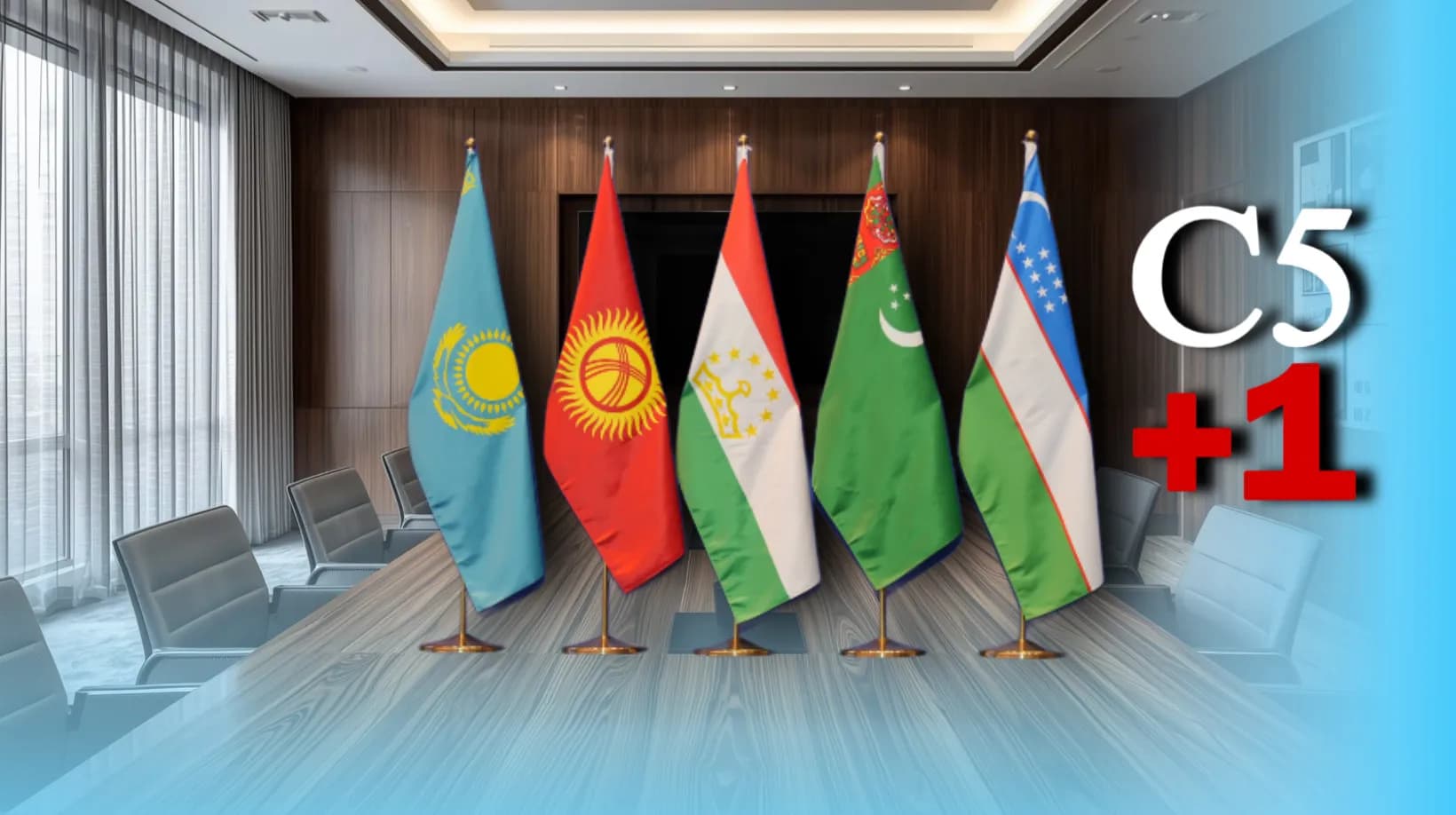
The foreign policy landscape of 2025 revealed a distinctive pattern in Central Asian international engagement, characterized by an unprecedented series of high-level“Central Asia Plus” also known as “C5+1” summits with major global powers and strategic partners. This diplomatic intensityencompassing six major summit meetings within2025represents a significant evolution in the region’s collective approach to external relations and multi-vector foreign policy.
This phenomenon reflects two concurrent dynamics. First, it demonstrates the increasingly active and pragmatic foreign policy orientation of the five Central Asianstates (Uzbekistan, Turkmenistan, Tajikistan, Kyrgyzstanand Kazakhstan, also referred as C5) and their commitment to balanced multi-vectorism through open dialogue with diverse international partners. Second, it signals the growing strategic interest of major external actors in the Central Asian region, particularly their recognition of the C5 as a coherent subject and actor of international relations.
The intensification of external engagement paralleled significant developments in intra-regional cooperation mechanisms. The Seventh Consultative Meeting of the Heads of State of Central Asia, held in Tashkent on November 15-16, 2025, marked akeymoment in regional institutionalization. Under the chairmanship of Uzbekistan’s PresidentShavkatMirziyoyev, this summit achieved several notable outcomes, including the historic accession of Azerbaijan as a full member, thereby expanding the geographic and strategic scope of Central Asian cooperation.
Most significantly, PresidentMirziyoyev proposed the transformation of the Consultative Meetings framework into a formalized “Central Asia Community” with a permanent Secretariat. This evolution of regional cooperation to a qualitatively new level,as prioritized in the“Uzbekistan – 2030”Strategy, represents a critical step toward codifying years of regional dialogue across diverse sectors, including resource management and energy cooperation.Such institutionalization efforts demonstrate the region’s commitment to establishing sustainable mechanisms for addressing shared challenges and coordinating external engagement strategies.
The year 2025 witnessed an exceptional concentration of“Central Asia Plus” summits, systematically engaging the C5 with its principal external partners:
Thefirst official“Central Asia-European Union”Summit convened in Samarkand, Uzbekistan (April 4, 2025), marking a strategic reorientation of European engagement toward the region. The summit prioritized connectivity enhancement through the Middle Corridor (Trans-Caspian International Transport Route), support for domestic reforms within Central Asian states, and operationalization of the EU’s Global Gateway investment initiative.
The first“Central Asia-Italy” Summit in Astana, Kazakhstan (May 30, 2025) adopted a Joint Declaration emphasizing strategic partnership across multiple domains: renewable energy development, infrastructure connectivity aligned with the Global Gateway framework, economic integration, water security, environmental sustainability, and security cooperation. Italy positioned itself as a bridge between Central Asian markets and European economies, proposing initiatives including a Central Asia-Italy scientific-educational consortium and tourism alliances.
The second“Central Asia-China” Summit in Astana (June 17, 2025)produced the landmark Treaty on Eternal Good-Neighborliness, Friendship and Cooperation and the Astana Declaration. The summit emphasized accelerated implementation of Belt and Road Initiative infrastructure projects, cooperation in green mining technologies, and formally designated 2025-2026 as the Years of High-Quality Development for China-Central Asia Cooperation.
The second“Central Asia-Russia” Summit in Dushanbe, Tajikistan (October 9, 2025), concentrated on regional security coordination, counter-extremism measures, and economic integration within Commonwealth of Independent States structures, reaffirmingRussia’s continued strategic engagement with the region.
The second“C5+1” – “Central Asia-USA”Summit in Washington, D.C. (November 6, 2025), commemorated the tenth anniversary of this format and represented a substantive shift from diplomatic rhetoric toward concrete economic commitments. The summit, accompanied by a major business forum, produced tangible agreements in critical minerals extraction, advanced technology transfer, and infrastructure development, reflecting U.S. strategic objectives in diversifying global supply chains while offering Central Asian states enhanced market access and technological partnerships.
The inaugural“Central Asia-Japan” Summit in Tokyo (December 19-20, 2025) yielded the Tokyo Declaration, launched the “CA+JAD Tokyo Initiative”, and secured Japanese commitment to invest approximately $19 billion in regional projects over five years. The summit established a biennial meeting schedule and initiated work on a long-term“Central Asia-Japan 2040” cooperation strategy, alongside the creation of an Expert Forum for sustained engagement.
The summit architecture reveals several analytically significant patterns in term of geopolitical and strategicperspectives.
First, the engagement encompasses both established great powers (United States, China, Russia) and significant middle powers with historical regional ties (Japan, EU and its member states). This diversity reflects the C5’s successful implementation of balanced multi-vectorism, avoiding exclusive alignment with any single external actor.
Second, these summits demonstrate a shared structural approach emphasizing multi-level engagement. Beyond high-level political declarations, each summit incorporated mechanisms for people-to-people connectivity, business-to-business partnerships, academic collaboration, and parliamentary exchanges. This bottom-up dimension aims to create sustainable foundations for strategic partnerships beyond governmental commitments.
Third, the summit format enabled simultaneous advancement of both collective C5 interests and bilateral national priorities. For instance, during the Japan summit, Uzbekistan secured bilateral agreements exceeding $12 billion and elevated bilateral relations to an expanded strategic partnership level, demonstrating how the“Plus” format serves dual functions: strengthening regional collective action while advancing individual national interests.
Contrary to traditional great power competition narratives that position Central Asia as a passive arena for external rivalries, the 2025 summit pattern reveals the C5 states as active agents pursuing strategic autonomy. The contemporary geopolitical contest over Central Asia is characterized less by direct territorial control or military competition than by influence-seeking through political-diplomatic engagement and soft power projection.
The C5’s ability to organize this intensive summit schedule while maintaining productive relations with competing powers demonstrates sophisticated diplomatic capacity. Rather than being reduced to pawns in a“New Great Game”, Central Asian states have leveraged external competition to secure substantial investment commitments, technology transfers, and infrastructure development.
The 2025 summit proliferation has established Central Asia as an increasingly significant actor in global geopolitics rather than a peripheral region. This enhanced international profile creates both opportunities and challenges for regional states.
Looking toward 2026, the intensive pace of“Central Asia Plus”summits will likely moderate due to the periodic nature of such engagements. However, the diplomatic capital accumulated in 2025 positions the region favorably for sustained international engagement through broader multilateral platforms, including BRICS Plus, Belt and Road Initiative forums, and notably as guest participants (Uzbekistan and Kazakhstan) at the 2026 G20 Summit in Miami. Such diverse engagement will be crucial for maintaining the balanced foreign policy orientation and strategic autonomy that characterize contemporary Central Asian diplomacy.
Overall, the “Central Asia Plus” summit architecture of 2025 represents a significant evolution in regional international relations, reflecting both the growing strategic importance of Central Asia in global geopolitics and the increasing sophistication of C5 diplomatic coordination. The parallel development of intra-regional institutionalization mechanisms and intensified external engagement demonstrates the region’s capacity to balance internal cohesion with external openness.
This dual process,regional consolidation and diversified external partnerships,positions Central Asia to navigate contemporary geopolitical complexity while advancing collective and individual national interests. The sustainability of this model will depend on the region’s continued ability to maintain strategic autonomy, manage competing external interests, and translate diplomatic engagement into tangible developmental outcomes for regional populations and sustainable development.
Farrukh Khakimov
Contributing writer at EUReflect.
Follow EUReflect
See more of our reporting on Google
Mark EUReflect as a preferred source and our stories are ranked higher for you in Top Stories, Discover and Google News — and carry a “preferred” badge when they are cited in AI results.
Add EUReflect as a preferred source