Towing icebergs to the Arabian Peninsula: an innovative solution to the water crisis or a technological illusion?
With the Gulf relying on desalination and depleting groundwater, the UAE's iceberg-towing idea returns. Is it a real water source or a technological illusion?
Research. By Saydimatova Shandora, Master’s student at the University of World Economy and Diplomacy, Tashkent, Uzbekistan.
Introduction: The Water Crisis on the Arabian Peninsula as a Strategic Challenge
Freshwater scarcity is one of the most serious structural challenges facing the Arabian Peninsula. The region’s geographical and climatic characteristics – high air temperatures, extremely low precipitation, high evaporation rates, and the absence of perennial river systems – create conditions in which the natural replenishment of water resources falls far short of growing demand.
The member states of the Gulf Cooperation Council (GCC) – Saudi Arabia, the United Arab Emirates, Qatar, Kuwait, Bahrain, and Oman – are particularly vulnerable. Urbanization, population growth, and the development of the industrial, agricultural, and energy sectors place further strain on limited water resources.
According to regional assessments, the Gulf states have an extremely low endowment of naturally renewable water resources. To compensate for this deficit, they rely heavily on seawater desalination. The GCC countries play a major role in the global desalination sector, accounting for a significant share of worldwide desalination capacity and output.
However, this reliance on desalination introduces additional risks. First, the process is highly energy-intensive. Second, the discharge of concentrated saline solution (brine) can have a detrimental impact on marine ecosystems. Third, water supply becomes dependent on the uninterrupted operation of energy and industrial infrastructure.
The depletion of groundwater poses a further threat. Recent studies indicate a significant decline in groundwater reserves within the transboundary aquifer systems of the Arabian Peninsula. Particularly severe depletion is observed in the central and north-central regions of Saudi Arabia.
Under these circumstances, the search for alternative sources of fresh water takes on not only economic but also strategic significance. One such alternative is the idea of transporting icebergs from Antarctica to arid regions.
Project history: from scientific hypothesis to UAE initiative
The concept of using icebergs as a source of fresh water is not a modern invention. As early as the 19th and 20th centuries, researchers and entrepreneurs explored the possibility of transporting polar ice to arid regions. However, the high cost of transport, the limited state of maritime technology at the time, and significant ice loss due to melting prevented such projects from being realized
In the 1970s, the idea gained renewed attention following proposals to tow Antarctic icebergs to the shores of Saudi Arabia. Ultimately, these projects did not come to fruition due to various technical and financial challenges.
A new phase of discussion began in 2017, when the Abu Dhabi-based firm National Advisor Bureau Limited unveiled the «UAE Iceberg Project». The company’s head, Abdulla Alshehi, proposed transporting large icebergs from Antarctica to the eastern coast of the UAE, specifically near the emirate of Fujairah.
The initial plans outlined several stages: selecting a suitable iceberg off the coast of Antarctica; organizing its transport using tugboats and leveraging ocean currents; protecting the ice mass from the impact of waves and relatively warm seawater; delivering it to the coast of Fujairah; and subsequently extracting, processing, and storing the fresh water.
In 2018, the UAE’s national news agency, WAM, reported on the formation of a scientific committee and the development of technical solutions. At that time, it was suggested that a pilot phase could begin as early as 2019, with the project’s preliminary cost estimated at $50-60 million.
However, these initial timelines were not met. In 2019, the head of the initiative cited different financial estimates: $80–100 million for a pilot phase and $100-150 million for the subsequent transport of a large iceberg. A report by «The National» also noted that the project faced funding and logistical challenges and was not an official UAE government program.
As of November 2026, there is no evidence in available open sources to suggest that the «UAE Iceberg Project» has moved into full-scale industrial implementation or that an iceberg has been delivered to the UAE. Therefore, it is more accurate to characterize it as a widely publicized private initiative – a scientific and engineering concept – rather than an active government program.
Technical feasibility: is it possible to transport an iceberg from Antarctica?
One of the most significant recent studies on this issue is a paper by American researcher Alan Condron, published in January 2023 in the scientific journal «Scientific Reports» and titled «Towing icebergs to arid regions to reduce water scarcity».
The study employed a numerical model to estimate the disintegration and melting of icebergs during transport from Antarctica to arid regions. The author specifically examined two destinations: South Africa and the United Arab Emirates (UAE).
The findings are particularly noteworthy. According to the calculations, the route from Antarctica to the coast of the UAE spans approximately 9,000 kilometers. At an estimated towing speed of about 0.5 meters per second, the journey could take as long as 206 days.
For the purpose of transporting an iceberg without specialized protective measures, the model considers an initial ice mass measuring approximately 2,000 meters in length and 600 meters in thickness. By the end of the journey, these dimensions would be significantly reduced – to roughly 312 meters in length and 112 meters in thickness. Under these conditions, the potential volume of remaining fresh water would be approximately 6.3 billion liters.
A major challenge is the requirement for multiple high-powered tugboats. The study explores scenarios involving roughly 10 to 20 tugs, which underscores the immense complexity of such an operation.
Special attention must also be paid to the geographical conditions at the final destination. The Strait of Hormuz contains areas with depths of only about 70-100 meters, which makes the direct delivery of a massive iceberg to certain coastal regions of the Persian Gulf problematic. In Kondron’s study, Fujairah-located on the coast of the Gulf of Oman—is considered a more suitable arrival point, as the ocean depths there make such an operation a more realistic prospect.
Thus, the challenge lies not so much in the feasibility of the towing process itself, but rather in the need to ensure that a sufficient mass of ice is preserved throughout the entire route.
Is it possible to reduce ice loss?
A study by Kondron examined a scenario in which an iceberg is protected from disintegration caused by wave action. In this case, the minimum initial dimensions required are reduced to approximately 1,250 meters in length and 600 meters in thickness.
The model indicates that a protected iceberg could deliver about 31.8 billion liters of water – roughly five times the amount possible without such protection.
However, this introduces an additional engineering challenge: developing an insulation system capable of withstanding months of exposure to waves, wind, saltwater, and mechanical stress. Furthermore, the covering itself must be environmentally safe and must not contribute to ocean pollution.
A 2021 study published in the journal «Energies» also explores the mathematical modeling of iceberg mass loss, demonstrating that route selection, towing speed, and the utilization of ocean currents are critical factors for the energy efficiency of the transport process.
In June 2026, a paper titled «Optimization of Iceberg Towin» was published in the «International Journal of Offshore and Polar Engineering». The authors examine various optimization strategies, including adjusting the iceberg’s orientation and leveraging the water jets from vessel propulsion systems. This reflects ongoing engineering research into the technology, though it does not, in itself, mean that a project to deliver icebergs to the Arabian region has become practically feasible.
Can iceberg solve the problem of water scarcity?
This is the central question of the entire project. The presence of a vast volume of fresh water in an Antarctic iceberg does not necessarily mean that transporting it can ensure long-term water security for the region.
Let us examine the findings of Kondron’s study. An iceberg protected against wave erosion could potentially deliver approximately 31.8 billion liters of water. At first glance, this is a colossal volume; however, it must be weighed against the actual needs of the UAE.
The study estimates the country’s total annual water consumption at approximately 9 trillion liters. Given this figure, a single protected iceberg would provide only about 0.35 % of the annual demand.
This statistic highlights the limitations of the project as a standalone tool for ensuring water security. Even if the transportation process proves technically successful, its contribution toward meeting the total demand for water would remain relatively small.
One further clarification is necessary here. The study notes that an unprotected iceberg – if successfully transported – could theoretically meet the basic drinking water requirements of the UAE’s population for 189-255 days. However, this calculation is based on the minimum amount of water required for survival, rather than the country’s actual consumption levels. Consequently, it would be inaccurate to use this figure as evidence that such a method could provide a comprehensive water supply.
Therefore, while iceberg towing might be considered an additional source of water, it cannot be viewed as a standalone solution to the region’s water crisis.
Economic challenges: how cost-effective is transporting ice compared to desalination?
Currently, the Persian Gulf states possess a well-developed infrastructure for seawater desalination. Saudi Arabia, the UAE, and other nations are investing in the construction of state-of-the-art desalination plants that utilize reverse osmosis and thermal desalination technologies.
Unlike the towing of icebergs, these technologies are already deployed on an industrial scale and provide relatively predictable volumes of water production.
The primary economic challenge of towing icebergs is that project costs extend well beyond the mere chartering of vessels. One must account for the identification and scientific assessment of a suitable iceberg, the organization of an expedition, the deployment of several high-powered tugboats, the fabrication and installation of protective coverings, satellite monitoring and navigation, insurance and risk management, the construction of infrastructure for water extraction, processing, and storage – as well as potential delays and the loss of ice mass.
The energy component is particularly significant. Towing a massive body of ice over a period of more than six months would require a substantial amount of fuel. If the operation relies on vessels with conventional engines, the resulting greenhouse gas emissions could severely diminish the project's environmental appeal.
At the same time, it should not be assumed that desalination is automatically the cheaper option in every scenario. Its cost depends on the energy source, the scale of the facility, the technology employed, the cost of capital, and environmental regulatory requirements.
Therefore, an objective assessment requires a comparative calculation of the total cost per cubic meter of water delivered to the consumer. Such a comparison must encompass not only transportation and production expenses but also the costs associated with subsequent purification, storage, and distribution. There is currently no proven industrial experience to suggest that iceberg delivery would be economically competitive with modern desalination plants.
Environmental risks and consequences for marine ecosystems
Although the concept of transporting icebergs is presented as an eco-friendly alternative to the industrial production of fresh water, its implementation could create its own set of environmental challenges.
The first issue concerns the impact on Antarctica. Icebergs are an integral part of the polar ice system, formed when pieces break off from glaciers and ice shelves. While the natural calving of icebergs is a standard environmental process, this does not mean that the industrial-scale removal of ice masses is inherently safe.
It is essential to distinguish between the natural formation of icebergs and deliberate human intervention in glacial systems. To minimize environmental impact, any such project should focus exclusively on icebergs that have already calved and are drifting freely, rather than involving the mechanical detachment of large ice masses from glaciers or ice shelves.
The second issue relates to marine ecosystems. Antarctic waters are characterized by complex biological processes linked to nutrient circulation, sea ice, and the presence of highly specialized organisms. Moving large masses of ice could alter local environmental conditions, though the full extent of such consequences remains poorly understood.
A third risk involves the transport process itself. Deploying a large number of tugboats over the course of several months would lead to increased carbon dioxide emissions, marine pollution, and the potential for accidents.
Finally, one must consider the impact on the marine environment at the destination. The large-scale melting of an iceberg would introduce significant volumes of cold, fresh water into the local area. This could affect the temperature, salinity, and density structure of coastal waters. The scale of these consequences would depend on the size of the iceberg, its rate of melting, and the specific circulation patterns of the Gulf of Oman. Thus, the environmental assessment of the project must cover the entire life cycle of the operation: from the selection of an iceberg to the extraction and distribution of the water.
International legal aspects: who owns icebergs?
The international legal dimension of this initiative warrants special attention. Since the proposed route begins in the Antarctic and traverses international maritime spaces, the project engages several legal regimes.
First and foremost, one must consider the 1959 Antarctic Treaty and the 1991 Protocol on Environmental Protection to the Antarctic Treaty.
The Protocol establishes stringent environmental requirements for activities in the Antarctic, including the mandate for a prior environmental impact assessment. It also enshrines a specific regime for the protection of the Antarctic natural environment.
However, it cannot be automatically assumed that the transport of a freely drifting iceberg is explicitly prohibited by these instruments. The legal regime governing a specific operation will depend on where the iceberg is sourced, the nature of the intervention in the natural environment, and the specific character of the activities conducted in the Antarctic.
A second critical instrument is the 1982 United Nations Convention on the Law of the Sea (UNCLOS). It governs the use of maritime spaces, navigation, the protection of the marine environment, and state responsibility for pollution.
The project raises a number of questions in this context. What legal regime applies to an iceberg that has already calved from an Antarctic glacier and is drifting freely on the high seas? What permits are required for its acquisition and transport? Who bears liability for environmental damage in the event of an accident? Which international standards govern the use of protective materials and the subsequent processing of the ice? What obligations arise for the state that receives the iceberg?
The issue of international liability is particularly significant. Should the towing process result in damage to the marine ecosystem or pollution of the waters, it would be necessary to determine the liability of the project operators and the states under whose jurisdiction such activities are carried out. Thus, international legal regulation should not be a secondary element, but rather one of the prerequisites for the implementation of the project.
The geopolitical dimension: water as a tool for strategic security
While the Persian Gulf states possess substantial financial resources and well-developed energy sectors, their natural freshwater endowment remains limited. Consequently, water supply has become a factor of national security.
The towing of icebergs has the potential to transform existing approaches to ensuring water security in the region.
First, such a project could contribute to the diversification of water sources. Currently, the states in the region rely heavily on seawater desalination. Introducing an additional source of freshwater could reduce their dependence on specific technological and energy systems. However, such diversification would only be meaningful if iceberg deliveries were to become regular, predictable, and economically viable.
Second, the project could serve as a vehicle for international cooperation. Transporting icebergs would require collaboration among states, scientific institutions, shipping companies, and international environmental organizations. One could envision the creation of an international consortium involving Saudi Arabia, the UAE, Oman, and other regional states.
Such a structure could oversee the funding of scientific research, the development of transport technologies, the conduct of environmental impact assessments, the establishment of a shared monitoring system, the formulation of legal standards, and the distribution of financial and technological risks.
Third, the initiative could intensify competition for leadership in the field of water technologies. The UAE already positions itself as a regional hub for innovation in energy, sustainable development, and water security. Implementing a project of this nature could further strengthen the country’s international standing. However, it should be noted that technological leadership does not necessarily imply the immediate implementation of a project. Even investments in research and the development of engineering solutions can serve as part of a broader strategy for advancing water technologies.
Fourth, the project carries significance within the context of climate diplomacy. As climate change progresses, issues surrounding access to fresh water are increasingly becoming a subject of international negotiation. Utilizing polar resources to meet the needs of arid regions could spark discussions regarding the equitable distribution of natural resources, environmental responsibility, and international governance.
At the same time, it is crucial to ensure that Antarctic natural resources do not become an object of purely commercial competition.
Consequently, the towing of icebergs is of potential interest not only as an engineering project but also as a new topic for international environmental and water diplomacy.
Alternatives and prospects: what should the solution to the water crisis look like?
The primary weakness of the iceberg-towing concept is that, while it offers a way to deliver an additional volume of water, it fails to address the structural causes of the shortage. Even the successful delivery of one or more icebergs would not resolve issues such as inefficient water consumption, the depletion of groundwater, or rising demand.
Therefore, the prospects for such a project must be evaluated within the framework of a comprehensive water security strategy.
The first area of focus should be the modernization of desalination. Advancing reverse osmosis technologies, integrating renewable energy sources, and improving the energy efficiency of desalination plants can lead to more sustainable freshwater production. Combining solar energy with modern desalination systems is particularly promising, as it could reduce the water sector’s reliance on fossil fuels.
A second area is the reuse of wastewater. Treated wastewater can be utilized for agricultural, industrial, and municipal purposes, thereby reducing the need to use high-quality drinking water in applications where such purity is not required.
A third area involves the protection of groundwater. Governments must limit the over-extraction of non-renewable aquifers, enhance monitoring systems, and incentivize a transition toward more efficient irrigation methods.
A fourth area could be the experimental towing of icebergs. Rather than jumping immediately into a large-scale project, it would be more prudent to conduct phased testing.
The first phase should involve satellite monitoring to identify a suitable iceberg. The second phase would entail computer modeling of the route, with an assessment of potential mass loss and associated risks. In the third phase, protective coverings should be tested to verify their effectiveness in a marine environment. Following this, a limited experimental towing voyage could be conducted, subject to subsequent independent environmental and economic assessment.
Only once reliable results have been obtained can a decision be made regarding the feasibility of scaling up the project.
Furthermore, environmental requirements and international legal constraints must be taken into account from the very early stages.
Conclusion
The concept of transporting Antarctic icebergs to the Arabian Peninsula serves as an intriguing example of exploring unconventional solutions to the global freshwater scarcity problem.
The relevance of this initiative stems from the objective challenges faced by states in the region, including the depletion of groundwater, rising consumption, heavy reliance on desalination, and the consequences of climate change.
Contemporary scientific research indicates that the transport of large icebergs from Antarctica to the coast of the UAE is theoretically feasible. Specifically, mathematical modeling by Alan Condron suggests that, under certain conditions, an iceberg could travel a distance of approximately 9,000 kilometers and deliver several billion liters of freshwater.
The most significant obstacles include substantial loss of ice mass, the requirement for a large fleet, high logistical costs, the long duration of transport, potential impacts on marine ecosystems, and a lack of proven, large-scale industrial implementation.
Moreover, a comparison between the potential volume of water delivered and the actual needs of the UAE reveals that even a large iceberg cannot, on its own, resolve the issue of water scarcity. Its role could, at best, be to contribute to the diversification of water supply sources.
The primary conclusion of this study is that iceberg towing should not be viewed as an alternative to existing water supply systems, but rather as a potential supplementary tool within a long-term water security strategy. In the current climate, the priority for the states of the Arabian Peninsula must remain the integrated management of water resources – a process that encompasses the modernization of desalination, the reuse of wastewater, the protection of groundwater, and the implementation of energy-efficient technologies.
At the same time, it would be premature to dismiss the concept of towing icebergs entirely. Further development of engineering solutions, improvements in ice-protection systems, and the conduct of experimental research could allow for a re-evaluation of its potential in the future.
Thus, the significance of this project extends beyond the simple search for a new water source. It illustrates just how closely intertwined the issues of technological innovation, environmental security, international law, and the geopolitics of natural resources have become in the 21st century.
References:
1. Condron, A. (2023). Towing icebergs to arid regions to reduce water scarcity. Scientific Reports, 13, Article 365. https://doi.org/10.1038/s41598-022-26952-y
2. Filin, S., Semenov, I., & Filina-Dawidowicz, L. (2021). Multi-Agent Simulation of Iceberg Mass Loss during Its Energy-Efficient Towing for Freshwater Supply. Energies, 14(13), 4031. https://doi.org/10.3390/en14134031
3. Qadir, M., & Siriwardana, N. (2022). Water Transportation via Icebergs Towing. In: Unconventional Water Resources, pp. 199–212. Springer. https://doi.org/10.1007/978-3-030-90146-2_9
4. Bosker, M., & Buringh, E. (2020). Ice(berg) Transport Costs. The Economic Journal, 130(629), 1262–1287. https://doi.org/10.1093/ej/ueaa023
5. Kornishin, K. A., Efimov, Y. O., Tarasov, P. A., Gudoshnikov, Y. P., Buzin, I. V., Nikushchenko, D. V., & Tryaskin, N. V. (2026). Optimization of Iceberg Towing. International Journal of Offshore and Polar Engineering, 36(2), 129–137. https://doi.org/10.17736/ijope.2026.jc974
6. United Nations Economic and Social Commission for Western Asia (ESCWA) & UNEP-DHI. (2025). 2024 Progress Report on the Implementation of Integrated Water Resources Management in the Arab Region. https://unepdhi.org/wp-content/uploads/sites/2/2025/06/2024-progress-report-implementation-integrated-water-resources-management-arab-region-english.pdf
7. Altayyar, M. O., Ali, S., Larson, A. E., Boving, T., Thiem, L., & Akanda, A. S. (2024). Quantifying groundwater depletion in Arabian Peninsula transboundary aquifer systems: Understanding natural and anthropogenic drivers. Groundwater for Sustainable Development, 26, 101293. https://doi.org/10.1016/j.gsd.2024.101293
8. Assessing the Water Budget of the Arabian Peninsula and Its Internal Recycling Potential (2025). Journal of Hydrometeorology, 26(1). https://journals.ametsoc.org/view/journals/hydr/26/1/JHM-D-24-0025.1.xml
9. United Nations. (1959). The Antarctic Treaty. Washington, D.C., 1 December 1959.
10. Secretariat of the Antarctic Treaty. (1991). Protocol on Environmental Protection to the Antarctic Treaty. Madrid, 4 October 1991.
11. United Nations. (1982). United Nations Convention on the Law of the Sea. Montego Bay, 10 December 1982.
12. Emirates News Agency (WAM). (2018, July 1). National Advisor Bureau launches UAE-Iceberg Project website. https://www.wam.ae/en/article/hszr779s-national-advisor-bureau-launches-uae-iceberg
13. The National. (2019, July 11). Plan to tow iceberg to UAE 'not science fiction', claims businessman. https://www.thenationalnews.com/uae/environment/plan-to-tow-icebergto-uae-not-science-fiction-claims-businessman-1.885243
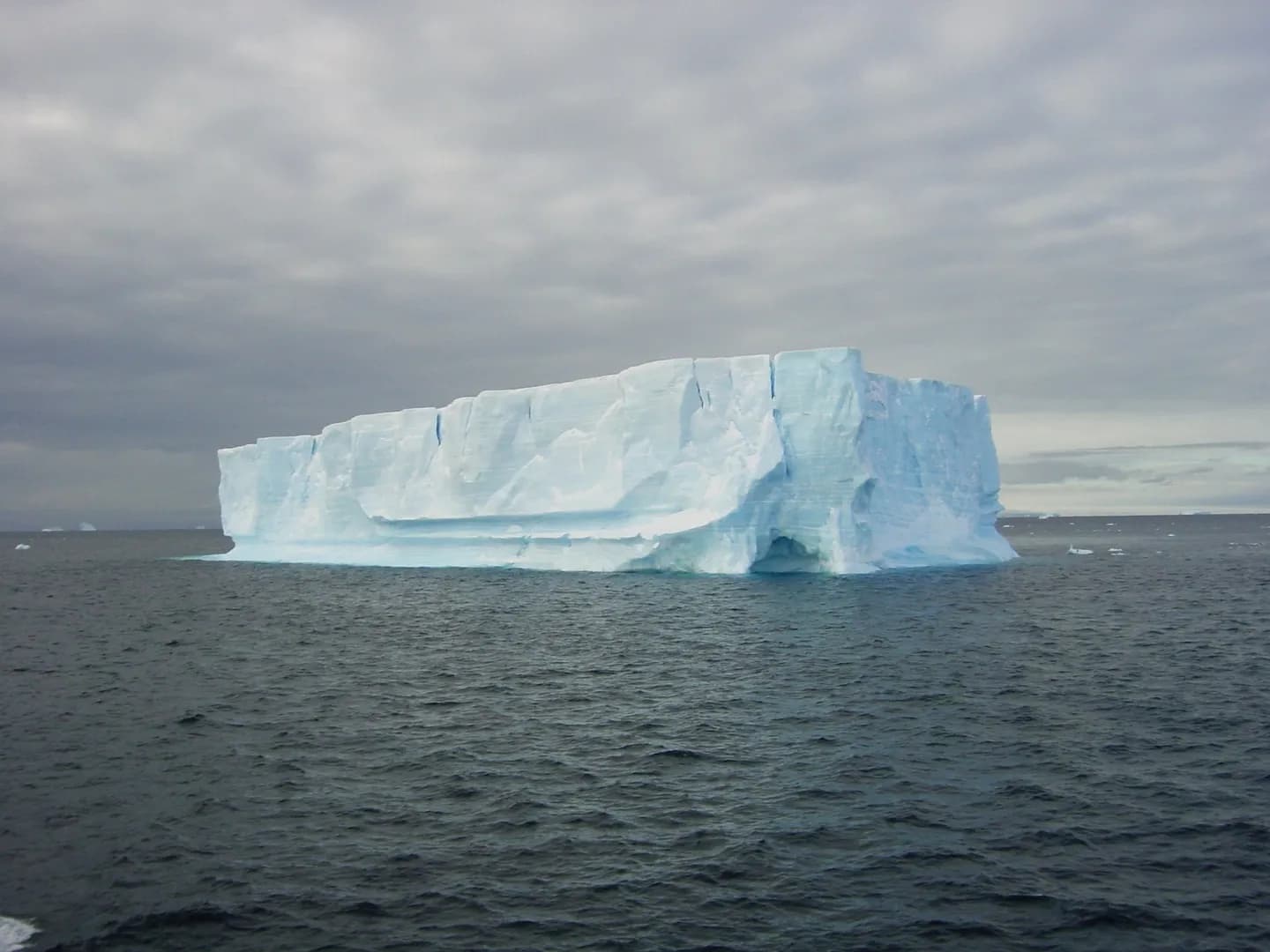
Main image: A tabular iceberg off the Antarctic Peninsula, the kind of flat-topped berg that towing proposals have in mind. Photo: Dr. David Demer, NOAA / Wikimedia Commons, Public domain.
Related Topics
EUReflect News
Site Administrator
Follow EUReflect
See more of our reporting on Google
Mark EUReflect as a preferred source and our stories are ranked higher for you in Top Stories, Discover and Google News — and carry a “preferred” badge when they are cited in AI results.
Add EUReflect as a preferred source