Trump Announces U.S. Military Campaign Against Iran and Calls for Government Overthrow
Dateline: Washington, Feb. 28, 2026 U.S. President Donald Trump announced the launch of a large-scale American military operation targeting Iran, stating that the objective is to dismantle the country’s military capabilities and nuclear infrastructure while urging Iranians to rise up against their government.
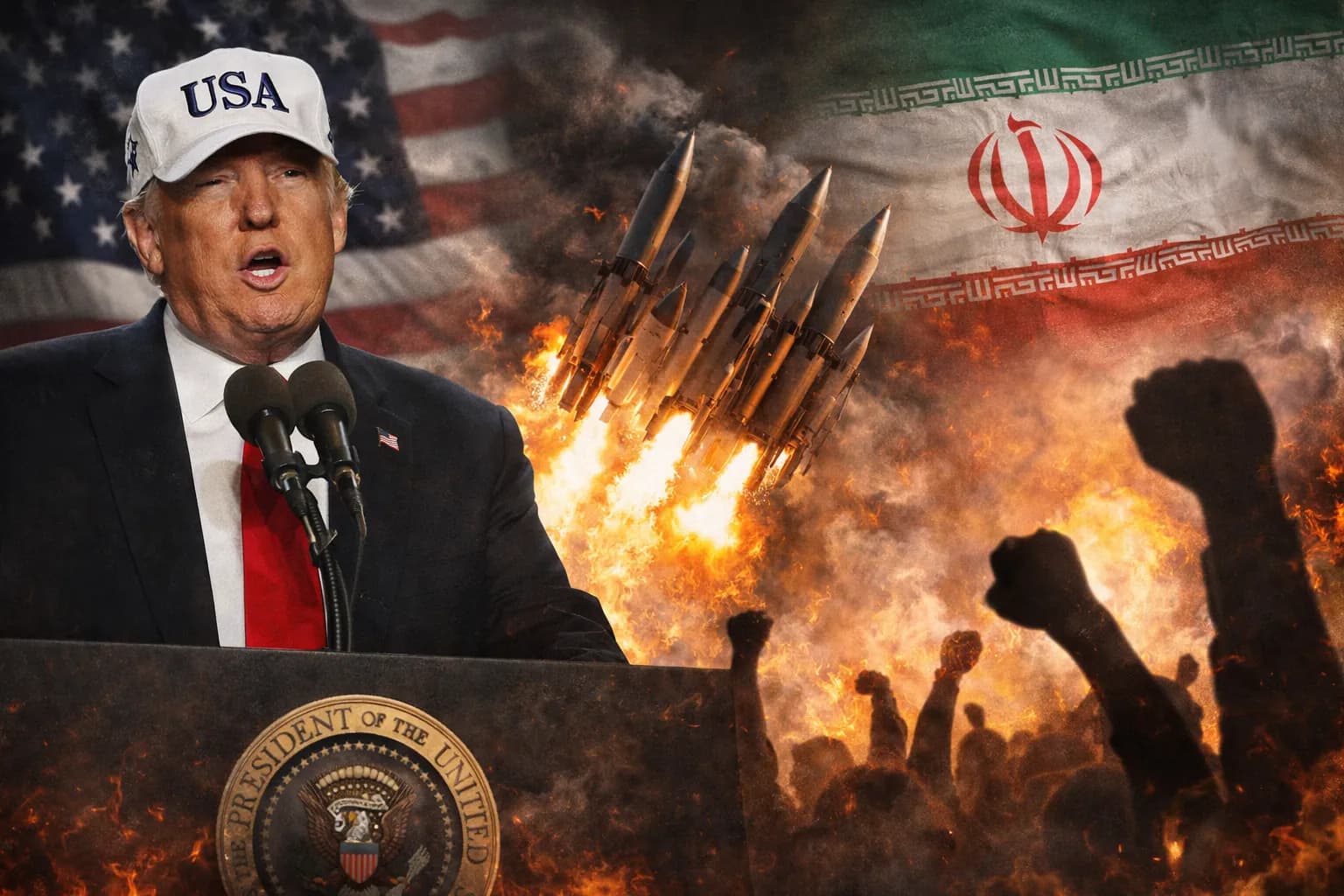
In a video message published early Saturday on the social media platform Truth Social, Trump described the strikes as “massive and ongoing.” He said the campaign was designed to eliminate what he characterized as immediate threats posed by Iran and to protect American forces and allies.
“Our objective is to defend the American people by eliminating imminent threats,” Trump said in the recorded address, according to reporting by The New York Times.
Appeal to Iranian population
In his remarks, Trump directly addressed Iranian citizens, encouraging them to challenge their country’s leadership after the military campaign concludes. He suggested that the United States was prepared to support such a shift and framed the strikes as part of a broader effort to weaken Iran’s governing system.
He also called on members of Iran’s military and security services, including the Islamic Revolutionary Guards Corps, to abandon their positions, saying they would avoid punishment if they complied. Conversely, he warned that those who resisted could face severe consequences.
Scope and objectives of the military operation
According to the president, the military action targets Iran’s missile systems, naval forces and regional allied groups. He acknowledged the possibility of American casualties, while stating that measures had been taken to reduce risks to U.S. personnel deployed in the region.
Trump justified the operation by citing decades of tensions between Washington and Tehran, arguing that Iran’s leadership has posed a persistent threat since the 1979 revolution that established the current political system.
Breakdown of diplomatic efforts
The strikes follow months of diplomatic engagement between U.S. officials and Iranian representatives concerning Tehran’s nuclear program. Trump had assigned senior envoys, including businessman Steve Witkoff and adviser Jared Kushner, to negotiate stricter limits on Iran’s nuclear activities.
Recent talks in Geneva, mediated by Oman, had raised expectations among some diplomats that a negotiated settlement was possible. However, Trump expressed dissatisfaction with the progress and indicated that military action remained under consideration.
The United States had demanded that Iran cease uranium enrichment entirely and cut ties with allied armed groups in the region—conditions Tehran had not accepted.
Escalating regional tensions
The operation represents the second U.S. military strike against Iran within the past year, following an earlier attack on Iranian nuclear facilities in mid-2025. The latest escalation comes amid broader American military deployments across the Middle East and heightened security precautions for U.S. personnel.
Trump released his announcement from his residence at Mar‑a‑Lago, shortly after arriving there from a domestic trip.
Strategic and political implications
The military campaign signals a major escalation in U.S.–Iran relations and reflects the Trump administration’s shift from diplomatic engagement toward direct military intervention after negotiations failed to produce an agreement.
Iranian authorities had not immediately issued a full response at the time of publication. The long-term consequences of the strikes—including potential regional retaliation and their impact on global security—remain uncertain.
Olha Pashchenko
Contributing writer at EUReflect.
Follow EUReflect
See more of our reporting on Google
Mark EUReflect as a preferred source and our stories are ranked higher for you in Top Stories, Discover and Google News — and carry a “preferred” badge when they are cited in AI results.
Add EUReflect as a preferred source