US and Venezuela Strike Oil Deal
The United States and Venezuela have announced a landmark agreement that would give Washington control over more than 65 billion barrels of Venezuela’s proven oil reserves. The deal is expected to attract more than $100 billion in private investment and generate over $209 billion in tax revenues for Venezuela, although key details about its implementation remain unclear.
Washington’s Venezuela Move
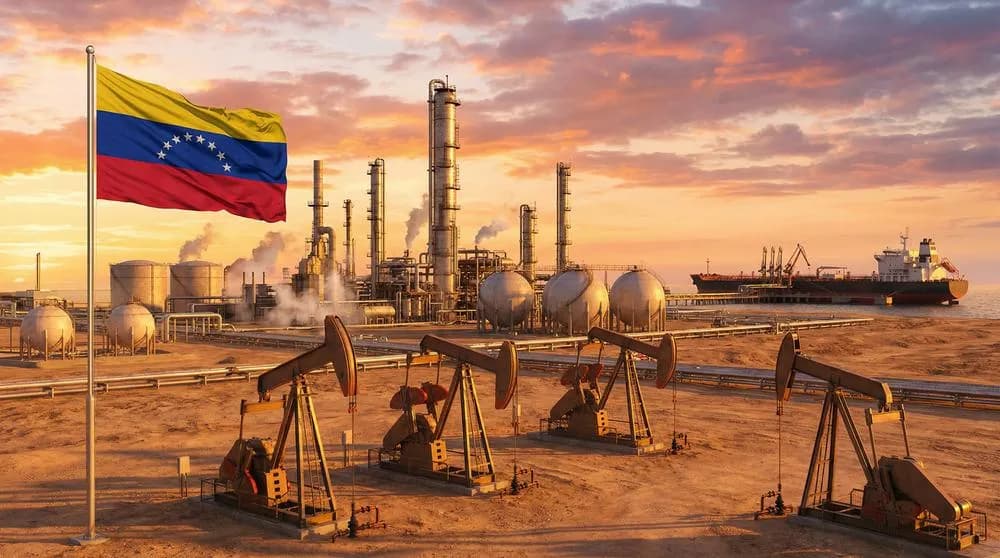
US President Donald Trump has announced a major agreement between Washington and Caracas that would give the United States control over more than 65 billion barrels of Venezuela’s proven oil reserves. Trump described the agreement as the largest oil deal in history, while insisting that it would not impose a direct financial cost on American taxpayers. The negotiations reportedly involved US Secretary of State Marco Rubio, Defense Secretary Pete Hegseth and Venezuela’s interim President Delcy Rodríguez.
At the centre of the agreement is the restructuring and development of Venezuela’s oil industry. With more than 303 billion barrels of proven reserves, Venezuela possesses the world’s largest known oil reserves. Yet years of economic mismanagement, sanctions, deteriorating infrastructure and insufficient investment have prevented the country from translating this resource wealth into sustained production capacity.
According to the Venezuelan government, the agreement could involve the development of 17 strategic oil fields. Caracas expects the initiative to attract more than $100 billion in private-sector investment and generate over $209 billion in tax revenues. Washington, meanwhile, has presented the agreement as a mutually beneficial arrangement that would provide the United States with more stable and lower-cost oil supplies while contributing to the reconstruction of the Venezuelan economy.
The significance of the agreement, however, extends well beyond the energy sector. Venezuela’s oil reserves have long been a source of geopolitical leverage, and greater US involvement could substantially strengthen Washington’s influence in Latin America. The deal therefore represents not only an economic arrangement but also a potential restructuring of the regional balance of power.
For the United States, the agreement also has implications for energy security and domestic fuel prices. The Trump administration argues that restoring Venezuelan production could eventually increase global oil supply and reduce pressure on energy prices. However, rebuilding Venezuela’s heavily damaged oil infrastructure is likely to require significant investment and time, meaning that the agreement's potential benefits may not materialise immediately.
There are also important uncertainties surrounding the structure of the deal. It remains unclear how ownership and operational control over Venezuelan oil fields will be distributed, what role American energy companies will play, and how revenues will be divided between the two countries. As a result, the investment and revenue figures announced by Caracas should currently be understood as projections rather than guaranteed outcomes.
For Europe, the development matters because a significant increase in Venezuelan oil production could eventually affect global energy markets. Additional Venezuelan supply could alter global oil flows and influence energy prices, while Washington’s expanding economic presence in Venezuela could further strengthen the United States’ position in the Western Hemisphere.
The agreement therefore should not be viewed simply as a commercial oil transaction. It brings together energy security, economic reconstruction and geopolitical influence within a single strategic framework. Its longer-term significance will depend on whether the announced investment plans materialise and whether Venezuela can restore its oil production capacity under the new arrangement.
Related Topics
Ipek Tuncer
M.A. in International Relations
Follow EUReflect
See more of our reporting on Google
Mark EUReflect as a preferred source and our stories are ranked higher for you in Top Stories, Discover and Google News — and carry a “preferred” badge when they are cited in AI results.
Add EUReflect as a preferred source