U.S.–Israeli Strikes Target Iranian Leadership; Supreme Leader and Senior Commanders Killed, Officials Say
Dateline: Tehran / Jerusalem / Washington, Feb. 28, 2026.Joint military operations by the United States and Israel struck key leadership targets inside Iran on Feb. 28, 2026, resulting in the deaths of Iran’s Supreme Leader and several top military commanders, according to statements from Western officials, regional sources and open source reporting.
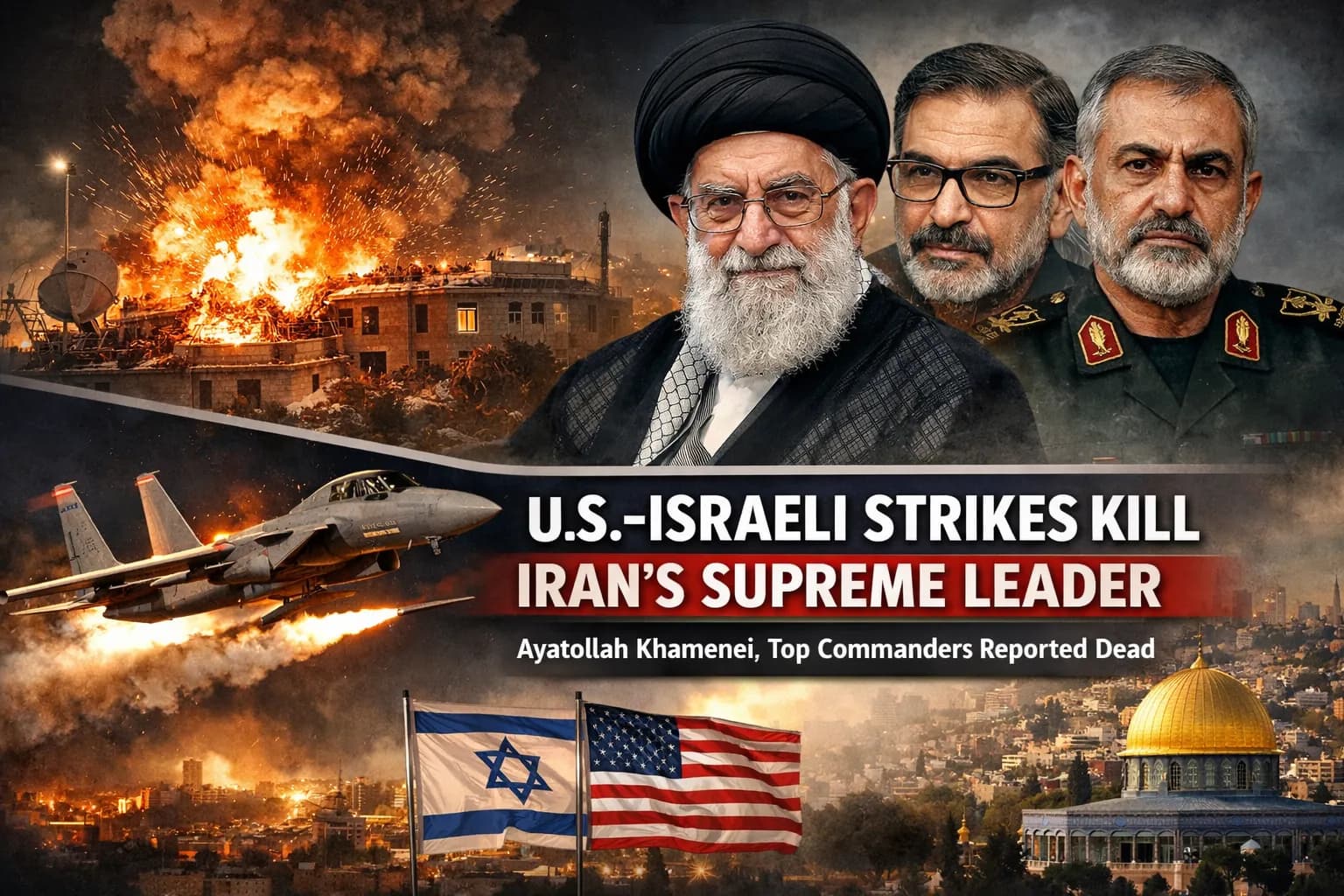
The offensive — characterised by Israel’s military as precise strikes on leadership and strategic decision‑making hubs — represents one of the most consequential blows to Tehran’s political and military hierarchy in decades.
Supreme Leader and Top Commanders Among Dead
Iran’s Supreme Leader, Ayatollah Ali Khamenei, is reported to have been killed in the strikes. Satellite imagery and independent tracking indicate damage to the compound where he was believed to be located when attacks commenced. Iran’s state media later reported his death and declared a national mourning period.
In addition to Khamenei, Israeli military sources listed senior figures in Iran’s security structure as among those killed, including:
Ali Shamkhani, secretary of Iran’s Supreme National Security Council and close adviser to the Supreme Leader.
Mohammad Pakpour, commander of the Islamic Revolutionary Guard Corps (IRGC).
Other senior defense planners and officials linked to Iran’s missile and nuclear decision‑making process.
These commanders were identified by Israeli spokesmen as key architects of Iran’s regional strategy and military posture. Israeli military statements indicated that the targeted strikes were aimed at crippling Iran’s ability to coordinate armed forces and security operations.
Strategic Implications and “Decapitation” Objective
Officials in Jerusalem described the operation as a calculated effort to degrade leadership continuity and disrupt Iran’s command structure through focused strikes on high‑ranking personnel. Western security analysts characterised these actions as a form of “decapitation strike,” in which multiple high‑value targets were hit when gathered in command locations.
The possible elimination of several senior commanders, particularly within the IRGC, could significantly disrupt Iran’s conventional and proxy force strategies. Multiple reports identified other senior defense officials as casualties, although full confirmation from Tehran remains limited amid disrupted communication channels.
Operational Context and Regional Fallout
The strikes came as part of a broader U.S.–Israeli military campaign ostensibly aimed at neutralising what Washington and Tel Aviv described as “imminent threats” from Iran’s missile and nuclear programmes. Tehran retaliated with a wave of missile and drone launches toward U.S. military bases and Israeli territory, intensifying fears of a wider regional conflagration.
Global reaction has included urgent calls for de‑escalation from international organisations and world leaders, even as oil markets and strategic analysts assess the long‑term impact of a leadership vacuum in Tehran.
Uncertainties and Ongoing Verification
While multiple sources confirm the deaths of Iran’s Supreme Leader and senior commanders, some Iranian authorities have provided minimal direct comment, and independent on‑ground verification remains limited. The situation is fluid, with further confirmations anticipated as additional information becomes available.
Olha Pashchenko
Contributing writer at EUReflect.
Follow EUReflect
See more of our reporting on Google
Mark EUReflect as a preferred source and our stories are ranked higher for you in Top Stories, Discover and Google News — and carry a “preferred” badge when they are cited in AI results.
Add EUReflect as a preferred source