Uzbekistan–Türkiye Relations Enter a New Phase
Uzbekistan–Türkiye Relations Enter a New Phase
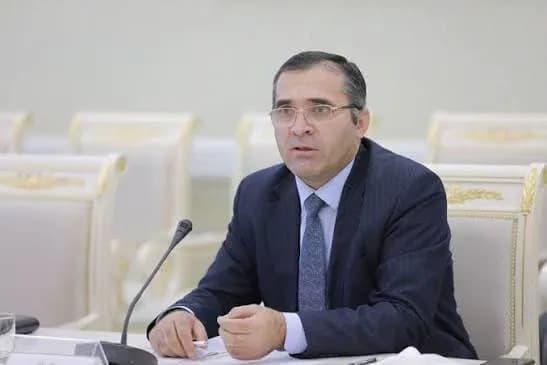
Nizom Khakimov, Independent researcher
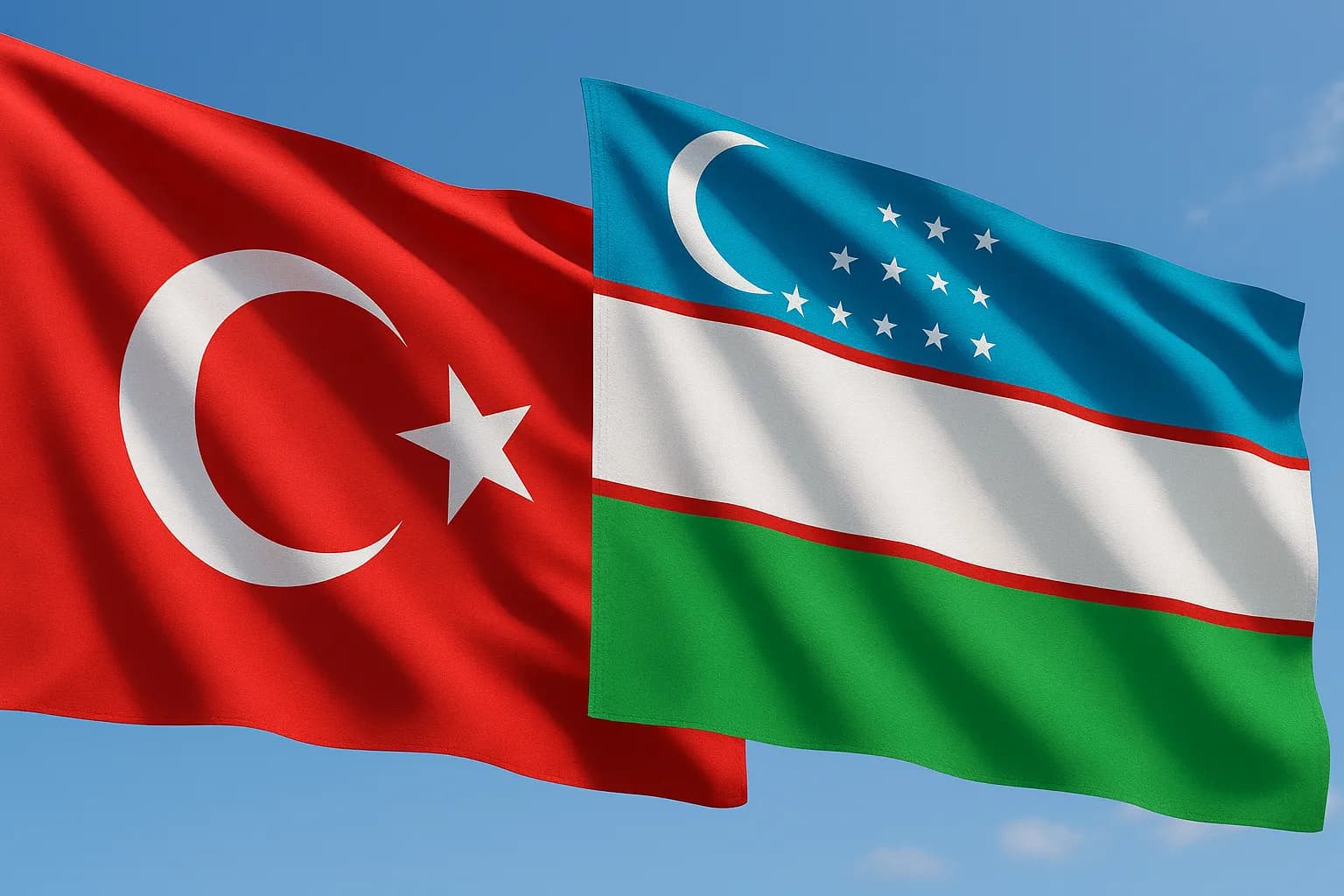
President Shavkat Mirziyoyev’s state visit to Türkiye marks more than a routine diplomatic engagement. It reflects a structural shift in Uzbekistan’s foreign policy, where Ankara has emerged as a key strategic partner linking Central Asia to broader Eurasian connectivity, industrial cooperation, and institutional integration. Unlike earlier phases dominated by political symbolism and historical rhetoric, current Uzbekistan–Türkiye relations are increasingly defined by tangible outcomes, institutional mechanisms, and long-term strategic alignment.
This visit takes place at a moment when Tashkent is actively diversifying its external partnerships while avoiding bloc politics—making Türkiye a uniquely compatible partner in Uzbekistan’s evolving foreign policy architecture.
From Political Rapprochement to Institutional Architecture
The recalibration of bilateral relations began after 2016, when Uzbekistan adopted a more open and proactive foreign policy. The elevation of relations to a Strategic Partnership and the establishment of the High-Level Strategic Cooperation Council created a stable institutional framework for regular coordination at the presidential and ministerial levels.
This institutionalization is critical. It has moved cooperation beyond episodic diplomacy toward a rules-based, agenda-driven partnership, enabling continuity across political cycles and sectors. Regular intergovernmental meetings now cover foreign policy coordination, economic planning, transport, energy, education, and security—signaling a mature bilateral architecture rather than ad hoc engagement.
Economic Cooperation: From Trade Growth to Co-Production
Bilateral trade, exceeding USD 3 billion, often dominates official narratives. However, the more significant transformation lies in the qualitative shift of economic cooperation. Uzbekistan and Türkiye are increasingly prioritizing joint production, localization, and industrial partnerships over simple trade expansion.
More than 2,000 enterprises with Turkish capital currently operate in Uzbekistan, particularly in textiles, construction materials, food processing, pharmaceuticals, and energy. Importantly, Turkish firms are transitioning from contractor-based models toward long-term joint ventures, aligning with Uzbekistan’s strategy of increasing domestic value creation and employment.
This shift reflects Tashkent’s broader development logic: integrating into global value chains while maintaining industrial sovereignty. Türkiye’s manufacturing expertise and flexible private sector make it a natural partner in this approach.
Energy and Infrastructure: Strategic Complementarity
Energy cooperation has become a pillar of bilateral relations. Turkish companies have invested heavily in Uzbekistan’s power generation sector, including thermal and renewable projects, contributing to capacity expansion amid rising domestic demand.
Beyond energy, infrastructure cooperation increasingly supports strategic connectivity goals. Turkish firms are involved not only in construction but also in logistics, project management, and operational efficiency—areas crucial for Uzbekistan’s ambition to transform from a landlocked to a land-linked economy.
This practical cooperation reinforces Uzbekistan’s emphasis on infrastructure as a driver of economic resilience rather than prestige projects.
Connectivity and the Middle Corridor
Türkiye’s growing role in Uzbekistan’s foreign policy is inseparable from its position in Eurasian connectivity debates. Coordination on the Trans-Caspian Middle Corridor aligns Ankara’s east–west ambitions with Tashkent’s need to diversify transit routes and reduce dependence on single corridors.
Cargo volumes along Türkiye–Central Asia routes have increased steadily in recent years, driven by improved customs cooperation, digitalization of logistics procedures, and multimodal transport solutions. While challenges remain—particularly in harmonizing regulations across multiple jurisdictions—the Middle Corridor is increasingly viewed as a strategic complement, not an alternative, to existing routes.
For Uzbekistan, Türkiye functions as both a transit partner and a gateway to European and Mediterranean markets.
Security and Defense: Pragmatic Engagement
Security and defense cooperation between Uzbekistan and Türkiye has recently advanced through a high-level visit of an Uzbek inter-agency delegation to Türkiye, reflecting a shift toward more structured and institutionalized security dialogue. The visit was conducted within the framework of the “4+4 mechanism,” bringing together the Ministers of Foreign Affairs, Interior, and Defense, as well as the Heads of Intelligence Services of both countries.
This format highlights a deliberate move away from ad hoc consultations toward systematic inter-agency coordination, enabling both sides to address sensitive bilateral security issues alongside regional challenges and global developments. Discussions during the visit focused on the most acute aspects of bilateral relations, evolving regional security risks, and the broader implications of increasing global volatility.
A key outcome of the visit was the adoption of a Joint Action Plan for the near future, aimed at ensuring effective coordination across diplomatic, defense, and intelligence institutions. Rather than signaling alliance formation, the 4+4 mechanism serves as a pragmatic platform for cooperation, focused on information exchange, capacity-building, and coordinated responses to shared threats.
This approach is consistent with Uzbekistan’s foreign policy principle of maintaining strategic autonomy while strengthening security partnerships based on mutual interests. For Türkiye, it reinforces its role as a reliable security interlocutor in Central Asia. Taken together, the recent delegation visit demonstrates how bilateral security cooperation is evolving from political dialogue into operational coordination with clearly defined mechanisms and objectives.
Soft Power, Education, and Elite Formation
Soft power continues to underpin the bilateral relationship. Thousands of Uzbek students study in Türkiye through state-sponsored and private programs, forming a generation of professionals familiar with Turkish institutions, language, and business culture.
These human-capital linkages have long-term strategic implications. Educational exchanges create informal networks that facilitate cooperation across diplomacy, commerce, and civil society—often sustaining bilateral ties even during periods of political uncertainty.
Multilateral Synergy: The Turkic Dimension
Uzbekistan’s active participation in the Organization of Turkic States (OTS) has further strengthened coordination with Türkiye. However, Tashkent consistently frames this engagement as functional rather than ideological, focusing on economic cooperation, transport connectivity, education, and digitalization.
This calibrated approach allows Uzbekistan to deepen Turkic cooperation without alienating other key partners, including Russia, China, the European Union, and the United States. In this sense, Türkiye complements—rather than constrains—Uzbekistan’s multi-vector diplomacy.
Conclusion: Strategic Endurance over Symbolism
President Mirziyoyev’s state visit underscores a central reality: Uzbekistan–Türkiye relations have entered a phase defined by strategic endurance and institutional maturity, not sentiment or symbolism.
Over the next 3–5 years, the partnership is likely to deepen along three main axes:
1.Industrial localization through joint ventures and co-production
2.Geoeconomic connectivity via diversified transport corridors
3.Human-capital integration through education and institutional exchange
The challenge ahead lies in managing this deepening cooperation without strategic overstretch. Yet current trajectories suggest that Uzbekistan–Türkiye relations are well positioned to become one of the most structurally resilient bilateral partnerships in Greater Eurasia.
Nizom Khakimov
Contributing writer at EUReflect.
Follow EUReflect
See more of our reporting on Google
Mark EUReflect as a preferred source and our stories are ranked higher for you in Top Stories, Discover and Google News — and carry a “preferred” badge when they are cited in AI results.
Add EUReflect as a preferred source