Why the Moroccan Religious Model Attracts Europe’s Attention
This article explains how Morocco’s management of the religious sphere counters radicalization through moderation, dialogue, and coexistence. Based on the Maliki school, Ash’arite doctrine, and Sufi spirituality, and guided by King Mohammed VI as Commander of the Faithful, it offers an inspiring model for Europe.
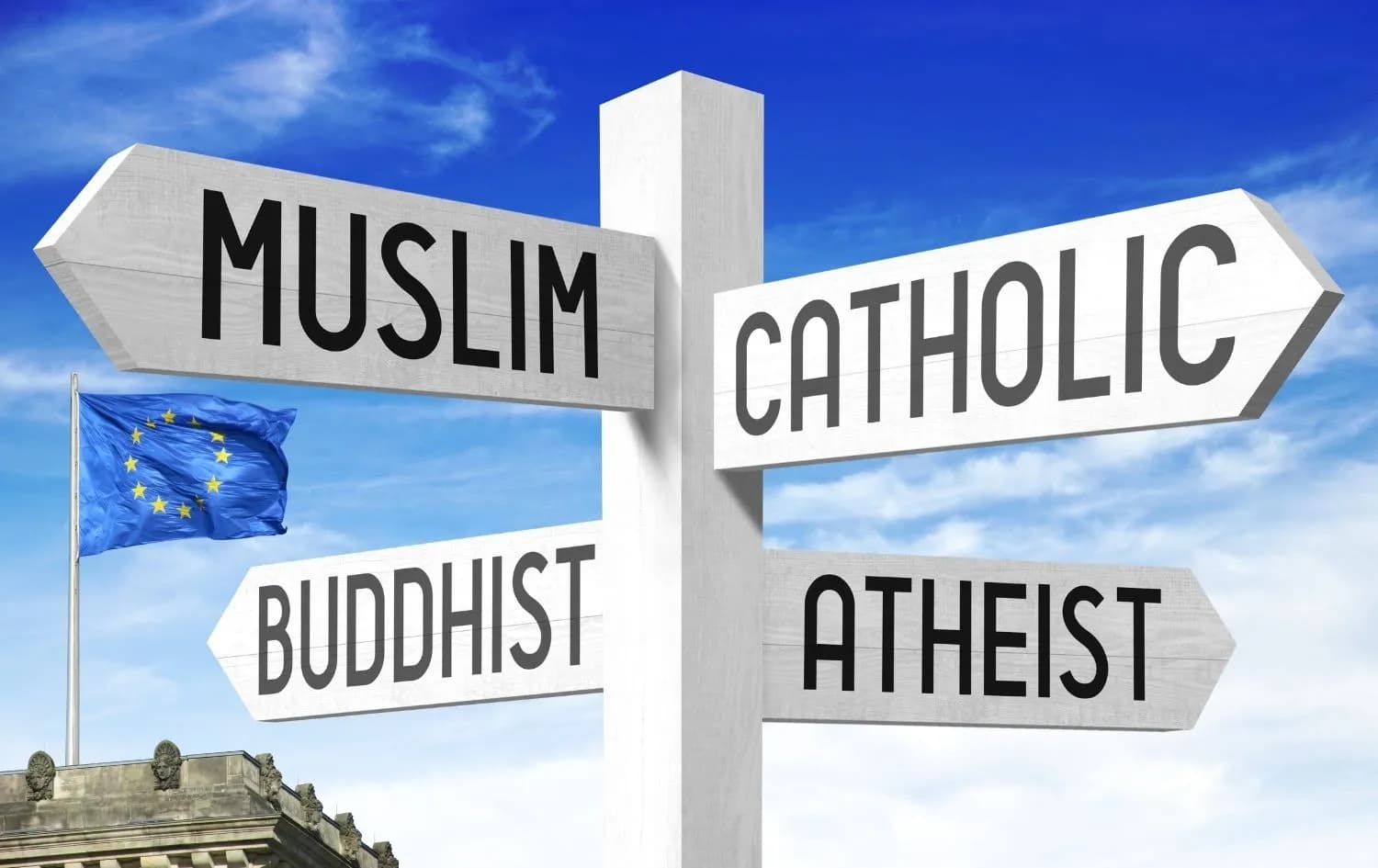
In the face of the challenges of radicalization and integration, the Moroccan approach to managing the religious sphere offers an alternative based on moderation and dialogue.
In a world where challenges and conflicts continue to grow, the importance of the concepts of civil diplomacy and peaceful coexistence has become more crucial than ever. These fundamental values aim to build a more just and tolerant world.
Peaceful coexistence among different cultures and religions guarantees the stability and progress of societies. Civil diplomacy, for its part, represents the ideal path to promote mutual understanding and cooperation among peoples, with the goal of building bridges of communication and dialogue between civilizations and religions, ensuring sustainable development, and resolving conflicts through peaceful means.
Morocco’s choice in favor of cultural and religious pluralism and coexistence among all components of its society is deeply rooted in its history and culture.
This model, nourished by a moderate Moroccan Islam founded on the middle path, mutual respect, and tolerance, rests on three major pillars: the Maliki school of jurisprudence, the Ash‘arite theological doctrine, and a tolerant Sufi spirituality. All of this is framed by the institution of the Commandership of the Faithful (Imarat Al-Mouminine), embodied by His Majesty King Mohammed VI, which guarantees freedom of worship for all religions.
This institutional and doctrinal framework enables Morocco to promote an Islam of the “middle way,” far removed from extremist deviations and ideological manipulation, thereby ensuring national cohesion and enviable regional stability.
The central role of His Majesty as Amir Al-Mouminine plays a key role in preserving religious and social balance. This function, both spiritual and political, helps safeguard the sanctity of religion while adapting it to modern challenges. The Sovereign ensures that Moroccan Islam remains rooted in moderation, tolerance, and openness, while actively combating all forms of radicalization.
Through structural reforms (such as the creation of the Mohammed VI Institute for the Training of Imams and the restructuring of the religious field), Morocco has succeeded in institutionalizing a moderate Islam that is exportable and firmly oriented toward peace and coexistence.
Morocco thus proves that it is possible to reconcile Islamic tradition, modernity, and stability, offering a path forward for Western societies seeking sustainable solutions against extremism. It is both a practical and symbolic approach to reconciling diversity, security, and social cohesion.
An Exportable and Inspiring Model for Europe
In the face of rising communal tensions, radicalization, ideological and religious influence from certain third countries on Islam in Europe, as well as conflicts linked to Islamism and the influence of the Muslim Brotherhood—perceived as a threat to Western values and as an attempt to establish a lasting presence through associative structures in Europe and worldwide—the Moroccan model offers a credible alternative. It demonstrates that modern Islam can be a factor of peace, stability, and coexistence, and deserves to be studied and adapted by Western countries in order to prevent radicalization and build more harmonious societies.
Radouan Bachiri
Contributing writer at EUReflect.
Follow EUReflect
See more of our reporting on Google
Mark EUReflect as a preferred source and our stories are ranked higher for you in Top Stories, Discover and Google News — and carry a “preferred” badge when they are cited in AI results.
Add EUReflect as a preferred source