Rescue Efforts Continue After Quake
A powerful 7.8-magnitude earthquake struck southern Philippines, killing at least 32 people and injuring more than 100. The quake triggered tsunami alerts across the Asia-Pacific region, caused landslides, destroyed buildings, and displaced thousands as rescue operations continue.
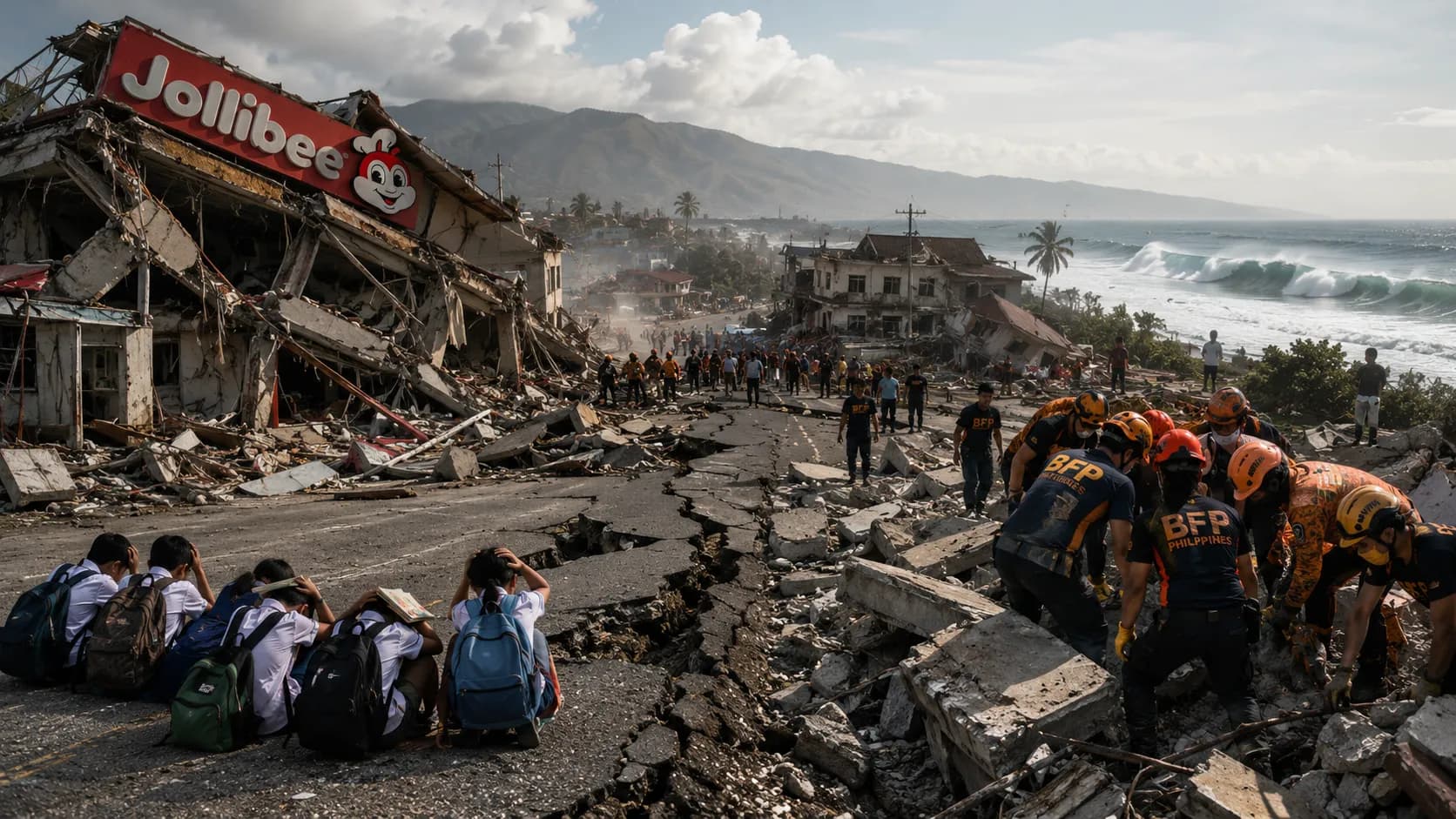
A powerful 7.8-magnitude earthquake struck off the coast of Mindanao in the southern Philippines on Monday morning, causing widespread destruction, loss of life, and panic across several provinces. The disaster has claimed at least 32 lives, injured more than 100 people, and forced the evacuation of approximately 10,000 residents as authorities continue search and rescue operations.
The earthquake, which occurred at 07:37 local time, was felt across a vast region and triggered tsunami warnings in several countries, including the Philippines, Japan, Indonesia, and Australia. Although many of the alerts were later lifted, the earthquake has left a devastating impact on communities near the epicentre and highlighted the ongoing vulnerability of the Philippines to major seismic events.
Widespread Damage and Rising Casualties
The earthquake’s epicentre was located off the coast of Mindanao, the Philippines’ second-largest island and home to approximately 26 million people. Local authorities reported severe damage to buildings, roads, and public infrastructure throughout affected areas.
Images and videos shared on social media showed collapsed structures and widespread destruction. One particularly striking video captured a Jollibee fast-food restaurant reduced to rubble. Landslides were also reported in several mountainous and coastal regions, contributing significantly to the death toll.
The coastal province of Sarangani suffered some of the worst damage. Officials confirmed that at least 17 people lost their lives there, many as a result of a major landslide triggered by the quake. Power and communication networks were temporarily disrupted across the province, complicating emergency response efforts.
In General Santos City, the urban centre closest to the epicentre, authorities confirmed 10 fatalities and reported that dozens of residents remained missing. Search teams continue to work around the clock to locate survivors trapped beneath debris and to account for those who have not yet been found.
Emergency Response and Government Action
Philippine President Ferdinand Marcos Jr. expressed condolences to the victims and assured the public that national agencies were fully mobilised to assist affected communities.
“The national government is moving and we will not leave Mindanao behind,” the president stated while directing government departments to coordinate relief and recovery efforts.
Emergency personnel, military units, medical teams, and disaster response agencies have been deployed to the hardest-hit regions. Temporary shelters have been established for displaced residents, while emergency supplies, including food, water, and medical assistance, are being distributed.
The government also ordered the suspension of classes in affected areas. The earthquake struck on the first day of the new academic year, causing fear among thousands of students and teachers. In one widely shared video from Davao Occidental province, children can be seen crouching on the ground as buildings shook violently around them. Fortunately, no injuries were reported at the school featured in the footage.
Authorities continue to evaluate the full extent of the damage, and official casualty figures may increase as rescue operations progress and remote communities are reached.
Tsunami Alerts and Continuing Aftershocks
The earthquake generated tsunami warnings across parts of the Asia-Pacific region. Authorities in Japan initially warned that waves of up to one metre could reach coastal areas. Smaller tsunami waves were later recorded in Okinawa and the Ogasawara Islands.
Tsunami activity was also observed along the coastlines of Indonesia, Palau, and the Philippines. Recorded wave heights ranged from a few centimetres to as much as 1.4 metres in some locations. While the tsunami impact remained relatively limited, officials urged residents in coastal areas to remain vigilant until all warnings were officially lifted.
Adding to concerns, seismologists recorded more than 130 aftershocks following the main earthquake. These aftershocks ranged in magnitude from 1.3 to 6.7, creating ongoing risks for damaged structures and hampering rescue efforts.
Experts warn that strong aftershocks may continue for days or even weeks following an earthquake of this magnitude, prompting authorities to advise residents to avoid unsafe buildings and remain prepared for additional seismic activity.
Conclusion
The devastating earthquake that struck Mindanao serves as another reminder of the Philippines’ position along the Pacific Ring of Fire, one of the world’s most seismically active regions. With dozens confirmed dead, hundreds affected, and thousands displaced, the nation now faces a challenging recovery process.
As rescue teams continue searching for survivors and communities begin assessing the extent of the damage, national and local authorities remain focused on providing emergency assistance and restoring essential services. The coming days will be critical in determining the full scale of the disaster and supporting the thousands of people whose lives have been dramatically affected by one of the strongest earthquakes to hit the Philippines in recent years.
Alvara Merrick
Contributing writer at EUReflect.
Follow EUReflect
See more of our reporting on Google
Mark EUReflect as a preferred source and our stories are ranked higher for you in Top Stories, Discover and Google News — and carry a “preferred” badge when they are cited in AI results.
Add EUReflect as a preferred source