A Historic First: Former President Sarkozy’ s Imprisonment
A Historic First: Former President Sarkozy’ s Imprisonment
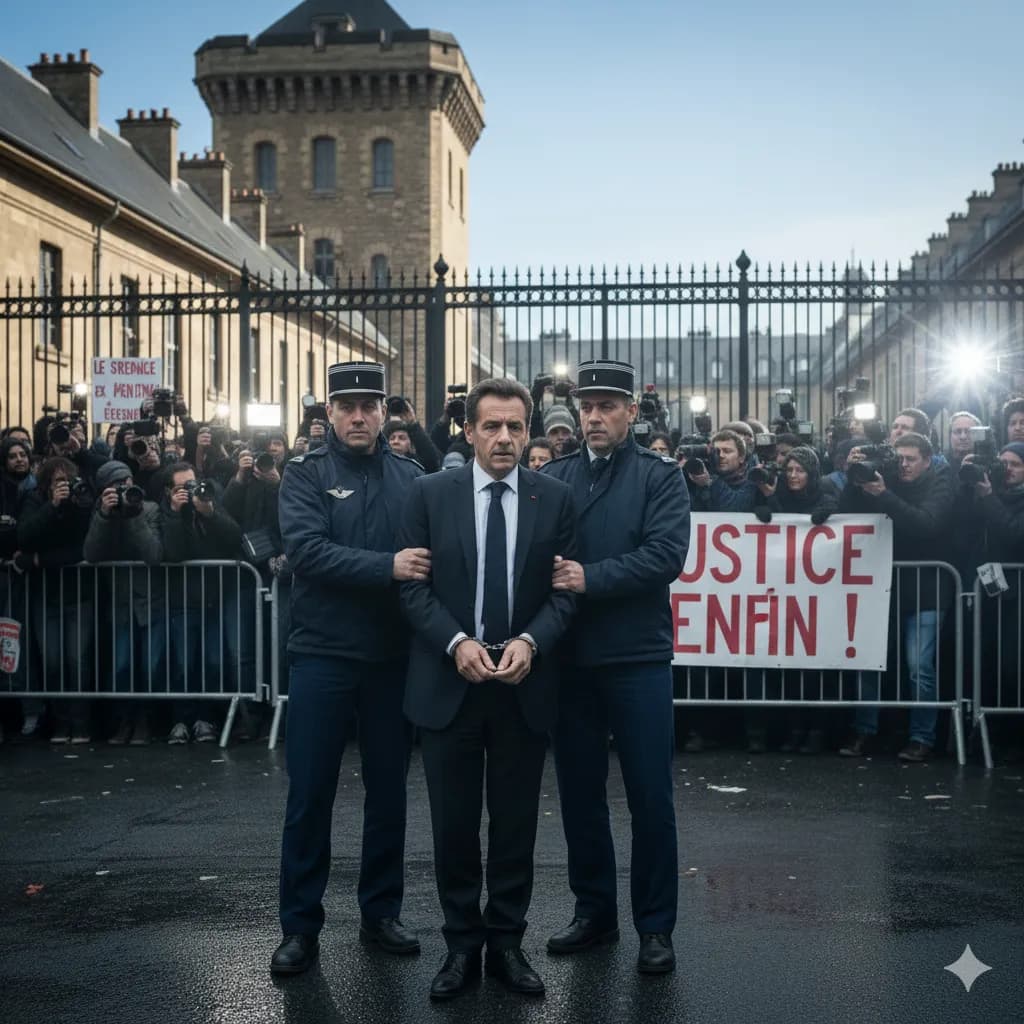
On October 21, 2025, former French President Nicolas Sarkozy was incarcerated at La Santé Prison in Paris, marking an unprecedented moment in modern French history as the first time a former president has been jailed. Convicted of “criminal association” (association de malfaiteurs) in connection with illegal campaign financing from Libya for his 2007 presidential campaign, Sarkozy’s five-year sentence has sparked intense political and societal debate.
Background: Sarkozy’ s The Libyan Financing Case
Sarkozy’s path to imprisonment began with allegations surrounding his 2007 presidential campaign, which was reportedly funded by millions of euros from the regime of former Libyan leader Muammar Gaddafi. According to the accusations, Sarkozy’s close aides, Claude Guéant and Brice Hortefeux, arranged secret meetings with Gaddafi’s intelligence chief and brother-in-law, Abdullah Senussi, to facilitate this illicit funding. Franco-Lebanese businessman Ziad Takieddine allegedly acted as an intermediary, though he died shortly before Sarkozy’s conviction.
On September 25, 2025, the Paris Criminal Court sentenced Sarkozy to five years in prison for “criminal association,” concluding that he knowingly allowed his campaign team to make clandestine agreements with the Libyan regime. While acquitted of personally receiving the funds, the court found him complicit in the scheme. Sarkozy immediately appealed, maintaining his innocence and calling the case a “vendetta driven by personal and institutional grudges.” This conviction reignited debates about transparency and ethics in French politics, given his presidency from 2007 to 2012.
The case is historically significant, as no former French president had been imprisoned since Philippe Pétain, the Nazi collaborator jailed for treason in 1945. Sarkozy’s conviction has become a test for judicial independence, political accountability, and public perception of elite impunity in France.
The Day of Incarceration: October 21, 2025
Morning Preparations and Public Response
The morning of October 21, 2025, began with a deeply personal and publicly significant farewell at Sarkozy’s villa in Paris’s upscale 16th arrondissement. His family, notably his 28-year-old son Louis, called for supporters to gather in solidarity. Around 100 people assembled outside, chanting “Nicolas! Nicolas!” and “Libérez Nicolas!” (Free Nicolas!). As reported by France 24 and BBC, Sarkozy, accompanied by his wife Carla Bruni-Sarkozy, waved to the crowd, holding her hand in a gesture of unity. Photographs by Thibault Camus (AP) and Sarah Meyssonnier (Reuters) captured the emotional scene, showing Sarkozy, eyes closed, bidding farewell to his supporters.
Before departing for prison, Sarkozy posted on X: “I have no doubt, the truth will prevail. But how devastating the price will be… It is not a former president they are locking up this morning, but an innocent man. My wife and children are by my side—do not pity me—but I feel deep sorrow for a France humiliated by this vengeful pursuit.” This statement reinforced his claim of innocence while rallying his supporters, framing the conviction as a politically motivated attack.
Arrival at La Santé Prison
At 09:40 (local time) Sarkozy’s convoy, escorted by police, arrived at La Santé Prison in the Montparnasse district. The area was cordoned off with heavy security, and journalists documented the event. France 24 reporter Julie Dungelhoeff described it as a “landmark moment.” Sarkozy’s entry marked the first incarceration of a former French president, a moment laden with symbolic and political significance.
Immediately after his arrival, Sarkozy’s lawyer, Christophe Ingrain, addressed the press outside the prison, calling the incarceration “a disgrace” and announcing that a request for release (mise en liberté) had been filed. Since Sarkozy appealed, he is legally presumed innocent, and detention can only continue if it is the “only means” to prevent flight, witness pressure, recidivism, or to ensure his safety. The court has two months to rule, though Ingrain suggested a decision within three to four weeks, meaning Sarkozy may remain detained for at least a month.
La Santé Prison: Conditions and Security
Prison Profile
Constructed in 1867, La Santé Prison, located on Rue de la Santé in Paris’s 14th arrondissement, is the city’s last intra-muros penitentiary. It has housed notable inmates such as Alfred Dreyfus, Maurice Papon, Jacques Mesrine, and poet Guillaume Apollinaire. Sarkozy’s associates, Patrick Balkany and Claude Guéant, also served time there. The prison is notorious for overcrowding and harsh conditions, hosting inmates ranging from drug lords to those convicted of terrorism-related offenses.
Sarkozy’ s Conditions
Sarkozy is held in the isolation wing (quartier d’isolement) to ensure his safety and privacy. His single cell, measuring 9–11 square meters, includes a toilet, shower, desk, small electric stove, mini fridge, and a television rented for €14 monthly. He has access to news, family visits, and written or phone correspondence, but social contact is minimal. Flavie Rault, former deputy warden of La Santé, told BFMTV, “Conditions in the isolation wing are harsh. You interact only with staff and never meet other inmates, which creates social isolation.” Sarkozy is permitted one hour of solitary exercise daily in a segregated courtyard.
Sarkozy brought two books: Jean-Christian Petitfils’ Life of Jesus and Alexandre Dumas’ The Count of Monte Cristo. The latter, a novel about a man wrongfully imprisoned who seeks revenge, mirrors Sarkozy’s narrative of being unjustly targeted and his determination to seek vindication through his appeal. In an interview with La Tribune, he stated, “I’m not afraid of prison. I’ll walk through the gates with my head held high.”
Special Security Measures
Due to his status as a former president, extraordinary security measures were implemented. Interior Minister Laurent Nuñez announced on Europe 1 radio on October 22, 2025, that two police officers from the presidential protective detail would be stationed in nearby cells to provide constant security during Sarkozy’s detention. Operating in rotating shifts, they aim to shield him from potential threats posed by other inmates. Nuñez stated, “The former president is entitled to protection due to his status. This protection continues in detention.”
This decision sparked controversy among prison guard unions. Nicolas Peyrin of the CGT union told BFM television that prison staff were fully capable of ensuring inmate safety, dismissing the police presence as unnecessary. Wilfried Fonck, another union leader, told RTL radio, “I’ve never seen anything like it in 25 years on the job,” highlighting the unprecedented nature of police presence in the prison. The controversy fueled perceptions of preferential treatment, intensifying public debate.
Societal and Political Repercussions
Sarkozy’s imprisonment sparked intense debate in France, dividing his supporters and critics. Supporters, primarily from the center-right, called it a “political witch hunt.” His family, including son Pierre, urged supporters to share messages of love and solidarity. France 24 captured sentiments from the crowd outside his home, with some declaring, “We’re protesting an unjust justice system.” Sarkozy’s X post further galvanized his base, framing his ordeal as a national humiliation.
Conversely, critics defended the ruling. Éric Alt, vice-president of the anti-corruption NGO Anticor, told France 24, “Justice is equal for all.” Sarkozy’s past legal troubles were frequently cited, including a six-month sentence (under appeal) in the Bygmalion case, which involved false invoices to conceal excessive spending in his 2012 presidential campaign, and a prior conviction requiring an electronic tag for attempting to bribe a magistrate.
Days before Sarkozy’s incarceration, President Emmanuel Macron hosted him at the Élysée Palace, describing it as a “human gesture” toward a predecessor. Macron noted that public reaction to a former president’s imprisonment was “normal” but refrained from commenting on the judicial decision. Justice Minister Gérald Darmanin announced plans to visit Sarkozy in prison, citing his responsibility to ensure the former president’s safety and the prison’s operations. He stated, “I cannot be indifferent to a man’s distress.” These gestures, while framed as protocol, were interpreted by some as tacit support, raising questions about judicial impartiality.
Media and Public Perception
These polarized reactions were amplified by extensive media coverage, which framed the event as both a legal milestone and a cultural phenomenon. France 24 provided live updates and a special broadcast, describing it as a “landmark event.” BBC highlighted the emotional farewell scenes, emphasizing Sarkozy’s dramatic exit. The Guardian focused on the controversy over police protection, framing it as a potential scandal. Politico’s partial article, titled “The Prison Diary of Nicolas Sarkozy,” hinted at exploring his personal reflections in prison, though the full text was unavailable. The intense media attention underscored the case’s legal and cultural significance.
Future Prospects: Appeal and Potential Release
Sarkozy’s legal team hopes for release by Christmas, with the appeal process expected to take three to four weeks. As he is presumed innocent during the appeal, continued detention must be justified by risks of flight, witness tampering, recidivism, or security concerns. House arrest with an electronic tag is a likely alternative. Additionally, Sarkozy faces another appeal ruling in November 2025 for the Bygmalion case, indicating that his legal battles are ongoing.
Conclusion: A Political Tragedy or a Triumph of Justice?
Sarkozy’s imprisonment is not just a personal legal battle; it highlights the complex interplay of politics, justice, and public perception in France. He frames the case as a vengeful attack, reading The Count of Monte Cristo as a symbolic nod to his belief in eventual vindication. Supporters see a political conspiracy, while critics view it as a testament to judicial equality. The appeal and potential release will shape the next chapter, but for now, Sarkozy’s incarceration remains a pivotal moment in French history. The case has ignited debates over elite accountability, judicial independence, and political ethics, reflecting the delicate balance of power, justice, and public trust in democratic systems.
Sources:
France 24, “En direct : L’ancien président Nicolas Sarkozy incarcéré à la prison de la Santé,” October 21, 2025.https://www.france24.com/fr/france/20251021-en-direct-france-ancien-president-nicolas-sarkozy-incarcere-prison-de-la-sante
BBC, “French ex-president Sarkozy begins jail sentence for campaign finance conspiracy,” October 21, 2025.https://www.bbc.com/news/articles/cvgkm2j0xelo
The Guardian, “Nicolas Sarkozy to have permanent police protection in prison,” October 22, 2025.https://www.theguardian.com/world/2025/oct/22/nicolas-sarkozy-permanent-police-protection-in-prison-france
Politico, “The prison diary of Nicolas Sarkozy,” October 21, 2025.https://www.politico.eu/article/nicolas-sarkozy-prison-france-former-president-book-monte-cristo
Zeynep Güney
Contributing writer at EUReflect.
Follow EUReflect
See more of our reporting on Google
Mark EUReflect as a preferred source and our stories are ranked higher for you in Top Stories, Discover and Google News — and carry a “preferred” badge when they are cited in AI results.
Add EUReflect as a preferred source