A Lethal Mirage: How Identity "Hallucinations" Set Sudan Ablaze
This article examines how constructed identity narratives of “Arab” and “African” in Sudan—rooted in culture, language, and politics rather than race—have been transformed into instruments of power, exclusion, and mass violence. Tracing the historical coexistence of Sudanese communities and the later politicization of identity by the modern state, the study shows how marginalization in regions such as Darfur was reframed through ethnic labels. The militarization of these narratives, particularly through the Janjaweed and their successor, the Rapid Support Forces, turned identity into a mechanism of war. External interventions further hardened these divisions, producing one of the world’s largest humanitarian crises. The Sudanese case demonstrates that identity, while socially constructed, can become lethally real when mobilized for political and geopolitical ends.
Years ago, I was deeply surprised when a Sudanese friend told me he was Arab. The Arabs I knew were fair-skinned; furthermore, given that Sudan is in Africa, it seemed genetically impossible for him to be Arab. Was it we—who perceive racial distinctions so clearly in the modern world—who were hallucinating, or was it my Sudanese friend?
Today, as I look at the Sudanese civil war where 12 million people have been displaced and hundreds of thousands killed, I remember that conversation. At the very heart of this war lies the issue of identity I was trying to grasp that day: What does it mean to be "Arab" or "African" in Sudan, and how can these two labels turn a country into hell?
Identity: A Narrative, Not a Color
The "Arab" identity in Sudan is not a racial category in the Western sense. Over centuries, migrants from the Arabian Peninsula intermarried and mixed with indigenous African communities in the Nile Valley, creating a new society. Genetically, most Sudanese Arabs carry far more African ancestral blood than Gulf Arabs. So why do they define themselves as Arab?
The answer lies in language, culture, and, most importantly, self-identification. Speaking Arabic, belonging to Arab tribes, adopting a nomadic lifestyle, and seeing oneself as part of this narrative defines being "Arab" in Sudan. On the other hand, communities like the Fur, Masalit, and Zaghawa speak their own languages, practice their own traditions, and define themselves as "African," outside of this Arab narrative.
This distinction exists in a world that is effectively color-blind to outsiders. If a Masalit villager and an Arab nomad stood side by side, an external observer might see no difference. But within Sudan, this distinction has become a matter of life and death.
Together for Centuries: Shared Lands, Different Identities
For centuries, "Arab" and "African" communities in Sudan lived in the same geography. Both are Muslim, both are children of Sudan, and both built lives in the same deserts and river valleys. While Arab tribes were generally nomadic pastoralists, communities like the Fur, Masalit, and Zaghawa were settled farmers. Yet, this difference did not prevent coexistence for centuries. There were marriages, trade, and neighborly bonds.
Were there conflicts in the pre-colonial era? Of course. Access to water, grazing lands, land disputes... but these were not identity wars. They were local, limited disputes that could usually be resolved through traditional mechanisms. A dispute between an Arab tribe and a Masalit village remained specific to that region; identity was a side detail, not the defining feature of the parties involved.
The Modern State: The Politicization of Identity
However, the construction of the modern state changed this balance. In post-independence Sudan, the central government made Arabic the official language, adopted a specific interpretation of Islam as the state ideology, and established Khartoum as the center of politics. While these choices seemed technical on paper, in practice, they included certain communities within the state while leaving others out.
Peripheral regions like Darfur were deprived of investment, lost control of their resources, and could not make their voices heard against central decisions. This neglect began to be interpreted through the lens of identity. The question "Why are we not receiving services?" was met with the answer "Because we are not Arab." Identity was no longer just a cultural affiliation; it became the explanatory framework for economic and political exclusion.
On the other hand, elites in Khartoum began to justify this neglect through identity as well: "They don't understand the state, they are far from the center, they are different from us." When both sides began to discuss structural problems using the language of identity, identity turned into a dangerous political weapon.
In 2001, when Fur and Zaghawa leaders swore on the Quran to act together, it signaled that identity had become a banner of resistance. Communities that had lived side by side for centuries were now forming a political front under the "African" identity.
2003: When Identity Becomes a Weapon
In 2003, this tension escalated into armed rebellion. The Sudan Liberation Army and other rebel groups attacked government targets to end Darfur’s marginalization. Khartoum’s response formalized the identity war: Arab militias known as the "Janjaweed" were armed and unleashed to attack non-Arab villages in Darfur.
RSF and SAF: Two Armies, Two Narratives of Identity
The war tearing Sudan apart today follows these exact identity lines. The Rapid Support Forces (RSF) is a direct successor to the Janjaweed. Its leader, Hemedti, is a power based on the Arab tribes in Darfur, mobilizing their historical grievances and identity solidarity.
Therefore, the conflict between the two sides is not just a power struggle; it is an existential battle over what "Arabness" and "Africanness" mean in Sudan, who will own the state, and which identity will be considered the norm.
External Powers: Weapons Deepening Identity
This identity war provides perfect ground for external actors. The United Arab Emirates is the primary source of weapons flowing to the RSF. The UAE's interest in Darfur’s gold is well-known, but there is another factor: ideological discomfort with the Islamic tendencies in the central government. For the UAE, the RSF is a tool to build its own model in Sudan. And with every weapon it receives, the RSF transforms further into a force fighting in the name of "Arab identity."
While Russia’s Wagner Group provides consultancy and support to the RSF, it uses Sudan’s gold to finance the war in Ukraine. On the other hand, Turkey, Iran, Egypt, and Saudi Arabia send weapons to the central government (SAF). Every external intervention makes the "Arab" and "African" divide clearer and deeper.
12 Million Refugees, 25 Million Hungry: The Price of Identity
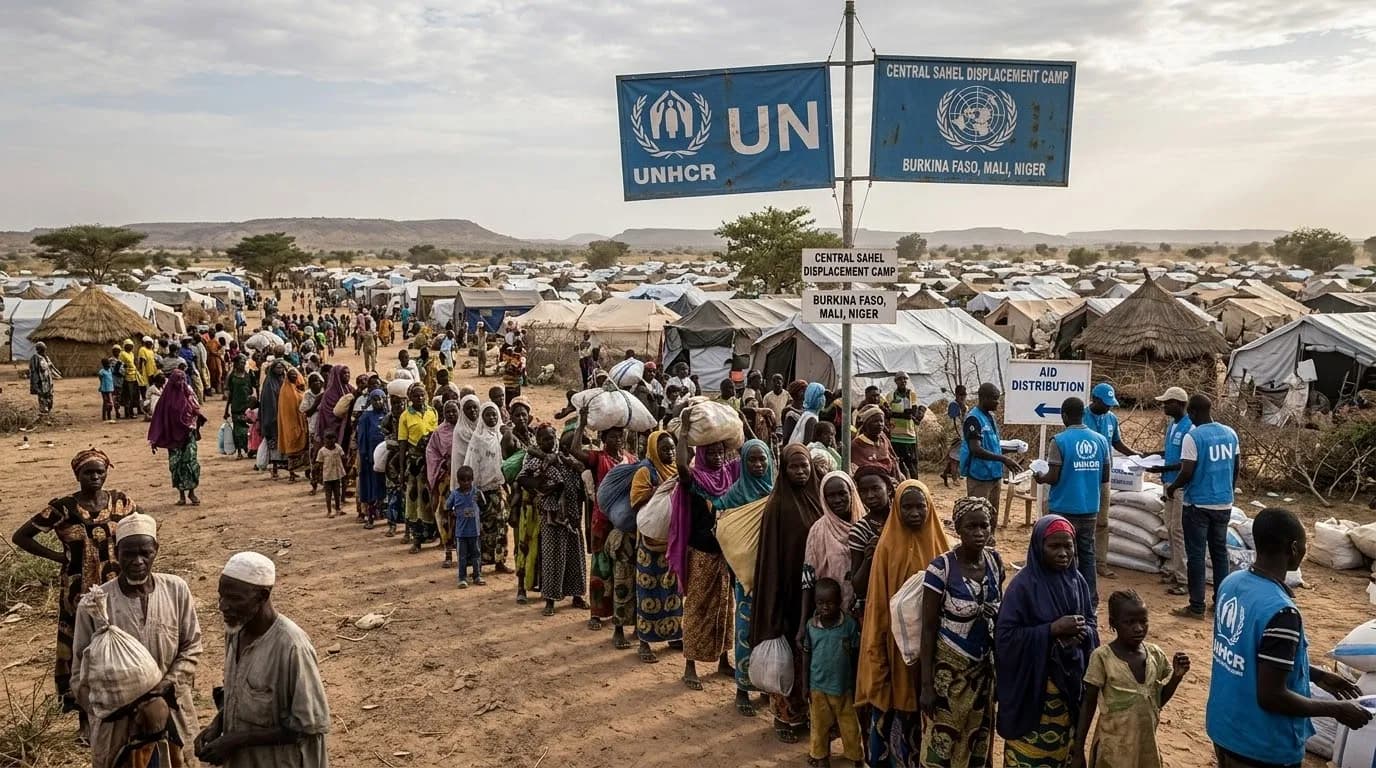
The bill for this identity war is issued without asking anyone for their ID. More than 12 million people have been displaced. While Masalit families fleeing Darfur take refuge in Chad, families fleeing Khartoum head toward Egypt. Half the population—25 million people—is struggling with hunger. Famine has been declared in Darfur. 80% of the healthcare system has collapsed.
Conclusion: Hallucination or Reality?
Years ago, when my Sudanese friend told me he was Arab, I thought he was hallucinating. Today I realize he wasn't. Being "Arab" or "African" in Sudan is not a genetic reality, but a historical, cultural, and political one. And this reality has been deepening for decades, determining the lives of millions.
Identity in Sudan is a tool used to legitimize power, to create spheres of influence for external powers, and to justify violence by militias. And the sharper this tool is used, the greater the destruction.
The war in Sudan shows us this: Identity is one of the most creative and most destructive inventions of the human mind. It is "real" there, but also incredibly malleable, manipulatable, and lethal. And today, millions of Sudanese are paying the bitterest price for this invention.
Abdullah Yakup Üner
Contributing writer at EUReflect.
Follow EUReflect
See more of our reporting on Google
Mark EUReflect as a preferred source and our stories are ranked higher for you in Top Stories, Discover and Google News — and carry a “preferred” badge when they are cited in AI results.
Add EUReflect as a preferred source