A Signature in Samarkand, a Question in Ankara: What Does the Cyprus Clause Really Mean?
Central Asian states at the 2025 Samarkand Summit reaffirmed UN resolutions on Cyprus, signaling EU alignment and raising concerns in Turkey over TRNC recognition and Turkic solidarity.
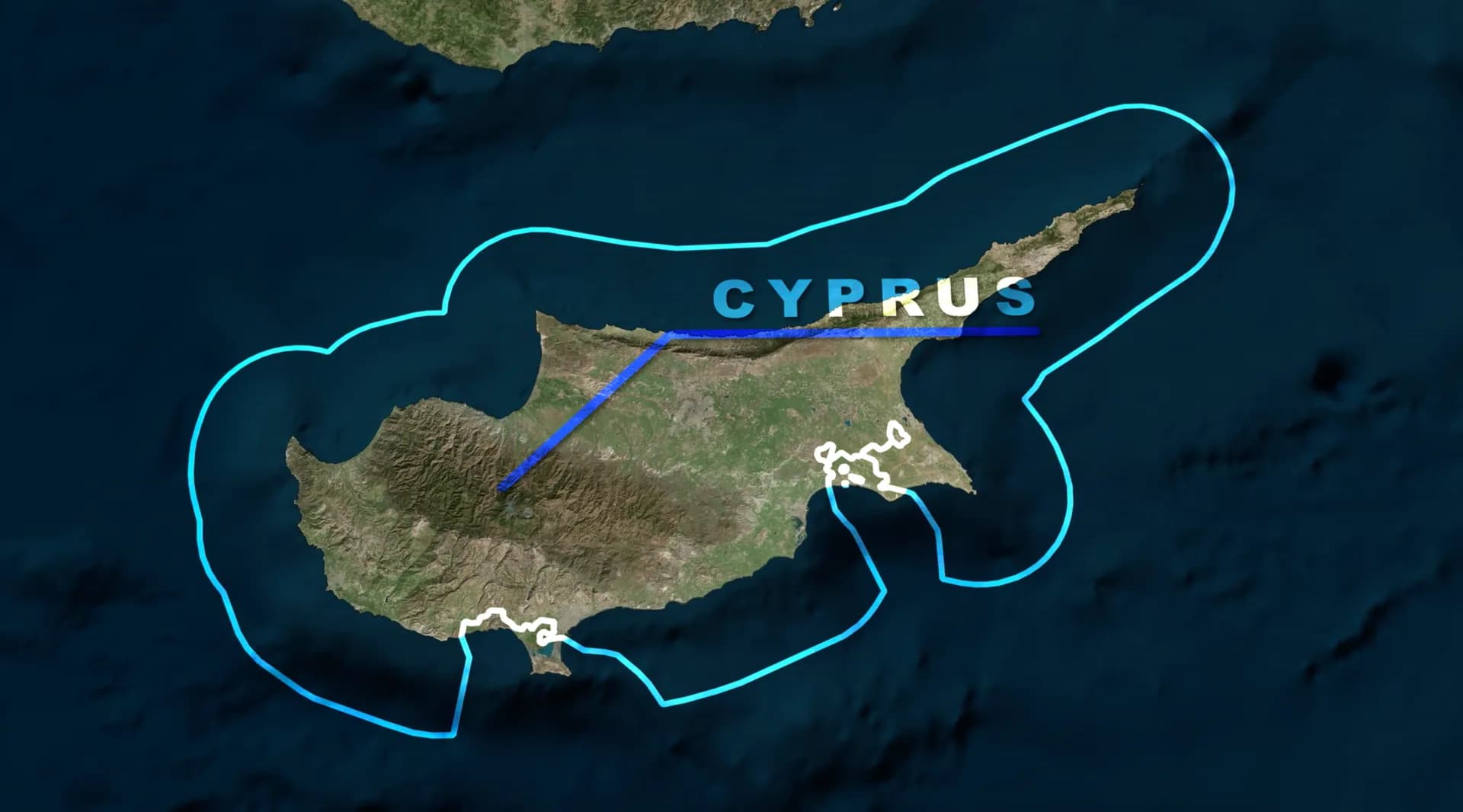
The European Union (EU) –Central Asia Summit, held in Samarkand on April 4, 2025, concluded with a joint declaration in which the participating Central Asian states—Kazakhstan, Uzbekistan, Kyrgyzstan, and Turkmenistan—reaffirmed their support for United Nations Security Council Resolutions 541 (1983) and 550 (1984). These resolutions, originally adopted in the aftermath of the proclamation of the Turkish Republic of Northern Cyprus (TRNC) ( Türkiye is the only country which recognises Northern Cyprus), call upon all United Nation (UN) member states not to recognize any entity established in violation of the sovereignty of the Republic of Cyprus. By endorsing these resolutions, the Central Asian countries effectively reiterated their non-recognition of the TRNC, a decision that reverberated widely across diplomatic and media circles.
In Türkiye, this move was received with considerable concern and disappointment. For many Turkish policymakers and commentators, the clause constituted not merely a reaffirmation of international legal norms, but a symbolic distancing by long-standing partners with shared historical, cultural, and linguistic bonds. Some analysts went so far as to characterize the development as a strategic setback for Ankara’s engagement with the Turkic world, or even as a form of diplomatic misalignment that risks undermining Türkiye’s vision for deeper regional integration under the framework of the Organization of Turkic States (OTS).
From Ankara’s perspective, the Turkish Republic of Northern Cyprus is not an unlawful entity but a legitimate political structure born out of necessity, following the breakdown of the bi-communal Republic of Cyprus in 1963 and the ensuing decades of systemic discrimination and violence against Turkish Cypriots. Turkey maintains that the intervention in 1974, carried out under the guarantor status defined by the 1960 Treaty of Guarantee, was aimed at restoring constitutional order and protecting the Turkish Cypriot community from enosis-driven threats. In this regard, Turkey asserts that the TRNC’s continued existence is vital for ensuring the political equality and security of Turkish Cypriots, particularly in the face of decades-long negotiation deadlocks and unilateral policies pursued by the Greek Cypriot administration under the guise of being the sole representative of the island.
It is against this complex historical and legal backdrop that the Samarkand declaration must be interpreted. While the inclusion of the Cyprus clause may appear procedural from a diplomatic standpoint, its timing and geopolitical implications are far from neutral. The fact that it was signed at a high-profile summit between the EU and Central Asian states has raised questions in Turkey about the degree to which Brussels might be leveraging its economic and political influence to shape the foreign policy preferences of countries traditionally seen as part of Ankara’s extended cultural and strategic neighborhood.
Moreover, the reaffirmation of non-recognition was seen by many in Turkey not only as a contradiction of the spirit of Turkic solidarity but also as a failure to acknowledge the legal and historical complexities of the Cyprus issue. Turkish analysts emphasized that the TRNC has consistently demonstrated its willingness to negotiate a fair and lasting settlement on the island, most notably through its support for the 2004 Annan Plan, which was overwhelmingly endorsed by Turkish Cypriots but rejected by the Greek Cypriot side. From this perspective, the Central Asian countries’ endorsement of the clause without reference to these dynamics was interpreted as a one-sided reading of international law that overlooks the political realities on the ground.
Echoes of the Samarkand Summit: Perspectives from Turkish, Russian, Central Asian, and European Media
In an article published on April 9, 2025, by VPO Analytics (ВПО Аналитика), it was argued that the decision reflects a conscious effort by Central Asian states to assert their sovereignty in the face of growing Pan-Turkic narratives emanating from Turkey. The article links Turkey’s geopolitical discourse—such as references to a future “Army of Turan” and Ankara’s leadership aspirations within the Organization of Turkic States (OTS)—to a cautious stance adopted by Central Asian governments. It suggests that these countries are pursuing a multi-vector foreign policy that includes closer alignment with the European Union. Notably, VPO Analytics, a Russia-based platform, presents this analysis from a perspective that appears intended to frame Turkish influence in the region as potentially destabilizing. This interpretation was quickly echoed by Sputnik Armenia, indicating a shared discourse among certain Russia-affiliated media.
On the same day, Politik.uz published a report emphasizing that the governments of Kazakhstan, Uzbekistan, and Turkmenistan had reaffirmed their support for the aforementioned UN resolutions during the Samarkand summit. The article argued that the move represents a strategic balancing act intended to preserve regional autonomy amid Turkey’s expanding regional outreach. It also highlighted the recent upgrading of diplomatic ties between some Central Asian states and the Republic of Cyprus, which is interpreted as an effort to limit Ankara’s influence. The report further contended that such developments weaken internal cohesion within the OTS and cast doubt on Turkey’s leadership role in the organization.
An earlier report by Euractiv (September 20, 2023) had already provided insight into the EU’s position on this issue. Dietmar Krissler from the European External Action Service (EEAS) warned that accepting the TRNC as an observer in the OTS could have negative consequences for the EU’s relations with Central Asian countries. Krissler noted that such a move might delay or obstruct the ratification of the Enhanced Partnership and Cooperation Agreements (EPCAs) with the EU. His remarks clearly signaled that Cyprus remains a sensitive issue for the EU, and that member states would closely monitor any engagement between Central Asian countries and the Turkish Cypriot administration.
In its April 15 report, Daryo.uz focused on the economic dimension of the Samarkand summit, suggesting that Central Asian governments’ reaffirmation of the UN resolutions may have been influenced by the EU’s €12 billion investment promise. The report also noted Turkey’s ongoing diplomatic efforts to increase international recognition of the TRNC. However, it concluded that the Samarkand declaration reflects a pragmatic approach by Central Asian states to prioritize strategic cooperation with the EU—an approach that may complicate Ankara’s regional ambitions. From this perspective, the decisions made in Samarkand represent an attempt by these states to maintain a delicate balance in their external relations and to secure tangible economic gains.
These media narratives, however, largely omit the Turkish perspective on the Cyprus issue. Turkey has consistently argued that the TRNC was established to ensure the political equality and security of Turkish Cypriots after the breakdown of the bi-communal structure of the Republic of Cyprus in 1963. Yet, most international analyses fail to take into account Turkey’s legal and historical justifications, leading to a portrayal of the issue through a narrowly defined lens.
A BBC analysis titled “What Motivated Central Asia’s Controversial Cyprus Decision?” (April 2025) presented a range of expert opinions. Former Kazakh diplomat Beysebayev remarked that the EU’s financial incentives may have outweighed the diplomatic costs: “I believe the regional leaders thought disappointing Turkey was a price worth paying for this ‘gift’.”Kyrgyz expert Dr. Chinara Esengul emphasized that “strategic priorities—not emotions—define foreign policy in the region”. Meanwhile, Alisher Ilkhamov, director of Central Asia Due Diligence, suggested that “the Cyprus clause may have been inserted into the joint declaration at the insistence of certain EU member states”. While he acknowledged that Central Asian states could have resisted the inclusion, he ultimately described their acquiescence as a diplomatic misstep.
Uzbek political analyst Rafael Sattarov echoed similar concerns, stating that Central Asian governments currently lack the political capital to challenge broader international narratives on issues like Cyprus. Both Sattarov and Esengul noted the absence of coordinated foreign policy positions among the OTS member states, pointing to the difficulty of forming unified diplomatic strategies on complex international matters.
Some experts argue that Turkey has not effectively communicated its position on Cyprus to its Central Asian partners. Others, including Ilkhamov, have proposed that elevating the TRNC’s status within the OTS could serve as a partial remedy to Ankara’s diplomatic isolation on the matter. Still, the OTS’s overall significance as a regional actor remains contested. According to Sattarov, the organization functions more as a symbolic or supplementary platform than a primary tool of foreign policy. He remarked, “For Erdoğan, it plays a key role in his coalition with the MHP. For Azerbaijan, it is a means to avoid diplomatic isolation. For the Central Asian countries, it is one component of their multi-vector diplomacy.” This interpretation supports the view that while the OTS emphasizes shared identity and cultural ties, its practical influence is limited by diverging national interests. Despite rhetorical references to Turkic solidarity, decisions such as those taken in Samarkand are still largely determined by pragmatic considerations of state interest and geopolitical alignment.
The article also highlights a broader reality: that Central Asian states are carefully navigating a geopolitical landscape dominated by major powers such as China, Russia, the EU, the United States, and Turkey. While Turkey’s presence and influence in the region have grown, it continues to trail Russia and China in terms of institutional and strategic depth. Interestingly, some experts point out that in the event of a regional crisis, Turkey might offer more immediate and tangible support than the EU—though this remains speculative.
Regarding the future of the TRNC’s recognition, Sattarov cautioned that Central Asian countries might face accusations of inconsistency if they were to recognize the TRNC while not extending similar recognition to disputed regions like Crimea or Donetsk. However, he added a caveat: “Never say never,” suggesting that long-term shifts in regional dynamics could produce unexpected outcomes.
An additional point of contention arises in relation to Turkmenistan’s endorsement of the Cyprus-related clause. As a country that has maintained a United Nations-recognized status of permanent neutrality since 1995, Turkmenistan is generally expected to refrain from aligning itself with positions that may be construed as taking sides in unresolved international disputes. The inclusion of its name in a declaration that explicitly affirms one party’s perspective on the Cyprus issue appears to run counter to the principles of its neutral foreign policy. While Ashgabat has historically avoided entanglements in military alliances or contentious geopolitical matters, its decision to co-sign a document referencing the Cyprus conflict has led some observers to question whether its neutrality is being selectively applied or quietly eroded under the pressure of growing ties with the European Union. From Ankara’s point of view, such a move is particularly disappointing given that Turkmenistan, as a fellow Turkic state with no direct stake in the Cyprus issue, might have been expected to maintain a more balanced or reserved stance.
Conclusion
The Cyprus clause adopted at the Samarkand Summit serves as a revealing case study in the complexities of Central Asia’s foreign policy calculations. While on the surface it reflects a continuation of support for existing UN resolutions, its broader significance lies in what it signals about regional alignments, intra-Turkic diplomacy, and the constraints of Turkic solidarity. Central Asian states appear to be navigating their roles within the OTS with caution, mindful not to jeopardize strategic relations with the European Union, while still maintaining symbolic engagement with Turkey.
Turkey’s efforts to enhance the TRNC’s international legitimacy face enduring challenges—not necessarily due to lack of regional affinity, but because of geopolitical realities that privilege economic incentives, diplomatic partnerships, and strategic balancing over ideological commonality. The Samarkand declaration is thus not merely a policy statement on Cyprus, but a mirror reflecting the evolving dynamics of Eurasian diplomacy, where Ankara’s ambitions, Brussels’ influence, and Central Asia’s pragmatism intersect.
Of particular note is the endorsement of this clause by Turkmenistan, a country that holds a permanent neutrality status recognized by the United Nations. Such a move raises questions about the coherence of Turkmen foreign policy and the credibility of neutrality claims when positions are taken on unresolved international disputes. In the long term, actions that appear to contradict stated principles of non-alignment risk undermining both national diplomatic integrity and the broader regional atmosphere of trust. A sustainable Eurasian security and cooperation framework can only emerge if regional actors act consistently with the values they profess—chief among them, respect for neutrality, balance, and inclusive engagement.
Казус Северного Кипра: в Центральной Азии не хотят сливаться в объятиях с наследниками османов, https://vpoanalytics.com/sobytiya-i-kommentarii/kazus-severnogo-kipra-v-tsentralnoy-azii-ne-khotyat-slivatsya-v-obyatiyakh-s-naslednikami-osmanov/, (15.04.2025).
Раскол в тюркском мире и удар по Турции? 3 страны Центральной Азии осудили оккупацию Кипра, https://am.sputniknews.ru/20250415/raskol-v-tyurkskom-mire-i-udar-po-turtsii-3-strany-tsentralnoy-azii-osudili-okkupatsiyu-kipra-86025416.html, (15.04.2025).
Центральная Азия подписалась под требованием не признавать Северный Кипр, https://politik.uz/novosti/czentralnaya-aziya-podpisalas-pod-trebovaniem-ne-priznavat-severnyj-kipr, (15.04.2025).
EU warns Central Asia of ‘negative effects’ of appeasing Turkey with North Cyprus, https://www.euractiv.com/section/global-europe/news/eu-warns-central-asia-of-negative-effects-over-appeasing-turkey-with-north-cyprus/, (07.05.2025).
Markaziy Osiyo davlatlari Kipr masalasida Turkiyaga qarshi chiqdi, https://daryo.uz/2025/04/15/markaziy-osiyo-davlatlari-kipr-masalasida-turkiyaga-qarshi-chiqdi, (07.05.2025).
Onur Erem, Rufat Ergeshov, Orta Asya ülkelerinin tartışmalı Kıbrıs kararının arkasında hangi nedenler var? https://www.bbc.com/turkce/articles/ckg2w41y970o, (07.05.2025).
Cyprus (Historical Overview), https://www.mfa.gov.tr/cyprus-_historical-overview_.en.mfa, (10.04.2025).
Historical Perspective, https://mfa.gov.ct.tr/cyprus-negotiation-process/historical-background/, (10.04.2025).
Joint Declaration following the first European Union – Central Asia Summit, https://www.consilium.europa.eu/en/press/press-releases/2025/04/04/joint-declaration-following-the-first-european-union-central-asia-summit/, (15.04.2025).
Dolunay Yusuf Baltürk
Contributing writer at EUReflect.
Follow EUReflect
See more of our reporting on Google
Mark EUReflect as a preferred source and our stories are ranked higher for you in Top Stories, Discover and Google News — and carry a “preferred” badge when they are cited in AI results.
Add EUReflect as a preferred source