Navi Pillay wins Nobel Peace Prize as US sanctions ICC
The Norwegian Nobel Committee awarded the 2026 Peace Prize to Navi Pillay, a former UN human rights chief and current ICJ judge. Hours later, the US announced sanctions against the International Criminal Court.
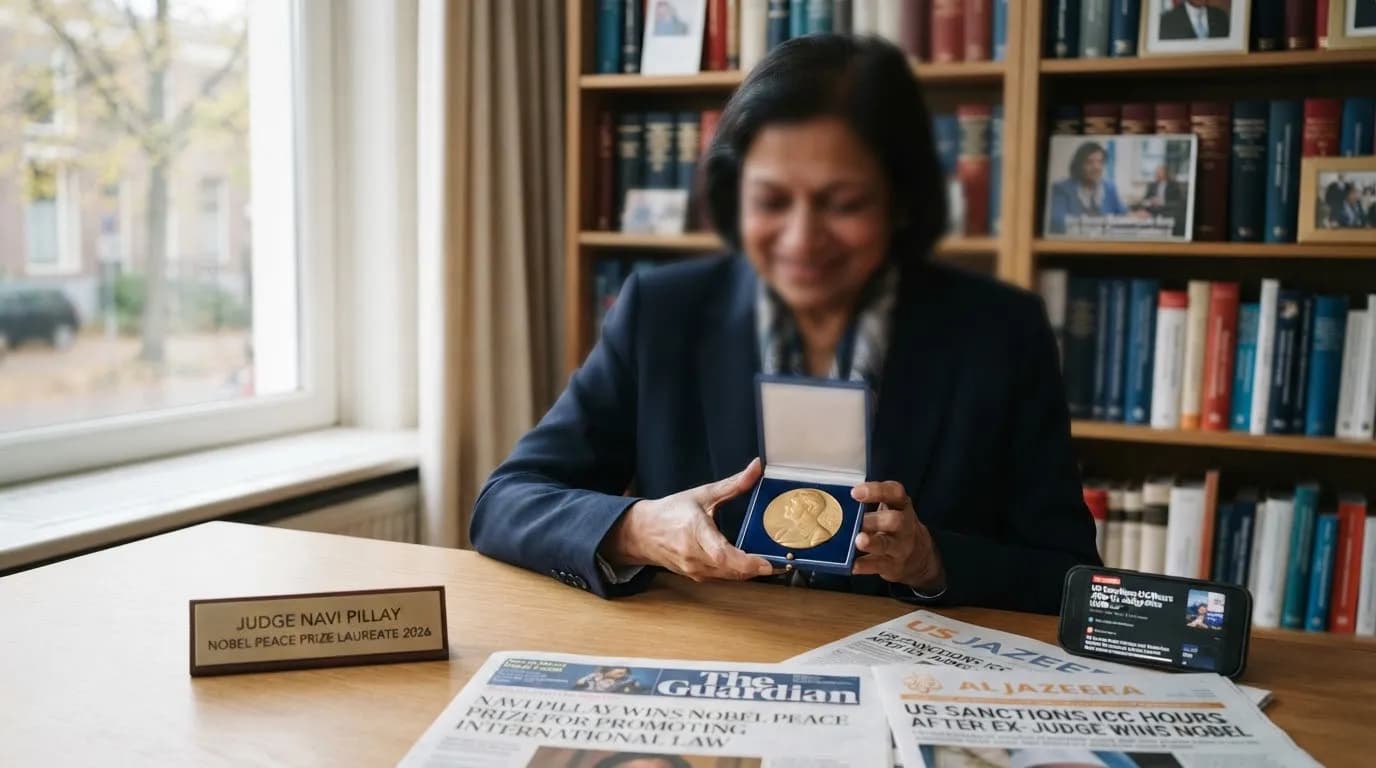
Navi Pillay, a former UN human rights chief and current judge at the International Court of Justice, has won the 2026 Nobel Peace Prize. The Norwegian Nobel Committee cited her efforts to promote peace and international law. Hours later, the United States announced sanctions against the International Criminal Court.
A career from apartheid South Africa to The Hague
Pillay, 85, is a South African former judge who served as the UN High Commissioner for Human Rights. The Nobel Committee said she has shown that legal measures can help prevent acts of war and violence.
She chaired a UN commission that concluded Israel was guilty of genocide in Gaza. She is currently serving as a judge at the ICJ.
According to Euronews, Pillay said she initially thought the news was a joke and wanted to verify the announcement before believing it.
US sanctions the ICC hours after the award
US Secretary of State Marco Rubio announced sanctions against the International Criminal Court on Friday, according to Al Jazeera. The move came hours after Pillay's Nobel award was announced.
The timing has drawn attention given Pillay's role at the ICJ and her previous work on Gaza. The US has not linked the sanctions directly to the Nobel announcement in the material available.
Questions of impartiality
France 24 spoke with Rosa Freedman, Professor of Law, Conflict and Global Development at the University of Reading, who said Pillay's career represents a remarkable contribution to international law and human rights. Freedman also said Pillay's legacy raises difficult questions about political impartiality, particularly in relation to Israel and Gaza.
The Nobel Committee's decision to honour Pillay is likely to be debated in light of these concerns.
Why this matters for Europe
The International Criminal Court and the International Court of Justice are both based in The Hague, and their work directly affects European legal and diplomatic frameworks. US sanctions against the ICC could complicate cooperation between European states and the court, particularly on cases involving allies or third countries.
The award to Pillay, and the US response, also highlight the growing tension between international legal institutions and major powers, a dynamic that shapes European foreign policy discussions.
Sources
- BBC News: Navi Pillay, former UN human rights chief, wins Nobel Peace Prize
- Al Jazeera: Rogue court’: US sanctions ICC hours after ex-judge wins Nobel Prize
- France 24: Navi Pillay awarded Peace Prize: 'Lifetime spent fighting for what's right & to uphold human rights'
- Euronews: I still want to verify this’: Nobel Peace Prize winner Navi Pillay’s first reaction
- The Guardian: ICJ judge Navi Pillay wins Nobel peace prize for promoting international law
- Sky News: And the Nobel Peace Prize goes to...
Related Topics
Zhansaya Nurlanovna
Contributing writer at EUReflect.
Follow EUReflect
See more of our reporting on Google
Mark EUReflect as a preferred source and our stories are ranked higher for you in Top Stories, Discover and Google News — and carry a “preferred” badge when they are cited in AI results.
Add EUReflect as a preferred source