Azerbaijan and the United Kingdom: A New Chapter in Strategic Partnership
The joint declaration signed in Dublin on 12 November ties security, economic development and human capital into one partnership, writes Azerbaijani MP Parvana Valiyeva.
Opinion. By Parvana Valiyeva, Member of the Parliament of Azerbaijan and of its Foreign and Inter-Parliamentary Relations Committee.
The signing of the Joint Declaration on Strategic Partnership between the Republic of Azerbaijan and the United Kingdom of Great Britain and Northern Ireland marks an important milestone in the development of bilateral relations. Signed on 12 November 2026, within the EPC Summit in Dublin, the document brings together three interconnected dimensions of cooperation: security, economic development and human capital. This integrated approach reflects the changing nature of international partnerships, in which political relations, economic resilience, technological progress and security are increasingly interconnected.
Relations between Azerbaijan and the United Kingdom have developed over many years, looking at the history, The Azerbaijan Democratic Republic actively sought to establish diplomatic and political relations with Great Britain from the early days of its independence. Initial contacts with the British military command General William Thompson began in November 1918, followed by intensive diplomatic engagement in 1919. These efforts culminated in the de facto recognition of Azerbaijan's independence by the Great Britain, on 11 January 1920[1].
After restoring its independence in 1991, Azerbaijan built relations with the UK in 1992[2], followed by the bilateral declarations signed in 1994 and 1998. The relations over the years, have been underpinned by political dialogue, mutual trust and economic cooperation. The new document seeks to adapt this partnership to recent international realities.
Defence and security constitute one of the three main pillars of the new partnership. The declaration identifies opportunities to enhance cooperation in military training, capacity building, interoperability, defence industry engagement, law enforcement, border management and legal and judicial cooperation.
In today's increasingly complex international environment, security challenges extend far beyond conventional military threats. Regional instability, cross-border crime and emerging risks require closer coordination, stronger institutions and effective international partnerships. Against this background, deeper cooperation between Azerbaijan and the UK can facilitate the exchange of expertise, strengthen institutional capabilities and contribute to a more comprehensive approach to regional and international security. As a nuclear-armed state, the UK is the third-largest defence spender in NATO. It also possesses significant strategic naval capabilities. The formation of Azerbaijan's Naval Forces began after British forces withdrew from Azerbaijan in August 1919. Until then, British naval vessels had been responsible for providing defence along the western shores of the Caspian Sea[3].
One of the declaration’s central political messages is its reaffirmation of the fundamental principles of international law and the United Nations Charter, including sovereignty, independence, territorial integrity and the inviolability of internationally recognised borders. The document also welcomes the progress made towards the normalisation of relations between Azerbaijan and Armenia, referring to the declaration adopted in Washington on 8 August 2025. This reflects the wider international interest in a stable, secure and economically interconnected South Caucasus.
Economic cooperation represents another major pillar of the declaration. The two countries aim to expand trade and investment, encourage commercial partnerships and explore opportunities in renewable energy, infrastructure, services, financial markets and support for small and medium-sized enterprises.
The development of transport and logistics connectivity is particularly significant. Azerbaijan's strategic geographical position between Central Asia and Europe, together with its role in the East–West transport network and the Middle Corridor, gives the country growing importance as a regional connectivity hub. Cooperation with the United Kingdom in transport, logistics and cross-border infrastructure could contribute to more efficient trade routes and stronger links between regional and international markets.
The three decades of successful and mutually beneficial cooperation with BP in the conventional energy sector have now paved the way for the green energy transition to become another important component of our bilateral partnership. Azerbaijan is advancing its renewable energy agenda and seeking to strengthen its role in the emerging regional green energy landscape. British expertise in finance, technology and investment could complement Azerbaijan's energy potential and ambitions. Cooperation in green finance, low-carbon technologies and sustainable infrastructure could create mutual economic benefits while supporting broader climate objectives.
The third pillar focuses on education, innovation, science and technology. The declaration identifies cooperation in higher and vocational education, professional training, digital and technical skills, public-sector capacity building, artificial intelligence, digital governance, research and innovation.
Overall, the significance of the declaration will ultimately depend on its implementation. Political commitments must be translated into concrete initiatives, investment projects, institutional cooperation and tangible benefits for businesses and citizens in both countries. Sustained political dialogue and effective coordination will therefore be essential.
The new Azerbaijan–United Kingdom strategic partnership signals the intention of both countries to move beyond traditional areas of engagement and build a broader, more diversified and future-oriented relationship.
Ultimately, the declaration represents an important step in the evolution of bilateral relations. Its long-term success will be measured not only by the commitments it contains, but by the ability of both countries to turn those commitments into sustainable cooperation and concrete results.
Notes
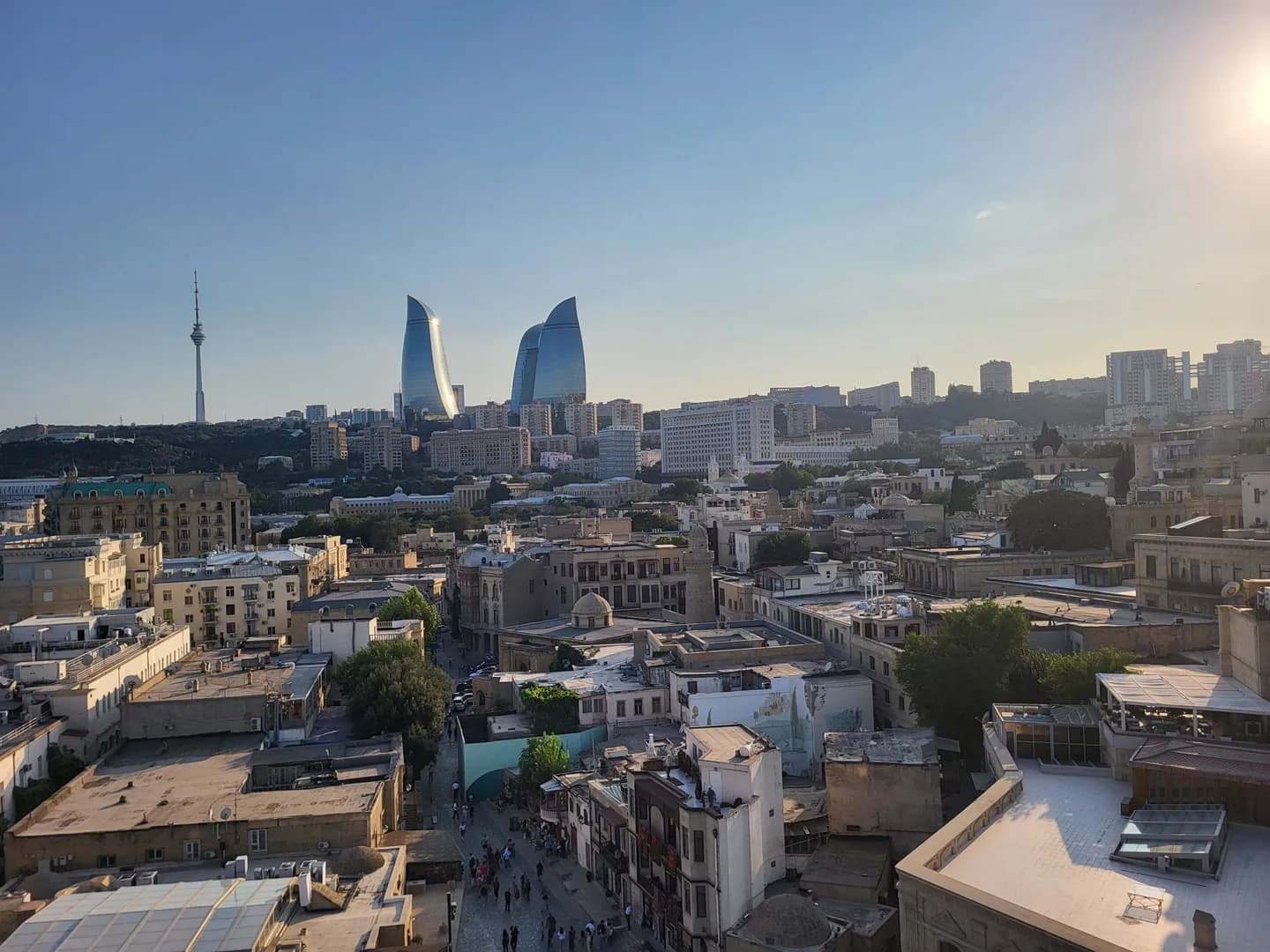
Main image: The Baku skyline, with the Flame Towers rising above the Old City. Photo: Viceskeeni2 / Wikimedia Commons, CC0.
Related Topics
EUReflect News
Site Administrator
Follow EUReflect
See more of our reporting on Google
Mark EUReflect as a preferred source and our stories are ranked higher for you in Top Stories, Discover and Google News — and carry a “preferred” badge when they are cited in AI results.
Add EUReflect as a preferred source