Akhal-Teke Horses
The Akhal-Teke horse is one of the oldest horse breeds from Turkmenistan. Known for its golden sheen, elegant build, and exceptional endurance, it developed in harsh desert conditions and stands out for both its physical abilities and cultural significance.
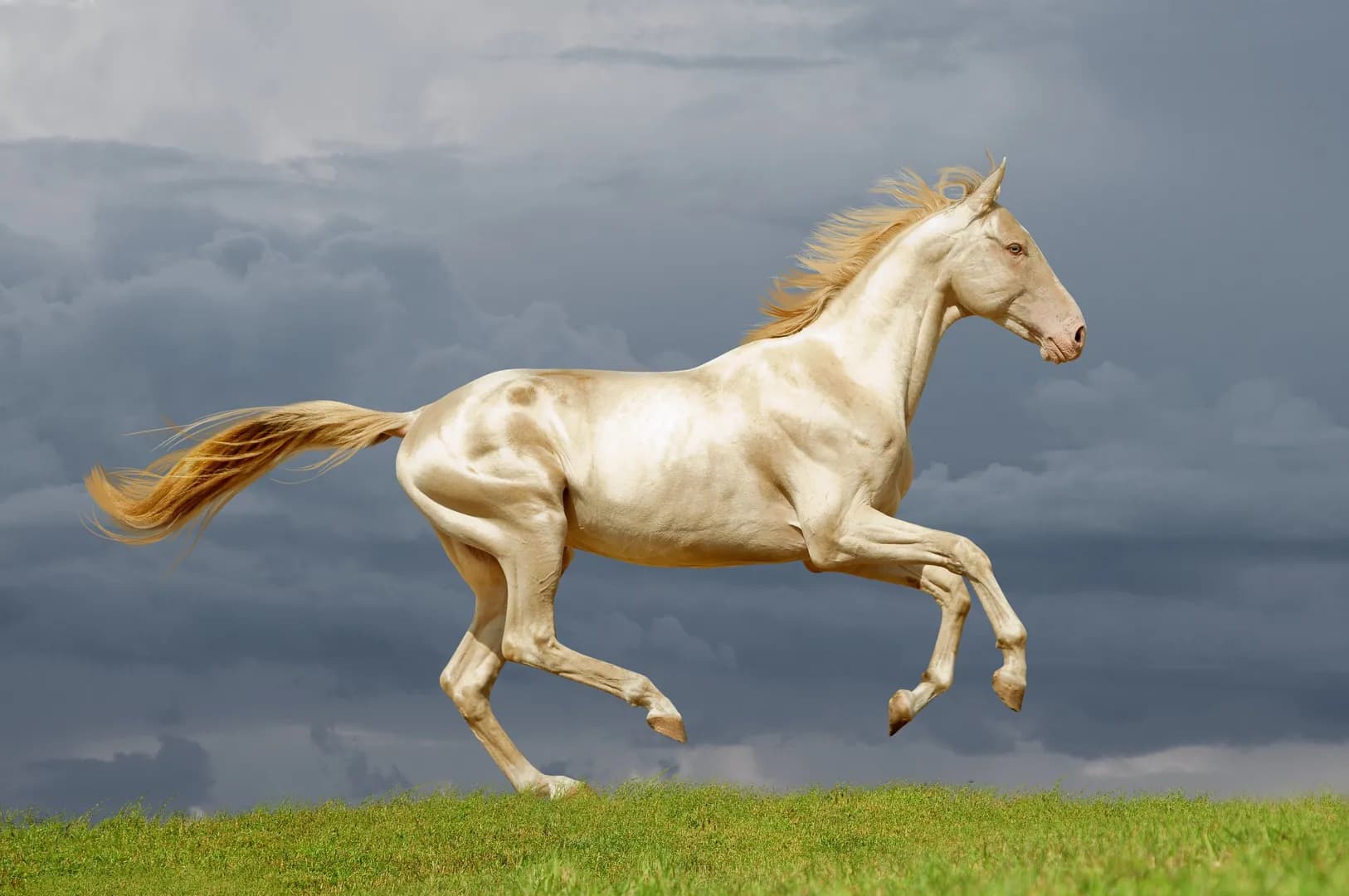
Few horse breeds look as unforgettable as the Akhal-Teke. With its golden shine, slim elegant body, and reputation for incredible endurance, this horse seems almost mythical at first sight. Yet behind its unusual beauty lies a long history shaped by the deserts of Central Asia and the traditions of Turkmenistan.
A horse shaped by the desert
The Akhal-Teke is one of the oldest horse breeds in the world and comes from Turkmenistan. For centuries, it developed in the harsh conditions of Central Asia, where horses needed to be fast, resilient, and able to endure heat, long distances, and little water. That environment helped create a breed that is not only elegant, but also extremely tough. Today, the AkhalTeke is still admired for combining beauty with endurance in a way that few other breeds do.
At first glance, the Akhal-Teke looks different from most horses people are used to seeing. It usually has a slim body, long legs, a narrow head, and a long, graceful neck. Its movement is light and smooth, which adds to its almost fragile appearance. But the breed’s most famous feature is its coat. Many Akhal-Tekes have a special metallic sheen that makes them look golden or silver in sunlight. This effect is linked to the structure of the hair itself, which reflects light in an unusual way (Central Asia Guide, n.d.; Global Voices, 2025). Because of that, the breed often seems almost unreal, as if it belongs more in a legend than in everyday life.
More than beauty
What makes the Akhal-Teke remarkable is that its beauty is matched by its physical ability. These horses are known for stamina, agility, and mental sharpness. They were bred in conditions where survival depended on efficiency, so they learned to do more with less. That is why the breed became associated with long-distance riding and exceptional endurance. One of the best-known examples is the famous ride from Ashgabat to Moscow in 1935, which helped prove just how strong and durable these horses were (Akhal-Teke Association of America, n.d.; Global Voices, 2025).
The Akhal-Teke is also known for its personality. People often describe it as intelligent, sensitive, and deeply loyal. It is not usually presented as an easy horse for everyone. Instead, it tends to bond very closely with one person and responds best to patience and trust. This is one reason why the breed has such a strong reputation: it is admired not only for what it can do physically, but also for the intensity of its character. In Turkmen tradition, this bond between horse and rider has long been treated as something serious and meaningful rather than simply practical (Advantour, n.d.).
A symbol of Turkmen heritage
In Turkmenistan, the Akhal-Teke is much more than a horse breed. It is part of the country’s cultural identity and historical memory. Traditions connected to breeding, caring for, decorating, and celebrating these horses remain culturally important, and UNESCO added the art of Akhal-Teke horse breeding and horse decoration to the Representative List of the Intangible Cultural Heritage of Humanity in 2023 (UNESCO, 2023). This recognition matters because it shows that the Akhal-Teke is tied not only to sport or appearance, but also to living customs passed down through generations.
The breed’s history also includes loss and survival. In the Soviet period, especially under Stalin, Akhal-Teke horses suffered heavily, and large numbers were destroyed. That darker chapter is part of why the breed is treated with such emotion in Turkmenistan today: preserving it is often seen as preserving part of the nation’s past (Türkiye Today, 2025). So when people call the Akhal-Teke a national treasure, they are not only talking about a beautiful horse. They are talking about endurance in every sense — physical, cultural, and historical.
In the end, the Akhal-Teke stands out because it is both athletic and symbolic. It is famous for its shining coat and elegant body, but those qualities alone do not explain its reputation. What truly makes the breed special is the combination of grace, stamina, intelligence, and cultural meaning. The Akhal-Teke is not just admired because it looks extraordinary. It is admired because it carries a long history with it.
Bibliography
Advantour. (n.d.). Turkmen Akhal-Teke horses. https://www.advantour.com/turkmenistan/culture/akhal-teke.htm
Akhal-Teke Association of America. (n.d.). The breed. https://akhal-teke.org/the-breed/
Central Asia Guide. (n.d.). Akhal-Teke horse. https://centralasia.guide/turkmenistan/destinations-tr/akhal-teke-horse/
Global Voices. (2025, April 24). Meet the majestic Akhal-Teke horses, the national pride of Turkmenistan. https://globalvoices.org/2025/04/24/meet-the-majestic-akhal-teke-horses-thenational-pride-of-turkmenistan/
Globetrotting. (n.d.). Horse breed: Akhal-Teke. https://www.globetrotting.co/horse-breedakhal-teke/
Konnoprzezzycie.pl. (2025, December 10). Akhal-Teke horse – the Golden Warrior from Turkmenistan. https://konnoprzezzycie.pl/en/blog/akhal-teke-horse/
Türkiye Today. (2025, January 30). Untold story of Akhal-Teke: The horse breed that faced genocide. https://www.turkiyetoday.com/lifestyle/untold-story-of-akhal-teke-the-horse-breedthat-faced-genocide-112918?s=2
UNESCO. (2023). Art of Akhal-Teke horse breeding and traditions of horses’ decoration. https://ich.unesco.org/en/RL/art-of-akhal-teke-horse-breeding-and-traditions-of-horsesdecoration-01978
Oleh Behunts
Contributing writer at EUReflect.
Follow EUReflect
See more of our reporting on Google
Mark EUReflect as a preferred source and our stories are ranked higher for you in Top Stories, Discover and Google News — and carry a “preferred” badge when they are cited in AI results.
Add EUReflect as a preferred source