Business Diplomat's third expert interview identifies five unwritten principles — respect, punctuality, confidentiality, careful communication and cultural awareness — that decide whether a contract gets signed at all.
Business Diplomat's fifth expert interview asks what a decade of training young people in business diplomacy can do for a national economy, and answers in terms of exports, investment and international partnerships rather than quick wins.
Cultural missteps rarely get mentioned in the room, but the article argues they show up later as slower replies, postponed meetings and deals that quietly go to another candidate.
Business diplomats cut the time a company spends finding the right distributor, institution or decision-maker from months to weeks, a difference that decides whether many SMEs ever start exporting at all.
A business diplomat carries their company's reputation and their country's business culture into every room, the interview argues, which is why conduct is weighed as heavily as the words spoken.
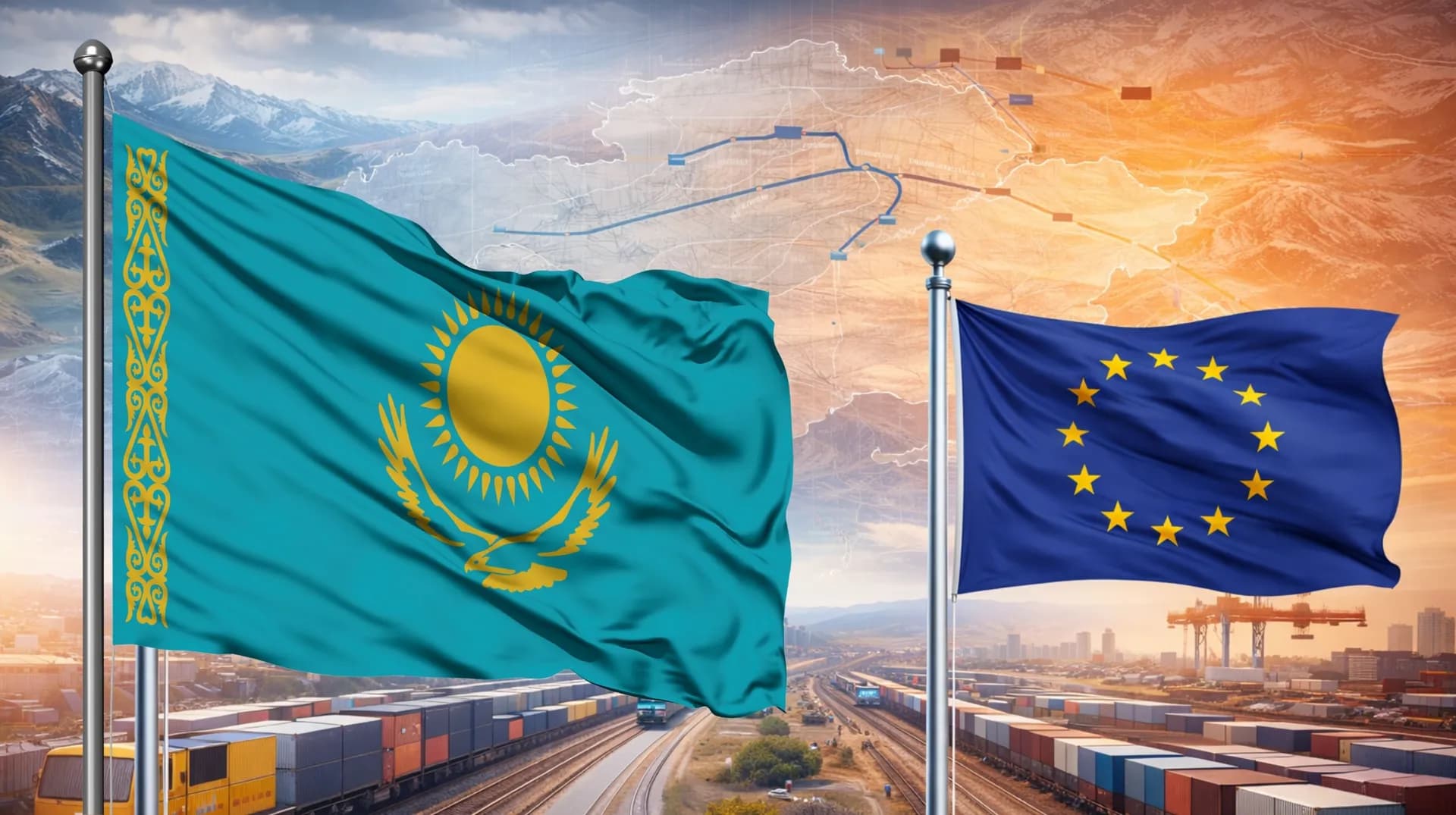
Kazakhstan’s economic reforms are shaped by EU regulatory standards, Chinese Belt and Road infrastructure investments, and an investor-friendly business environment. Together, these elements support diversification, legal certainty, and Kazakhstan’s transformation into a strategic Eurasian logistics and investment hub.
Kazakhstan is increasingly positioned as a strategic economic hub in Eurasia through a development model centered on fifteen Special Economic Zones. Located at the core of the China–Europe overland trade corridors, the country aims to transform its role from a transit territory into a center of production, investment, and logistics. These Special Economic Zones are thematically designed to support industry, petrochemicals, logistics, technology, tourism, and processing sectors. Among them, the TURAN Special Economic Zone stands out due to its large territorial scale, multi-sectoral structure, and comprehensive incentive framework. Established in the Turkistan Region, TURAN SEZ combines tourism development with manufacturing, food processing, textiles, and logistics. Expanded activity classifications, long-term tax exemptions, and free land allocation have strengthened investor interest. Between 2019 and 2025, the zone attracted significant investment volumes, generated employment, and completed a large number of projects. Overall, current trends indicate that Kazakhstan is emerging as one of the most promising economic actors in the Eurasian region, with Special Economic Zones serving as the backbone of this transformation.