EU Standards and Kazakhstan’s Reform Agenda
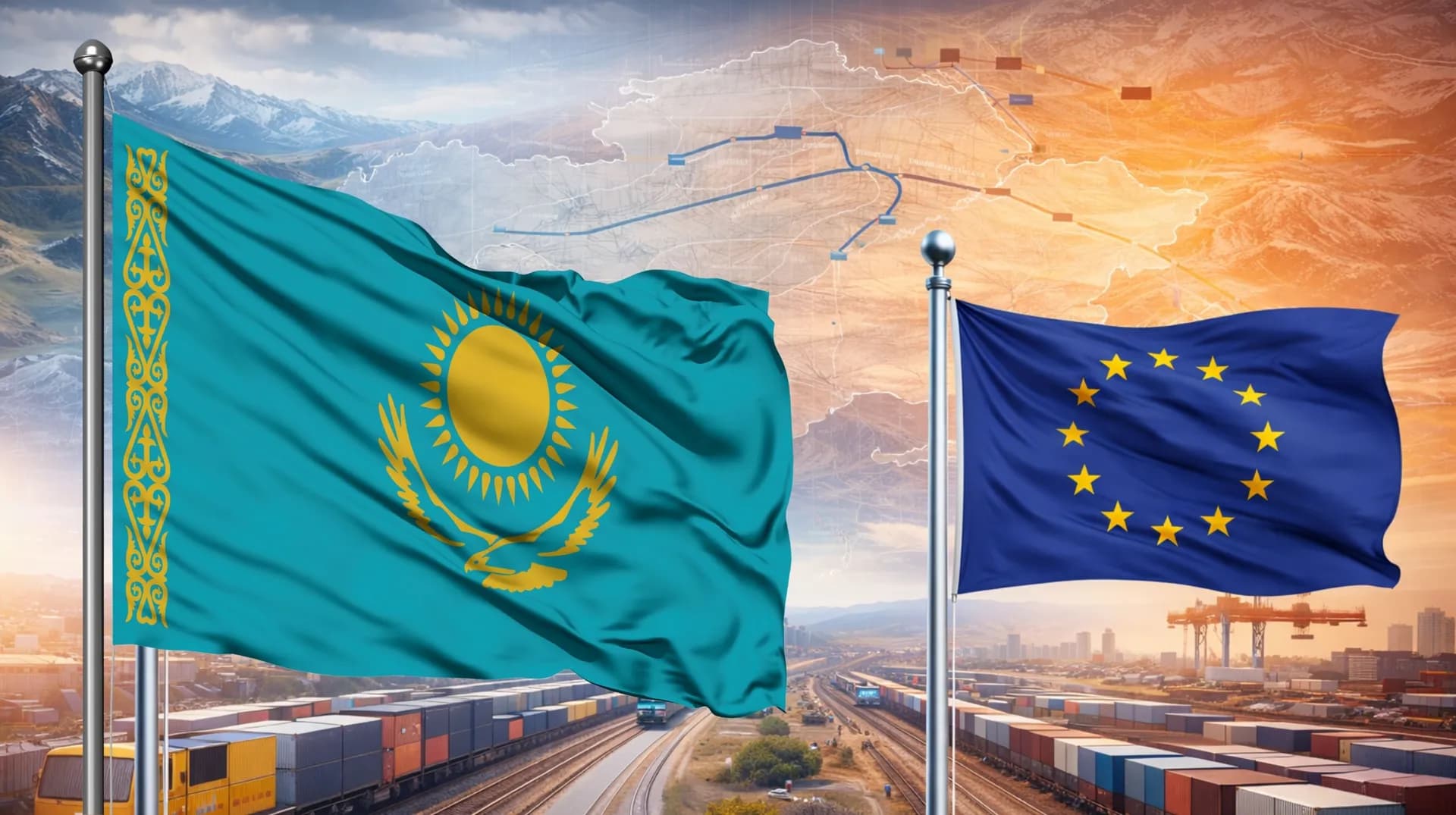
Kazakhstan’s economic reforms are shaped by EU regulatory standards, Chinese Belt and Road infrastructure investments, and an investor-friendly business environment. Together, these elements support diversification, legal certainty, and Kazakhstan’s transformation into a strategic Eurasian logistics and investment hub.
Introduction
In recent years, Kazakhstan has pursued an economic reform agenda that extends beyond domestic growth objectives and is increasingly oriented toward deeper integration into the global economic system. European Union (EU) standards, China’s infrastructure investments under the Belt and Road Initiative, and an investor-friendly corporate framework constitute the three main pillars of this strategy. When considered together, these elements illustrate Kazakhstan’s ambition to position itself not only as a regional actor in Central Asia but also as a strategic economic hub across the broader Eurasian space. At the core of this reform agenda lies an effort to align economic growth with institutional capacity, legal certainty, and international connectivity.
1.EU Standards and Kazakhstan’s Reform Agenda
Kazakhstan’s engagement with the EU cannot be reduced to trade volumes alone; the defining feature of this relationship is the process of normative alignment. Reforms in the areas of the rule of law, administrative transparency, competition policy, public procurement, and technical regulation are largely designed with reference to EU standards. This approach reflects Kazakhstan’s intention to establish a more predictable, rules-based, and accountable economic system.
From an analytical perspective, EU standards function less as a pathway toward political membership and more as a credibility and quality anchor for Kazakhstan’s reforms. Regulatory convergence with European norms reduces perceived risks for long-term and capital-intensive investments, particularly for European and multinational firms. At the same time, this alignment supports Kazakhstan’s broader objective of diversifying its external trade structure beyond energy and raw materials toward manufacturing, logistics, and services. In this sense, EU standards serve both as an internal discipline mechanism and as an external signal of reliability to global markets.
2.China and Infrastructure: Kazakhstan’s Strategic Position in Eurasia
The second major dimension of Kazakhstan’s reform strategy is its cooperation with China in the field of infrastructure development. Within the framework of the Belt and Road Initiative, China has played a central role in financing and constructing railways, logistics hubs, border crossings, and customs infrastructure across Kazakhstan. These projects have transformed the country into a key land corridor linking China with European markets, offering time and cost advantages compared to maritime routes.
Crucially, Kazakhstan does not perceive itself merely as a transit territory. Official strategies and investment policies emphasize the creation of value-added logistics services, warehousing, light manufacturing, and regional distribution centers. This approach aims to ensure that infrastructure investments generate direct and sustainable economic benefits rather than limited transit revenues alone. From this perspective, Kazakhstan–China cooperation is characterized by economic pragmatism and mutual benefit rather than ideological alignment or one-sided dependency.
3.Company Formation and Incentives for Investors
Kazakhstan has significantly simplified and digitalized its company formation procedures in recent years. For foreign investors, the most commonly used legal structure is the Limited Liability Partnership (LLP), which offers managerial flexibility alongside limited liability protection. The ability to establish a company within a short timeframe, combined with online administrative processes and legislation open to foreign capital, has enhanced the country’s overall investment attractiveness.
Additional incentives include tax exemptions, fiscal incentives, and customs advantages within Special Economic Zones (SEZs), which are designed to attract industrial and logistics investments. Kazakhstan’s strategic location at the center of the China–Europe trade corridor, coupled with comparatively low operational costs, further strengthens its competitiveness. From a structural standpoint, this model indicates that Kazakhstan seeks not merely to attract foreign capital but to retain investors and channel them toward long-term production and employment generation. SEZs, in particular, function as instruments of targeted and planned economic development rather than ad hoc growth.
Conclusion
When EU-oriented regulatory reforms, China-supported infrastructure development, and an investor-friendly corporate environment are assessed together, Kazakhstan’s economic transformation emerges as a balanced and multi-vector strategy. The country simultaneously leverages European norms to enhance legal certainty and transparency while deepening its physical integration into China-centered global trade networks. This dual orientation is consistent with Kazakhstan’s broader multi-vector foreign policy approach. As a result, Kazakhstan is gradually moving beyond its traditional role as a commodity exporter and systematically building the foundations to become one of Eurasia’s emerging centers for logistics, investment, and production.
Aigerim Absamatova
Contributing writer at EUReflect.
Follow EUReflect
See more of our reporting on Google
Mark EUReflect as a preferred source and our stories are ranked higher for you in Top Stories, Discover and Google News — and carry a “preferred” badge when they are cited in AI results.
Add EUReflect as a preferred source