Turkmenistan’s Economy Grows 6.3% in H1 2026
Turkmenistan’s economy grew by 6.3% in the first half of 2026, driven by strong oil and gas output alongside gains in construction, trade, and services. While economic stability remains solid, long-term resilience will depend on accelerating diversification beyond the energy sector.
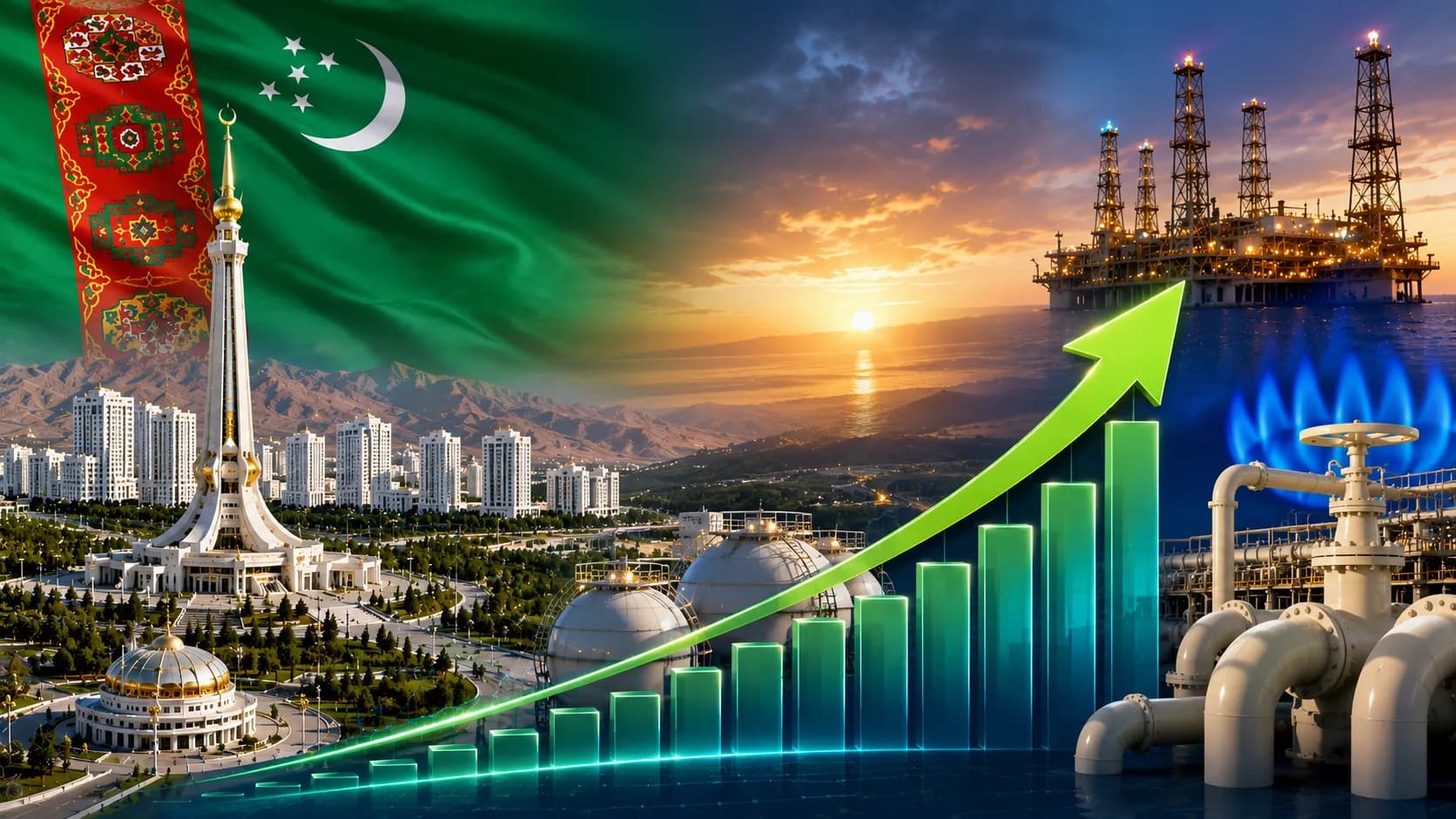
Turkmenistan continues to record steady economic growth despite regional and international challenges. In the first half of 2026, the country’s Gross Domestic Product (GDP) grew by 6.3%, a rate that reflects the economy’s ability to maintain its development trajectory amid a complex environment.
Deputy Prime Minister Hojamyrat Geldimyradov announced these results during an expanded government meeting. The various sectors showed varying performance: industry grew by 2.7%, construction by 6.7%, transport and communications by 10.4%, trade by 8.5%, agriculture by 2%, and services by 8.4%. Overall production volume for the period exceeded the same period last year by 10.4%.
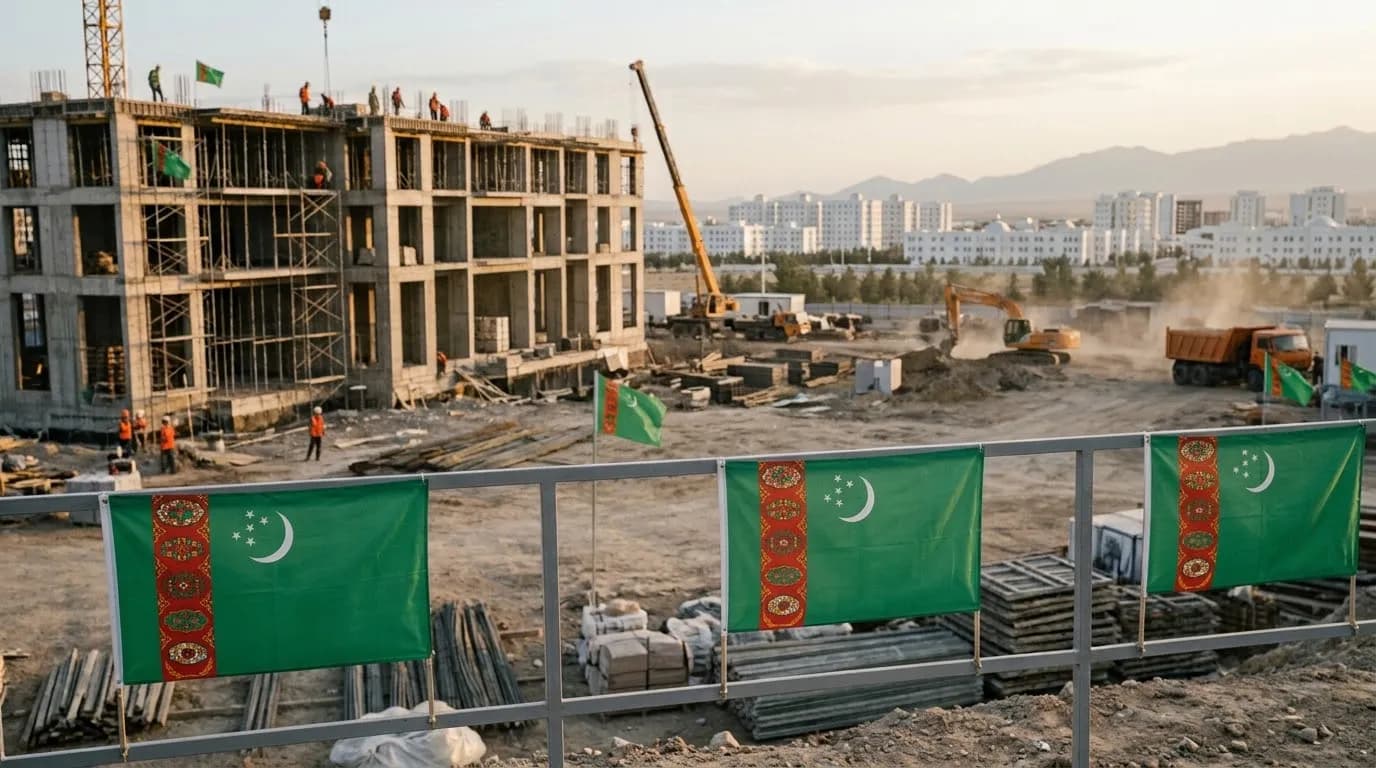
This performance indicates that some non-oil sectors are beginning to gain notable momentum. Retail trade increased by 10.1%, foreign trade by 7.5%, and capital investments rose by 4.3% to reach 18.6 billion manats, in line with the 2026 Socio-Economic Development Program. During this period, 309 thousand square meters of housing and facilities were commissioned across various regions.
However, the backbone of this economic performance remains the oil and gas sector. The state company Türkmennebit exceeded its oil production plan by 108.3%, with gasoline production surpassing targets by 16%, diesel by 11.4%, and liquefied gas by 18.5%. Natural gas production reached 107.6% of the plan. President Serdar Berdimuhamedov has emphasized that diversifying natural gas exports to global markets remains a strategic priority, with focus on developing the Galkynysh field and modernizing infrastructure.
Despite this stability, structural challenges are evident. Heavy reliance on the energy sector, even with diversification efforts, makes the economy vulnerable to fluctuations in global gas prices. Growth in non-oil sectors, particularly agriculture at only 2%, remains modest. This raises the fundamental question: How can Turkmenistan transform its stable growth into more comprehensive and diversified development?
In my view, the 6.3% growth is a significant achievement given the complex geopolitical conditions. However, sustaining this momentum will depend on the success of diversification efforts. Turkmenistan possesses vast gas reserves, but true economic resilience requires greater investment in processing industries, modern agriculture, and tourism, alongside strengthening the private sector and attracting foreign investment in non-energy fields.
I expect Turkmenistan’s economic growth to continue between 6% and 6.5% during 2026–2027, supported by rising global energy prices and the completion of projects such as the Serhetabat–Herat gas pipeline within the TAPI project. Nevertheless, if the pace of diversification does not accelerate, the economy may face difficulties in absorbing future external shocks.
In conclusion, Turkmenistan today enjoys tangible economic stability and a strong foundation of natural resources. But the real challenge is not merely maintaining current growth rates, but building a more diversified, resilient economy capable of creating sustainable jobs for future generations. The opportunity is greater today than ever before, especially with the shift toward international partnerships and investment in non-oil sectors. The key question facing decision-makers in Ashgabat is whether this stability will evolve into a comprehensive developmental leap, or whether the economy will remain dependent on a single resource. The coming years will be decisive in shaping Turkmenistan’s economic future.
Abdul Hamid Hamid Al-Kba
Contributing writer at EUReflect.
Follow EUReflect
See more of our reporting on Google
Mark EUReflect as a preferred source and our stories are ranked higher for you in Top Stories, Discover and Google News — and carry a “preferred” badge when they are cited in AI results.
Add EUReflect as a preferred source