Bangladesh — a Potential Tourism Star
Written by journalist Danylo Aleksandrov.
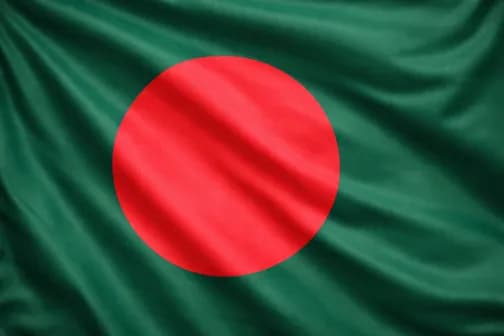
People's Republic of Bangladesh is a country located in South East Asia, on the coast of the Bay of Bengal. It borders Myanmar to the southeast and is otherwise surrounded by Indian territory. With a population of 174 million people, who live in an area of approximately 150 thousand square kilometers, Bangladesh is one of the most densely populated counties in the world, occupying the 10th place, with mostly micro- or city states such as Vatican or Monaco having more population density. With its capital located in the city of Dhaka, Bangladesh faces a set of challenges in its politics, economy and geography, and yet its tourism industry is developing, proudly inviting foreign visitors and investments. In this article we will describe the tourism industry in Bangladesh and difficulties it needs to overcome to achieve success in this domain, as well as the impact it makes on the country’s economy and its future.
Why Bangladesh?
Bangladesh has a lot to offer for tourists, as numerous attractions await visitors in every corner of the country. Some of these places are recognized on international level – such as Somapura Mahavihara, an old vihara (Buddhist temple), which was assigned UNESCO World Heritage Site status back in 1985. Another similar place, which is also on UNESCO’s list, is the Mosque City of Bagerhat located in the south of the country. Here, several hundreds of 15th century structures, a lot of them mosques, schools, bridges etc., testify to the age and richness of Bangladesh’ history. Aside from internationally protected sites, tourists in the country’s past will find lots of attractions, especially regarding the architecture. If you are not interested in the ancient ruins, throughout the country you can find preserved structures built by the British during the time when the territory of Bangladesh was still a part of British Empire. On their own, cities here have a vibrant culture and offer lots of experiences for travelers. They present a number of different activities and places, from museums and cultural spaces to busy streets with its markets and festivals. The capital city of Dhaka is one of the best examples of this, at the same time having some unique traits like having an enormous population (sometimes considered 2nd largest population city with its 36.6 million inhabitants) and, as a consequence, size, which makes it a place which is worth a visit on its own.
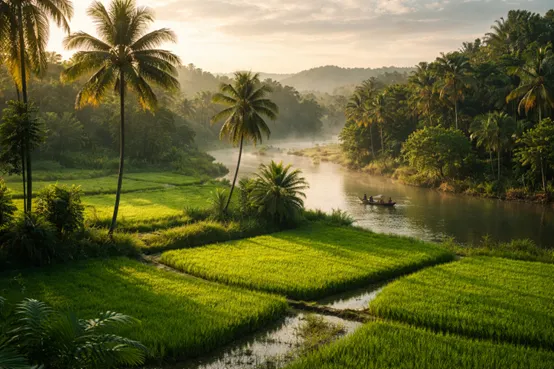
Another big contributor to local tourism is the country’s nature. Bangladesh is
home to several different biomes, each offering travelers stunning views and interesting activities. But the most famous of Bangladesh's natural landmarks is probably Sundarbans – a large area in the south which is located at the confluence of 3 rivers (Ganges, Brahmaputra and Meghna), on the coast of the Bay of Bengal. Stretching across 10,277 km2 and 2 administrative divisions, Sundarbans comprises the largest mangrove forest in the world. Home to a variety of animals, such as Royal Bengal tigers and countless others, this is one of the most popular destinations for those interested in nature and recreation.
Apart from this, we must not forget that the Bay of Bengal itself is another place attractive to tourists. Speaking on about this, we must mention the city of Cox's Bazar in the South-East of Bangladesh, especially its extensive beach. At around 120 km wide, this beach is often considered the longest natural sea beach in all of Asia and 5th longest in the world. Divided into several sections, there is an activity for everyone, aside from the usual sunbathing and swimming. Places where you can eat seafood, ride a boat or choose another activity from those offered. Annually, several million people visit this location.
To conclude this part, we can say for sure that Bangladesh has a lot to offer to travelers with different interests and tastes, so it is no wonder that local tourism industry is rising, although not without challenges. Now let’s see how that impacts the economy, as well as the problems, which should be taken care of if the country hopes to develop its tourism sector.
Economical impact
Despite numerous potential attractions for travelers, tourism in Bangladesh is still a growing industry. Jobs in tourist industry or connected to it (whether directly or indirectly) number in around 2.7 million jobs, which amounts to 3.7% of the country's total employment, as of 2013. In that same year, The World Travel and Tourism Council (WTTC) reported, that tourism and travel would directly generate around 1.7 million jobs, at the same time supporting 3.8 million of other, related jobs, which would equal 4.2% of the total employment. These statistics would mean that every year, the country’s growth rate in direct jobs would be 2.9%. So, while the numbers are not big, the growth of tourism industry in Bangladesh remains steady, despite numerous challenges that appeared through the years. Organisation for Economic Co-operation and Development reported, that in 2021 tourism generated 4.4% in GDP. To further promote the country for travelers and provide them with necessary services and infrastructure, the Ministry of Tourism of Bangladesh invests more and more funds from its yearly budget, which has lead to a steady growth. The focus of promotion efforts is on the country’s rich history, culture, as well as the beauty of its diverse nature and wildlife. After falling since 2008 peak of 467.000, starting form 2015, the annual number of arrivals in Bangladesh has been rising, from 126.000 in 2015 to 323.000 in 2019. Despite this, tourism remains less developed here than in neighboring countries. This is caused by a series of difficulties which we will look into in further sections of the article.
To conclude, it can be said, that tourism is one of the rising industries inBangladesh, which contributes more and more to the country’s economy. Although it is still behind tourism in other countries of South Asia, it is on track to take its place among one of the more popular tourist destinations in the region, as the statistics tell us that in general, every year more funds are allocated to provide better infrastructure and related services for visitors. Another positive impact are millions of jobs that are generated by tourism, which includes both the jobs that are directly connected to this sphere of economy as well as those which are contributing indirectly.
Challenges
Now, let’s look into why Bangladesh still does not receive a bigger number of annual visitors despite commiting resources into its tourism industry, as well as other factors hindering its development. This will allow us to better understand the situation and to have a glimpse at the future of the efforts undertaken by Bangladesh to have more tourists. Though it could be seen from the previous paragraphs that this South Asian country has enormous potential, a large part of it is still unexplored and there are reasons for this neglect.
One of the main challenges faced by the tourism industry of Bangladesh is the country’s economy. Although some of the numbers look promisding, such as a labour force of 71.4 million, being the 36th largest economy in the world or the fact that it is second-largest economy in South Asia, Bangladesh still has a set of problems which are to be overcome if the country hopes for more visitors which would bring more money and investments into the economy. Usually, the country’s economy is regarded as a major developing mixed one, which means it is a country which does not possess a highly developed industry, and which also combines a number of economic charactrestics of different systems, such as freedom associated with capitalism and government interference in business affairs, often attributed to left ideas such as socialism. In the fiscal year 2024–25, Bangladesh experienced its slowest economic expansion in the last three years, caused by a weaker performance of agriculture and services sectors. Conglomerates owned by families, small and medium sized private businesses dominated the country’s economy, accounting for around 80% of GDP, while the role of companies owned by state becomes less and less important. Though it must be said, that in recent years the situation is becoming better, with a steady gorwth of GDP, more exports and other markers of an economy that is starting to feel well, there are still issued here which in turn might slow the tourism industry. One of the impacts of the economic issues on Bangladesh’s tourism is lack of funds to establish a reputation to attract travellers. As there are some popular destinations nearby — like India, China or other countries further to the South and East like Thailand, it would take some time and dedicated financial resources to create a picture of Bangladesh as a new place that is worth a visit. So, issues that the country is dealing with in its economic sector persist and are influencing tourism, as singificant resources should be allocated to make visitors interested in Bangladesh. But the country is on the right track, although it might still take some time until the country is better known and appreciated by tourists.
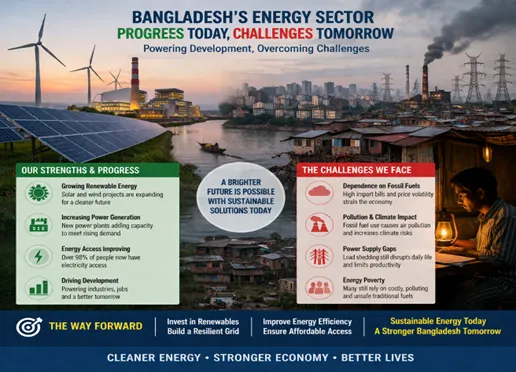
100% of electrification was reached only in 2022, and yet Bangladesh’s energy sector has to deal with a set of problems, such as low plant efficiency and delays in their completion, erratic power supply and sometimes blackouts, problems that affect the country as a whole, and tourism sector in particular. Bangladesh is on track to shifting to green energy, but there is a lot of work to be done to achieve better energy self reliance, as more energy is needed for the country’s economy to keep the rising rates of development.
Another challenge is presented by political situation in both Bangladesh and neighboring region. One of the main problems inside Bangladesh remains the corruption in its various forms. Primarily, we are talking about various syndicates controlling large swathes of local tourism industry. For example, because of this, infrastructure like hotels or restaurants might charge a lot more for their services than they should – leading to visitors feeling exploited and unwanted, damaging the country’s reputation and depriving it of profits. This is often coupled with a lack of necessary education and preparation of staff, as it is often leaves more to be desired.
Some notice that Bangladesh should also invest more into proper education for those working in tourism industry. As such, work needs to be done in the domain of hospitality. Security is another major concern, as some report that cases like robberies are common, with police response sometimes not as effective as expected. Though sometimes it is explained by a general situation with the country’s security, characterized as fragile because of civil unrest and related issues.
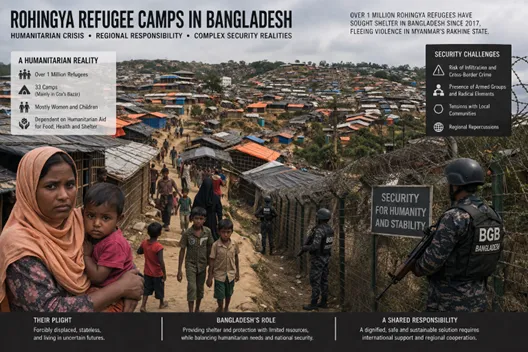
One of the main factors contributing to instability and unrest in Bangladesh are numerous refugees, mainly from neighboring Myanmar, which is suffering from a civil war since 2021. According to UNCHR, more than one million refugees belonging to Rohingya ethnic group, which is suffering repressions in their homeland, currently reside in a single, one of the world’s largest, refugee camps. Refugees are a presenting a number of challenges to Bangladesh. The main ones are a large cost to accommodate and feed such numbers. Refugees often live in tightly packed environments located in areas prone to natural disasters. A more recent problem is a surge in crime, with numerous cases of violence among the refugees, as well as forced recruitment, extreme poverty and other associated security risks.
Finally, ecological issues present another detriment to the country’s tourist sector. Bangladesh is often considered among the countries most vulnerable to climate change. Among the factors that contribute the most to this are the country’s geography, as well as population density and its dependence on agriculture. Most of the territory of Bangladesh is located on a low lying plain which is often used for growing various crops by the country’s people. That, coupled with a very high population density, means that even a minor rise in sea levels might have destructive effect for potentially millions of people, aside from nature and wildlife. Bangladesh still has to tackle the problem of poverty and extreme poverty, because of which in the case of natural hazards such as floods or cyclones a large part of the populace might not have the necessary resources to prepare or safely relocate to other locations in the country. For the tourism industry, climate change might present itself in damage to Bangladesh's wildlife, especially on the coast, where a number of sea resorts and associated activities are based. The government is working on measures to counter climate change, such as those part of the Bangladesh Delta Plan 2100, adopted in 2018, or other related actions. But, as in other corners of the world, the climate change is likely to persist and cause further problems.
Now, we can see that Bangladesh as a whole and as a tourist destination have a number of issues do deal with. Whether it is problems related to economy or global warming, if the South Asian country wants to attract more visitors it has to deal with them in an effective way, as they are slowing down the growth of tourist industry. Luckily, the government understands this and promotes solutions which would greatly help to aid the still fledgling tourism industry.
Conclusion
To conclude the article, we can can say, that Bangladesh is on track to become a new popular tourist destination in the region, though for now it may appear that this is only the beginning of the long road. While it certainly is good news for those looking to discover new countries and cultures, the economical impact of the developing tourism also brings more money as well as jobs for the local population. Though it is not without difficulties that this industry is moving forward, as it has to deal with a set of different problems. While the authorities of Bangladesh are working hard to resolve these issues, it might still be a long way until this country makes it to the pedestal of the more popular tourist destinations in the region.
EUReflect News
Site Administrator
Follow EUReflect
See more of our reporting on Google
Mark EUReflect as a preferred source and our stories are ranked higher for you in Top Stories, Discover and Google News — and carry a “preferred” badge when they are cited in AI results.
Add EUReflect as a preferred source