Europe’s Tourism Lead Is No Longer Guaranteed, Bulut Bağcı Warns at European Parliament
BRUSSELS — Europe may still be the world’s most recognizable tourism destination, but its dominance can no longer be taken for granted, World Tourism Forum Institute President Bulut Bağcı warned during remarks at the European Parliament on Tuesday.
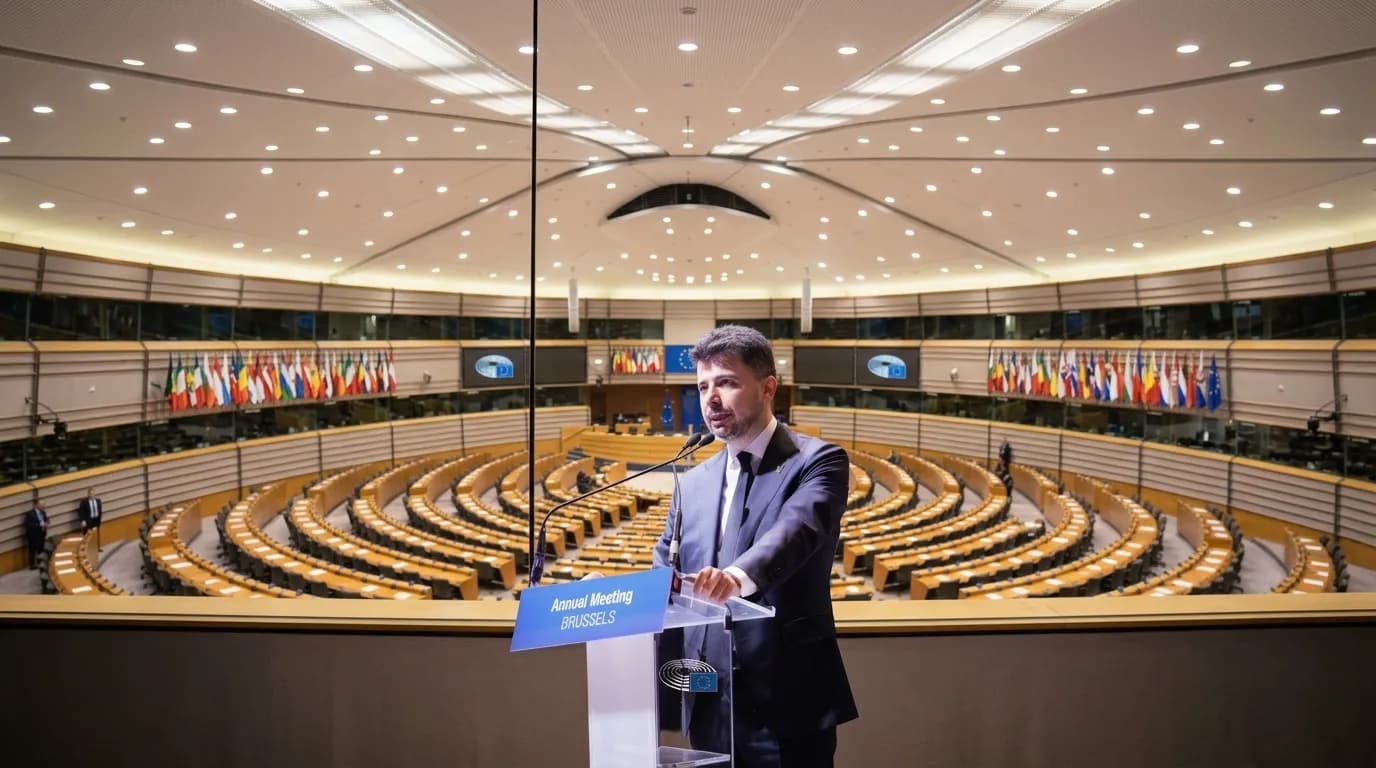
Speaking at a session titled “European Tourism in a Changing World: Global Trends, Competitiveness and Future Outlook,” Bağcı argued that Europe is entering a new phase of global competition, as governments across the Middle East, Asia and Africa pour capital into airports, hotels, infrastructure, destination branding and new tourism ecosystems.
“Europe will continue to attract visitors,” Bağcı said. “The real question is whether Europe will remain the most competitive tourism destination in the world.”
His message was straightforward: Europe’s cultural depth, historic cities, gastronomy and global brand remain unmatched, but heritage alone will not be enough to secure long-term leadership.
A new global tourism race
For decades, Europe benefited from an almost structural advantage in global tourism. Its cities, museums, coastlines and transport networks made the continent the default destination for international travelers.
That landscape is now changing.
Gulf countries are developing large-scale tourism projects at speed. Asian destinations are expanding connectivity and capacity. African markets are positioning tourism as a pillar of economic development and foreign investment.
According to Bağcı, this means European policymakers must begin treating tourism not simply as a mature service sector, but as a strategic industry exposed to increasingly aggressive global competition.
“Countries are now using tourism as part of their broader economic and investment strategies,” he said. “Europe cannot rely only on what it built in the past.”
Regulation versus competitiveness
Bağcı’s intervention also touched on one of Brussels’ most persistent policy tensions: how to reconcile sustainability and regulation with economic competitiveness.
Europe has moved faster than most regions on environmental standards, consumer protection and sustainability policy. But Bağcı warned that rising costs, complex permitting systems and excessive bureaucracy could make European destinations less attractive to investors.
“Regulation is necessary. Sustainability is necessary. But competitiveness must remain part of the discussion,” he said.
The concern is particularly acute in tourism, where investment decisions can shift quickly between regions.
Hotels, resorts, transport infrastructure and entertainment projects increasingly compete for international capital. If approvals take too long or costs become too unpredictable, investors can simply move elsewhere.
“Investors need clarity, speed and confidence,” Bağcı said.
AI is about to reshape travel
Technology was another central theme.
Bağcı said artificial intelligence will fundamentally change how travelers choose destinations, book trips and experience places once they arrive.
The destinations that understand visitor behavior, personalize travel experiences and integrate digital systems effectively will gain a competitive advantage, he argued.
For Europe, the opportunity lies in combining its strongest asset — cultural heritage — with a much more advanced digital tourism ecosystem.
“Europe should not only protect its heritage,” Bağcı said. “It should combine that heritage with technology.”
That shift will require more than new apps or booking platforms. It will mean using data and AI to manage visitor flows, personalize experiences, reduce congestion and improve destination planning.
Overtourism needs management, not retreat
Bağcı also entered one of the most politically sensitive tourism debates in Europe: overtourism.
From Barcelona and Venice to Amsterdam and the Greek islands, local governments are under increasing pressure to respond to overcrowding, rising housing costs and resident frustration.
But Bağcı cautioned against framing the solution simply as fewer visitors.
“The solution is not fewer tourists. The solution is better tourism management,” he said.
His argument is that tourism demand should be redistributed geographically and seasonally — away from overcrowded city centers and peak summer months, and toward secondary cities, rural regions and emerging destinations.
If managed correctly, he said, tourism can become a tool for regional development rather than a source of urban tension.
Europe still has the strongest hand — for now
Despite his warnings, Bağcı struck an optimistic tone about Europe’s long-term position.
The continent still holds an advantage that competitors cannot easily reproduce: centuries of history, cultural diversity, mature infrastructure and a powerful global identity.
But maintaining that advantage will depend on whether Europe can move quickly enough.
Bağcı framed the next phase of European tourism around four priorities: heritage, innovation, investment and sustainability.
“Europe already has all four,” he said. “But leadership is not permanent.”
The challenge for Brussels and national governments will be to ensure that Europe does not become a victim of its own success — admired globally, but increasingly slower, more expensive and harder to invest in than its competitors.
“The world is moving quickly,” Bağcı said. “Europe must move quickly as well.”
EUReflect News
Site Administrator
Follow EUReflect
See more of our reporting on Google
Mark EUReflect as a preferred source and our stories are ranked higher for you in Top Stories, Discover and Google News — and carry a “preferred” badge when they are cited in AI results.
Add EUReflect as a preferred source