Bear Captured Near Tokyo
Japanese authorities captured a black bear after days of sightings in Utsunomiya near Tokyo. The incident highlights Japan’s growing bear problem, with record attack numbers reported in 2025. Officials are increasingly using drones, AI systems and other technologies to track and deter bears.
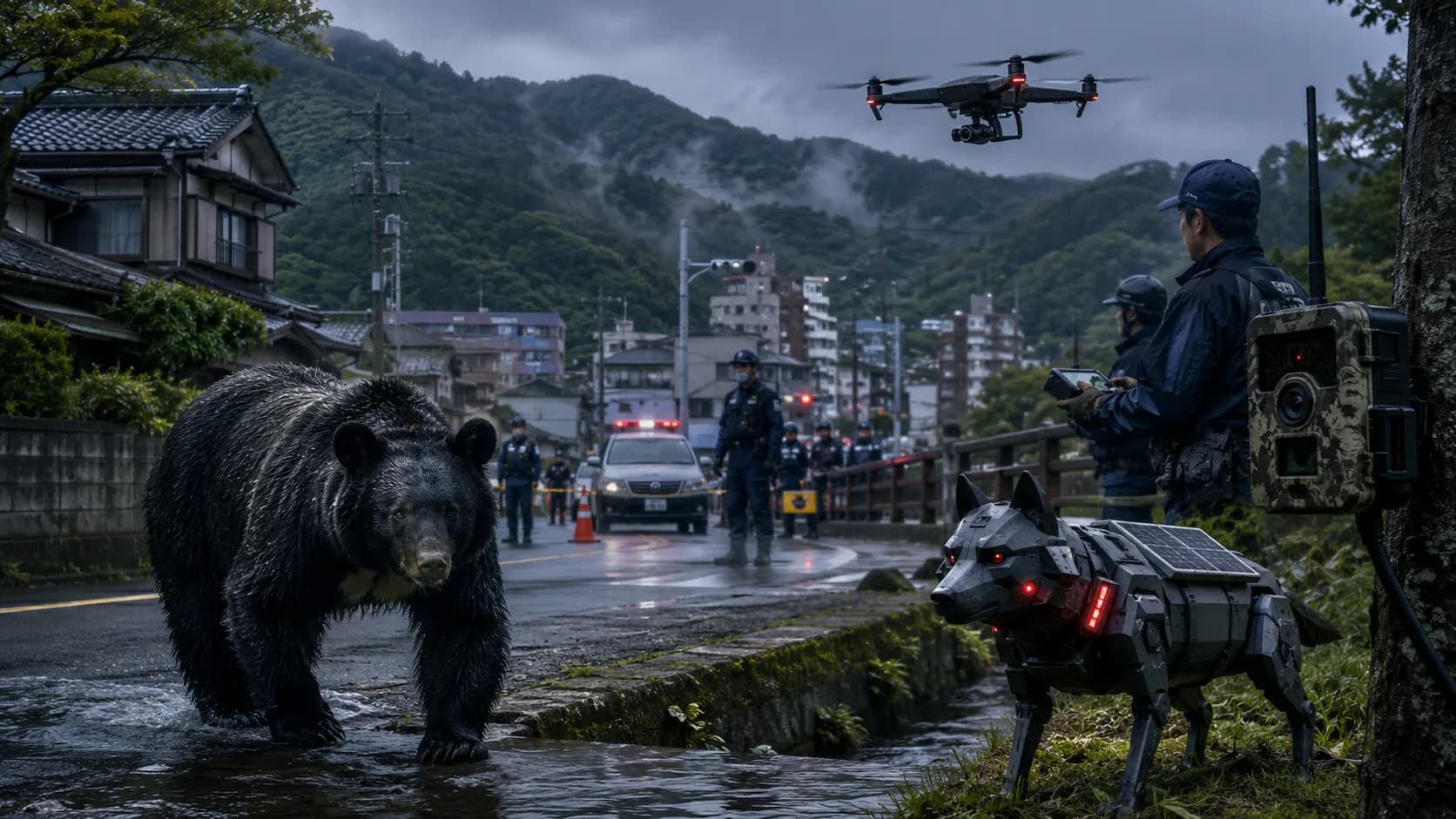
Japan’s ongoing struggle with increasing human-wildlife conflicts has once again drawn national attention after authorities successfully captured a black bear that had been roaming through a densely populated city near Tokyo. The incident, which caused widespread concern among residents and led to school closures, highlights a growing challenge facing communities across the country as bear sightings and attacks reach unprecedented levels.
The bear was captured in Utsunomiya, a city of approximately 500,000 residents located north of Tokyo. Officials spent several days tracking the animal before a veterinarian successfully sedated it using tranquiliser darts. The event comes amid a broader increase in bear encounters throughout Japan, prompting authorities to adopt new technologies and emergency measures to protect the public.
Record Number of Bear Attacks Raises National Concern
Japan has experienced a dramatic increase in encounters between humans and Asiatic black bears in recent years. According to the country’s environment ministry, 2025 saw a record 238 bear attack victims, including 13 fatalities, making it one of the most dangerous years on record for human-bear conflicts.
Large areas of rural Japan, particularly the mountainous Tohoku region, serve as natural habitats for black bears. Traditionally, these animals rely on forest food sources such as acorns and beechnuts. However, poor harvests in recent years have reduced food availability, forcing many bears to venture closer to towns and residential districts in search of alternative sources of nutrition.
Experts warn that the problem extends beyond food shortages. Japan’s declining rural population has altered the relationship between humans and wildlife. As villages shrink and fewer people remain in remote areas, the reduced level of human activity creates an environment where bears feel increasingly comfortable entering populated locations.
Climate and ecological changes may also be affecting bear behaviour. Scientists suggest that shifting weather patterns could influence hibernation schedules and extend periods during which bears remain active, increasing the likelihood of encounters with people.
Dramatic Capture Operation in Utsunomiya
Authorities launched an extensive operation after the bear was repeatedly spotted throughout Utsunomiya. Residents reported more than 20 sightings over several days, with the animal appearing near schools, homes, parks and public spaces.
The bear, estimated to weigh around 100 kilograms, displayed remarkable agility as it moved through the city. Witnesses observed it swimming across a river, climbing fences and travelling through residential neighbourhoods. Concerned about public safety, local officials temporarily closed all 94 public primary and middle schools in the city.
Police eventually identified the bear’s location approximately 2.5 kilometres south of the city’s main railway station. The capture operation lasted nearly one hour and forty minutes. The first tranquiliser dart missed its target, but follow-up shots eventually sedated the animal, allowing officials to safely secure it.
Authorities also warned residents that there could be a second bear in the area and advised people to keep doors and windows locked while monitoring official safety announcements.
Technology and Innovation Become Key Weapons Against Bear Threats
While the Utsunomiya bear has been captured, another bear remains at large in Fukushima Prefecture. The animal recently injured four people in a residential district and has repeatedly evaded capture despite several attempts by authorities.
The bear gained national attention after reportedly escaping from an electronics factory surrounded by police officers. Local officials described the animal as unusually intelligent, with reports suggesting it may have opened a window to escape. The mayor of Fukushima also stated that officials observed the bear drinking water from a tap and possibly turning the handle itself.
To locate the elusive animal, authorities have deployed drones equipped with advanced monitoring systems. The use of technology is becoming increasingly important as local governments seek more effective methods for managing wildlife threats.
Earlier this year, the Japanese government established a ministerial task force dedicated to addressing the growing number of bear attacks. Emergency response measures have also been introduced to reduce casualties and improve coordination between local authorities.
Several municipalities are considering artificial intelligence-based monitoring systems that analyse images captured by trail cameras to detect bear activity more efficiently. Technology companies are also developing drone networks capable of tracking bears through dense forests and mountainous terrain using thermal imaging cameras.
In addition to surveillance technology, innovative wildlife deterrents are gaining popularity. One notable example is the “Super Monster Wolf,” a solar-powered robotic wolf designed to frighten bears and other wild animals. Demand for the device has surged in 2026 as communities search for new ways to protect residents and agricultural land.
Conclusion
The successful capture of the Utsunomiya bear represents a temporary victory for Japanese authorities, but the broader challenge remains unresolved. Rising bear populations near human settlements, environmental changes, declining rural communities and food shortages are combining to create more frequent and dangerous encounters across the country.
As Japan faces record numbers of bear attacks, authorities are increasingly relying on advanced technologies, improved emergency responses and innovative deterrent systems to manage the growing threat. The situation serves as a reminder of the complex balance between human development and wildlife conservation, and the need for long-term solutions that ensure both public safety and the protection of natural ecosystems.
https://www.bbc.com/news/articles/c0qyzvnjlxno
Zulya Atabayeva
Contributing writer at EUReflect.
Follow EUReflect
See more of our reporting on Google
Mark EUReflect as a preferred source and our stories are ranked higher for you in Top Stories, Discover and Google News — and carry a “preferred” badge when they are cited in AI results.
Add EUReflect as a preferred source