Cinema as a Bridge Between Malaysia and the EU
European films took home major prizes at the 9th MIFFest, including Best Director for Morad Mostafa and the Audience Choice Award for Oliver Laxe's 'Sirât'.
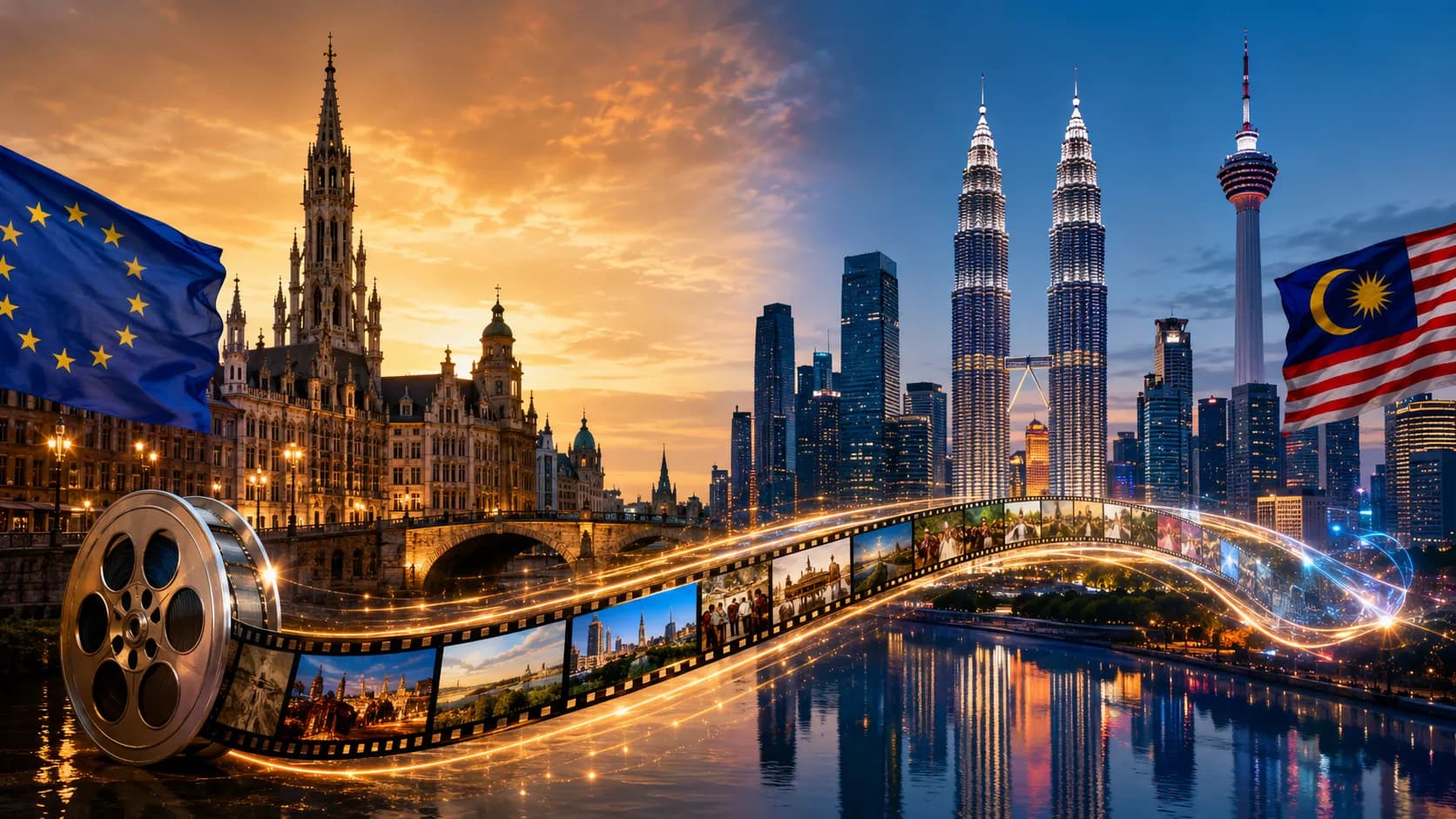
Relations between Malaysia and the European Union have been in the headlines in 2026 thanks to free trade negotiations and the ratification of the Partnership and Cooperation Agreement. Yet one of the oldest and most consistent points of contact between the two sides was established not at diplomatic tables but in cinema halls. The European Film Festival (EUFF), held in Kuala Lumpur since 1999, and the Malaysia International Film Festival (MIFFest), which has grown into one of Southeast Asia's leading festivals within a decade, have drawn steadily closer in recent years. The 9th MIFFest, which concluded in July 2026, offered a striking picture of European cinema's visibility in Malaysia.
A summer in Kuala Lumpur dominated by European productions
Held from 18 to 25 July, the 9th MIFFest brought 65 films from 35 countries in 27 languages under the theme "Resonance" to Kuala Lumpur audiences. The festival's closing film was Turkish-German director İlker Çatak's "Yellow Letters", winner of the Golden Bear at the Berlinale. Several of the ten films competing in the Malaysia Golden Global Awards (MGGA), the festival's international competition section, were European productions or co-productions: Czech director Ondřej Provazník's "Broken Voices", Franco-Swiss filmmaker Marie-Elsa Sgualdo's "Silent Rebellion", and Egyptian director Morad Mostafa's "Aisha Can't Fly Away", made in partnership with France and Germany.
The results confirmed the weight of European cinema among Malaysian juries and audiences. Mostafa won Best Director, while French actress Lila Gueneau shared the Best Actress award with Singapore's Ong Xuan Jing for her performance in "Silent Rebellion". The Audience Choice Award went to Spanish director Oliver Laxe's "Sirât". According to Variety, this year's awards, with winners spanning North America, Europe, the Middle East and Latin America, reflected the festival's growing international reach.
Two festivals converging
For a long time, the relationship between EUFF and MIFFest ran in parallel but separately. EUFF, organised by the EU Delegation, screened European films each autumn in Kuala Lumpur and Penang in partnership with Golden Screen Cinemas, while MIFFest ran its own international programme in July. The turning point came in 2024, when the EU Delegation, together with member state embassies, hosted a European Cinema Night within MIFFest under the title "European Cinema as a Bridge Between Cultures". In 2025 the relationship was institutionalised: the 25th European Film Festival ran as a parallel section of MIFFest from 20 to 27 July, with the festival's most extensive lineup to date. Timo Goosmann, deputy head of mission at the EU Delegation, emphasised at the time that EUFF had become a cultural institution in Malaysia since 1999.
How this partnership continues in 2026 remains unclear. The EU Delegation issued a call for tenders in March 2026 for the organisation of EUFF; at the time of writing, the dates of the 26th EUFF and its relationship with MIFFest had not been announced publicly.
Malaysia's ambition: A regional film hub
MIFFest's rapprochement with Europe is part of a larger ambition for Kuala Lumpur. Festival founder Joanne Goh this year openly articulated the goal of making Kuala Lumpur Southeast Asia's film hub. The "ASEAN On Screen" programme, launched in 2025 with the National Film Development Corporation (FINAS) during Malaysia's ASEAN chairmanship, became a permanent section of the festival this year and was recognised by ASEAN Records. The presence of Philippe Bober, one of Europe's leading independent producers, on the festival's advisory board also shows that the link with the European industry extends beyond screenings alone.
Bridge or one-way showcase?
The picture has its gaps. While European films have been screened regularly in Malaysia for twenty-six years, the visibility of Malaysian cinema in Europe remains largely dependent on individual selections at festivals such as Berlin, Cannes and Locarno. For cinema to become a genuine "bridge", the flow needs to run in both directions: Malaysia-focused sections at European festivals, co-production agreements and script development funds would be the natural continuation of the ground now being laid along the EUFF–MIFFest axis.
A roadmap for late 2026 and 2027
The convergence of the two festivals in Kuala Lumpur shows that cinema can play not merely a symbolic but a structural role in the Malaysia–EU cultural dialogue. Turning that potential into practice requires a sequence of concrete steps.
By the end of 2026
Clarify the EUFF–MIFFest partnership. The EU Delegation should announce the format of the 26th EUFF as soon as the tender is concluded and confirm whether the parallel-section model of 2025 will continue. Uncertainty at this stage weakens the momentum built over two years.
Use the autumn EUFF as a pilot for reciprocity. Even a small "Malaysian Focus" strand within EUFF's Kuala Lumpur and Penang programme, with Malaysian filmmakers in dialogue with European guests, would signal that the flow is meant to run both ways.
Bring FINAS and the EU Delegation to the same table. A joint working group, anchored in the MEUPCA Joint Committee once it convenes, should map existing instruments (Erasmus+, Creative Europe's international strands, FINAS incentives) and identify where they can be combined.
Secure a European festival partner for 2027. Negotiations with at least one European festival willing to host a Malaysian or ASEAN showcase in 2027 need to begin now, as programming decisions are typically locked in six to nine months ahead.
In 2027, the 50th anniversary of ASEAN–EU relations
Present a Malaysian showcase in Europe. A dedicated section at a European festival, ideally paired with a touring programme in two or three EU capitals, would be the first structural counterpart to 26 years of EUFF in Malaysia.
Launch a Malaysia–EU co-production and script development fund. Modest in scale but jointly governed, such a fund would move the relationship from screening to production and give European producers already engaged with MIFFest a concrete reason to invest.
Integrate "ASEAN On Screen" into the anniversary agenda. MIFFest's permanent ASEAN programme offers the EU a ready-made platform to engage the whole region through a single festival, in line with the Brussels goal of concluding the free trade agreement by October 2027.
Build the talent pipeline. Sponsored places for Malaysian film students and young professionals at European film schools and festival labs, and reciprocal residencies for European filmmakers in Malaysia, would ensure the bridge outlasts individual festival editions.
Whether cinema becomes a genuine bridge will depend less on the number of films screened than on whether the two sides commit to reciprocity before the anniversary year arrives. The answer to the question, in other words, now rests as much with Brussels as with Kuala Lumpur.
Sources: Malay Mail, Screen Daily, Variety, United Daily News, EU Delegation to Malaysia (EEAS), MIFFest, EUFF Malaysia.
Zhansaya Nurlanovna
Contributing writer at EUReflect.
Follow EUReflect
See more of our reporting on Google
Mark EUReflect as a preferred source and our stories are ranked higher for you in Top Stories, Discover and Google News — and carry a “preferred” badge when they are cited in AI results.
Add EUReflect as a preferred source