Butter Over Guns, Empire Over Edge: When Values Became Optional
From Normative Giantto Security Beggar: Self-Made Exile from Power
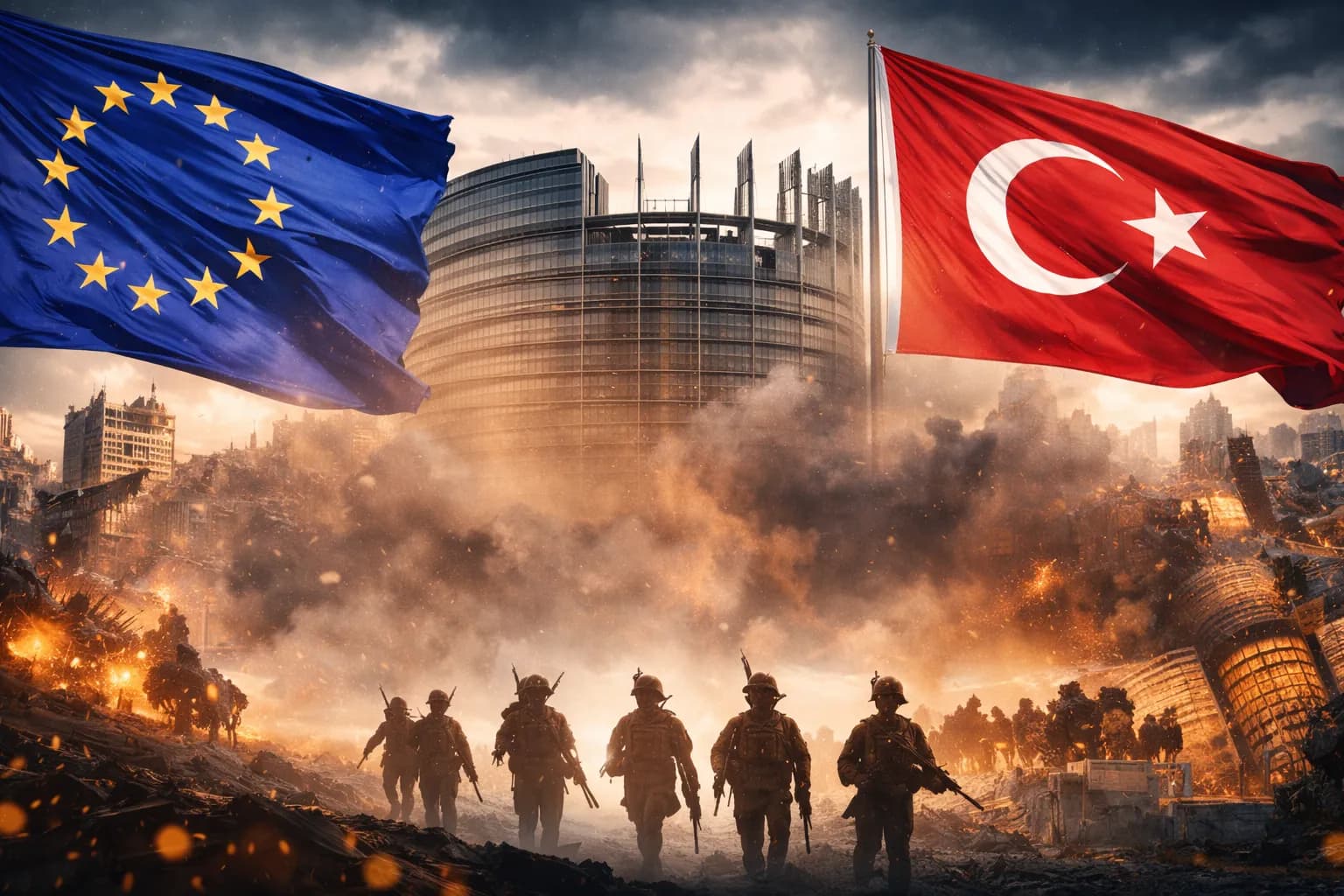
I. Ontological Crisis: No Guns? No Butter.
Since the European Coal and Steel Community was founded in 1950, the European Union has marketed its corevalue—"peaceful conflictresolution"—not as a weakness, but as a strategy. At the foundation of the post-WWII project lay the idea that war should no longer exist in Europe and that this could be achieved through "economic interdependence." This value achieved immense success internally; no member state went to war with another. For years, Europe defended the choice of "butter over guns" (welfare over security) as a success story. However, when a conventional threat emerged right next door (Ukraine, the Middle East), this choice left the continent unprepared and in a state of strategic blindness.
Moreover, with the comfort provided by historical superiority, Europe defined itself as a "normative power" for decades. It viewed the export of democracy, human rights, and the rule of law as a more effective tool thantanks. However, the harsh reality of the 2026 world has reminded Europe of a bitter lesson: Soft power is not a gem that exists on its own; it is merely a shadow of economic prosperity and military deterrence (hard power).
Belgian Foreign Minister Mark Eyskens' 1991 definition of Europe as "an economic giant, a political dwarf, and a military worm" remains valid today, with all its causes and consequences.Eyskens was right then; Europe remains politically divided in times of crisis and dependent on the US, just as it is today. Although Europe has not learned its lesson since then, some small changes have occurred: In the intervening time, the economic giant has lost altitude and shrunk, the political dwarf has continued its passivity in the face of greater powers, and the military worm has only just raised its head from the dirt. At the end of the day, Europe is trapped in the vice of the "guns vs. butter" dilemma.
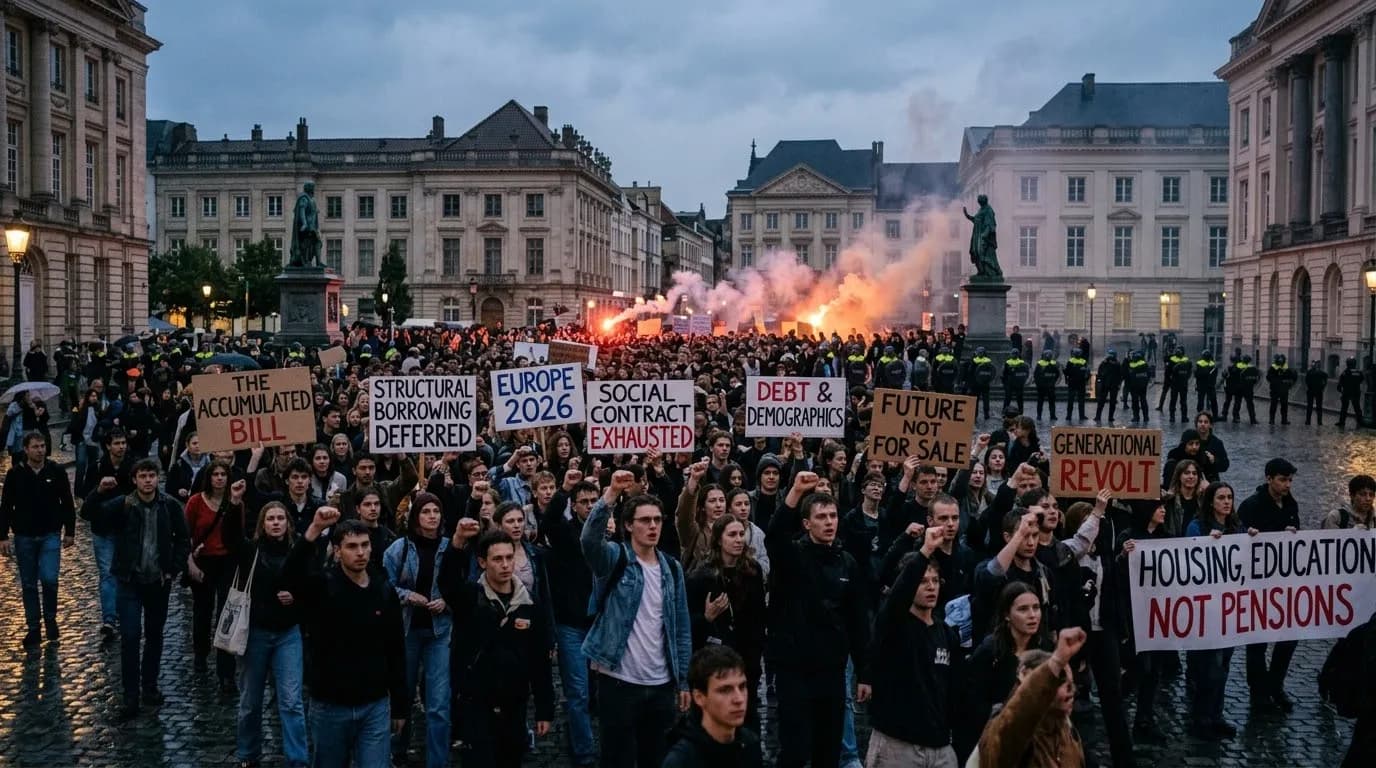
Of course, while Europe faces many security threats, it has undergone its most significant transformation in the economic sphere. For the last 15 years (since the 2008 crisis), Europe has watched the gap in per capita income widen between itself and the US/Asia. A Europe that cannot create prosperity, whose middle class is melting, and which cannot ensure energy security, can no longer offer a "European Dream" to its own citizens or the world. Where there is no prosperity or security, values remain mere rhetoric.
II. The Irony of Collective Defense: A One-Way Ticket
With the 2025 National Security Strategy (NSS), the US ended its role as Europe's "automatic security provider." Washington now establishes relationships based not on shared values, but on immediate interests and the capacity to "pay the bill."
1. The Bankruptcy of Article 5 and the "Delinquent" Rhetoric: Trump's labeling of members who do not meet defense spending targets as "delinquent" and his statement that he would "encourage Russia to do whatever the hell they want" to these countries is a serious blow to the soul of NATO. The historical irony is this: Throughout NATO history, Article 5 has been invoked only once—for the US after September 11. While European soldiers died in the mountains of Afghanistan to protect American cities, unconditionally fulfilling the alliance's "one for all" principle, today Washington uses this "security cheque," which historically only it has cashed, as an instrument of blackmail against its European allies. Security is no longer a right; it is a subscription service that can be cancelled at any moment.Historically, which country other than the US hasactually benefited from the Article 5 anyway?
2. The Greenland Blackmail and the Wall Street Rally: The most striking proof that diplomacy has turned into a "real estate negotiation" is the Greenland crisis. When his request to buy Greenland was rejected, Trump threatened Europe with tariffs. After a meeting with the NATO Secretary General and the formation of a "deal framework," Trump withdrew the threat, saying, "Everyone is happy, I will not use military force." The rally that started on Wall Street immediately after this statement showed that the markets were celebrating "transactional diplomacy," not "value-based diplomacy."
3. Ukraine and the "Miami Summit" Pressure: In February 2026, at a time when Russia was striking energy infrastructure and turning winter into a weapon, the US began forcing Ukraine to the table for "peace by early summer." Zelensky's admission that "The US's main priority is the November elections" showed that Washington focused not on Kyiv's territorial integrity, but on a quick diplomatic victory it could sell in domestic politics. The "Miami Summit" imposed by the US is proof that European security has been held hostage to the American election cycle and peace has turned into "show business" material. Ukraine has become a mere subplot in American domestic politics.
III. Normative Power Without Actual Norms
When the US umbrella was removed, Europe turned into a paradox of "Normative Power Without Actual Norms." Breaking its own rules to survive, Europe suspended its value system and holistic stance.
1.Germany: The Nail in the Coffin of Schengen
Germany, the heart of the European project, ironically became the country to suspend "free movement" (Schengen), one of the union's fundamental values.
•The Return of Borders:Chancellor Friedrich Merz extended border controls until March 2026 citing "internal security" and "integration problems" in September 2025. The transition from Merkel's "Wirschaffen das" (We can do this) policy to an "Internal Security First" approach, combined with the rising far-right movement in the region, is a significant indicator that the EU's holistic political shadow at the international table is merely a trick of the light.
•Hegemony and Fragility:While Germany is becoming a military giant (the 4th largest army in 2029), it is politically paralyzed by the rise of theAfD. This situation triggers the "historical German threat" reflex in Poland and the fear of "role theft" in France.
2. France: Strategic Collapse in Africa and the New Search
France plays the "nuclear deterrence" card against Germany's military rise, but things are not going well in Africa.
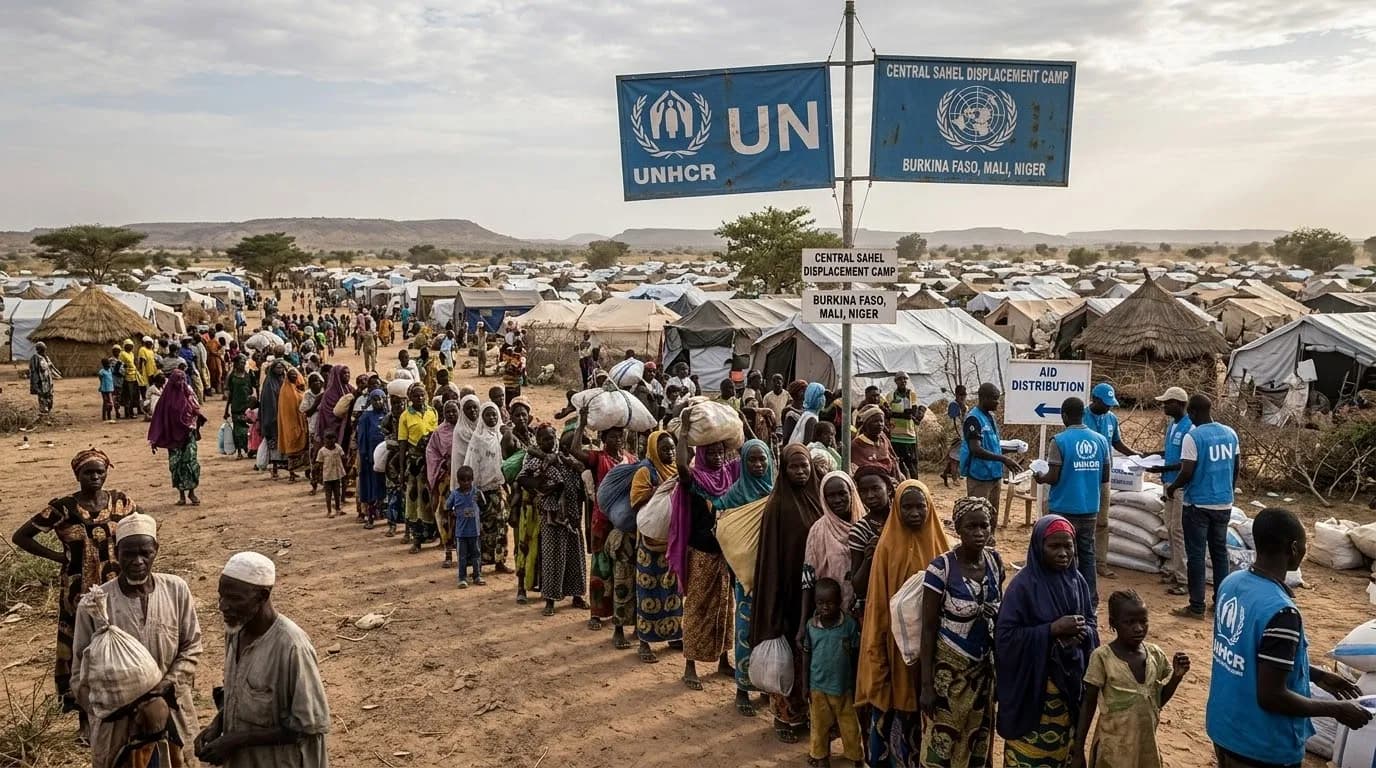
•Loss of Reputation:The arrest of French intelligence officers in Niger and Burkina Faso on charges of "espionage" seriously negatively affected Paris's influence on the ground.
•New Strategy:France announced it would unveil a new strategy for Africa in 2026 based on a "more flexible, civil society-oriented approach focused on memory work" to stop this collapse. However, in the face of Russia's "alternative security model" and China's unconditional investments, this "soft" move by France seems far from changing the harsh reality on the ground.
3. Hungary, The Trojan Horse Within the Union: In November 2025, Viktor Orbán visited Moscow to meet with Putin for the fourth time since the invasion of Ukraine. Orbán presented himself as the architect of peace, saying, "We are preparing Budapest for the Trump-Putin summit." This move was not just foreign policy, but a domestic political calculation before the April 2026 elections. Facing the risk of losing power for the first time in 15 years, Orbán aimed to present the cheap energy and Paks nuclear power plant guarantee he received from Russia to the voters as "stability."
The German Chancellor's reaction that "Orbán is acting without a European mandate" is not wrong at all. However, has Orbán not already answered the question, "Is Europe still at a level to provide a 'mandate'?" Indeed, Hungary has been following a foreign policy quite different from the rest of the European continent for some time, bringing a new breath to its hedging strategy by turning its face to the East and solidifying its place in alternative alliances like the Organization of Turkic States (OTS) by highlighting its Turkic identity.
IV. "If We Are Not at the Table, We Are on the Menu"
Deep cracks in the Western alliance have manifested themselves in many international issues, leading to a search for new paths.
1. The West's "Good Boy" is Now After New Ties: In January 2026, the Canadian Prime Minister made a historic admission in Beijing: "Our relationship with China is morepredictable than our relationship with the US." This rhetoric was cemented by a concrete economic capitulation: Canada opened the door to Chinese electric vehicles and accepted a quota of 49,000 units annually with a customs duty of only 6.1% (instead of the previous 100%).
2. The Davos Warning and EU-INC: The Canadian Prime Minister's warning from the Davos podium, "If middle powers do not come together, if we are not at the table, we are on the menu," declared that the transatlantic alliance had been replaced by a "survival coalition." Parallel to this, Europe entered a search for a "third way" with the "EU-INC" initiative, which reduced company incorporation to 48 hours, and the Free Trade Agreement signed with India ("Mother of All Deals"). In the same period, giants like VW bowing to China's "voluntary price commitment" was proof that capital had also abandoned values.
3. Technological Retreat (AI Act): Despite all these efforts, in November 2025, under pressure from the US and technology lobbies, Europe postponed the critical articles of the AI Act for a year. Brussels realized it could not regulate an area where it could not innovate, sacrificing the claim of "ethical technology" to economic competitiveness; of course, under the direction of American companies...
V. Türkiye: The Art of "Compartmentalization" and the New Flag on the European Ship
Canadian Prime Minister Mark Carney presented a clear dilemma to middle powers at Davos: "You are either at the table or on the menu." Türkiye, however, has already created a third path for itself: Being the Chef.
Türkiye is an active playmaker that determines the parameters of the solution and effectively directs processes in many crises from the Grain Corridor to Libya, from Karabakh to Somalia; while doing so, it undertakes high risks to ensure regional stability and sometimes has to make difficult tactical concessions to maintain the delicate balance between global powers (US, Russia, EU). The F-16 process or economic pressures are the inevitable costs of this strategic initiative. In this sense, Türkiye has left Europe behind in finding a place for itself within great power politics.
While European capitals lose their strategic compass and drift, Ankara skillfully applies a "Compartmentalization Strategy" in its foreign policy, managing relations not as a single tangled ball of problems, but by keeping security, energy, economy, and even the great powers of the international arena in independent, watertight compartments. Sometimes it brings great powers to the table, sometimes it makes concessions to them, but at the end of the day,Türkiye is the one cooking the meal.
•Security Compartment:As NATO's second-largest army, Türkiye protects the Alliance's southeastern flank. While the Baltics and Poland tremble with fear ofRussia, Ankara maintains both NATO's factual assurance and open communication channels with Moscow.
•Energy and Dialogue Compartment:While supplying S-UAVs (drones) to Ukraine and defending its territorial integrity, it simultaneously continues natural gas agreements and the nuclear power plant project with Russia.
•Economic Integration Compartment:While strengthening the "Middle Corridor," a critical leg of China's Belt and Road, it presents this not as a threat to the West, but as supply chain diversity.
Sometimes a mediator, sometimes a party, sometimes the one setting the table. But never just a "spectator." Türkiye, present in a vast geography extending from the Aegean to the Eastern Mediterranean, from the Middle East to Africa and Central Asia, shapes regional balances while protecting its borders. This skill of "separating the files" has turned the critical tones of European leaders (Merz, Macron) toward Türkiye into a forced pragmatism.
This has caused European leaders to replace their critical tones with a forced pragmatism, and to present the forced Turkish flag on the European ship as if it were a gift once again. However, Türkiye seems to have long stopped waiting for Europe's approval and charted its own path. Now, Ankara's door is the first one Europeknocks on in an energy crisis, migration management, or security vacuum. This is an admission that Ankara is not just a "bridge," but a "station master" managing the compartments. However, it must not be forgotten that today, Türkiye will cook its meal for itself.
A Shakespearean Conclusion: Hoist with His Own Petard
Peace is not a reality, but a fragile ideal possible only ina world everyone desires. Europe is experiencing the bitter awakening of this today; Schengen is suspended, the AI Act is postponed, borders are closed. As it lost its capacity, it became unable to defend its values. This situation paved the way for European states to turn back to raw military power and security discourses. Of course, old habits began to trigger old traumas. Today, the rising right-wing view in Europe is becoming increasingly vocal. The future for Europe is more uncertain than ever, and values are more ambiguous than ever.
Searching for a new path among the bargains of great powers, Europe realized that old roads cannot be walked with old friends. Western values of European origin can now only serve as a roof if the powerful desire it. Today, the question "What do we do without the US?" is still one of the most asked questions in European countries.Yet, it is no news that the US can push EU countries into the background when it wants; The message of the Iraq War was quite clear.
However, explaining this situation only through strategic blindness would not be enough. European states made an existential choice long ago and chose to bea "strongdependent" instead of an independent power. Today, it remains uncertain whether the powers emerging from the lands of the "other," whom Europe has historically held itself superior to, can be Europe's new lifebuoy. In any case, it falls to us to quote the Turkish proverb:"Kendi düşen ağlamaz"(One who falls by himself shouldn't cry).
Zeynep Güney
Contributing writer at EUReflect.
Follow EUReflect
See more of our reporting on Google
Mark EUReflect as a preferred source and our stories are ranked higher for you in Top Stories, Discover and Google News — and carry a “preferred” badge when they are cited in AI results.
Add EUReflect as a preferred source