Canada and the EU Reassert Their Strategic Ambitions at the 2025 Business Summit
Brussels hosted the sixth edition of the EU-Canada Business Summit on 27 November, drawing political representatives, industry leaders and policy specialists to the Mission of Canada to the European Union. The annual gathering once again served as a meeting point for discussions on shared economic priorities and a venue for targeted business engagement.
Olha Pashcenko-Journalist of EU Reflect
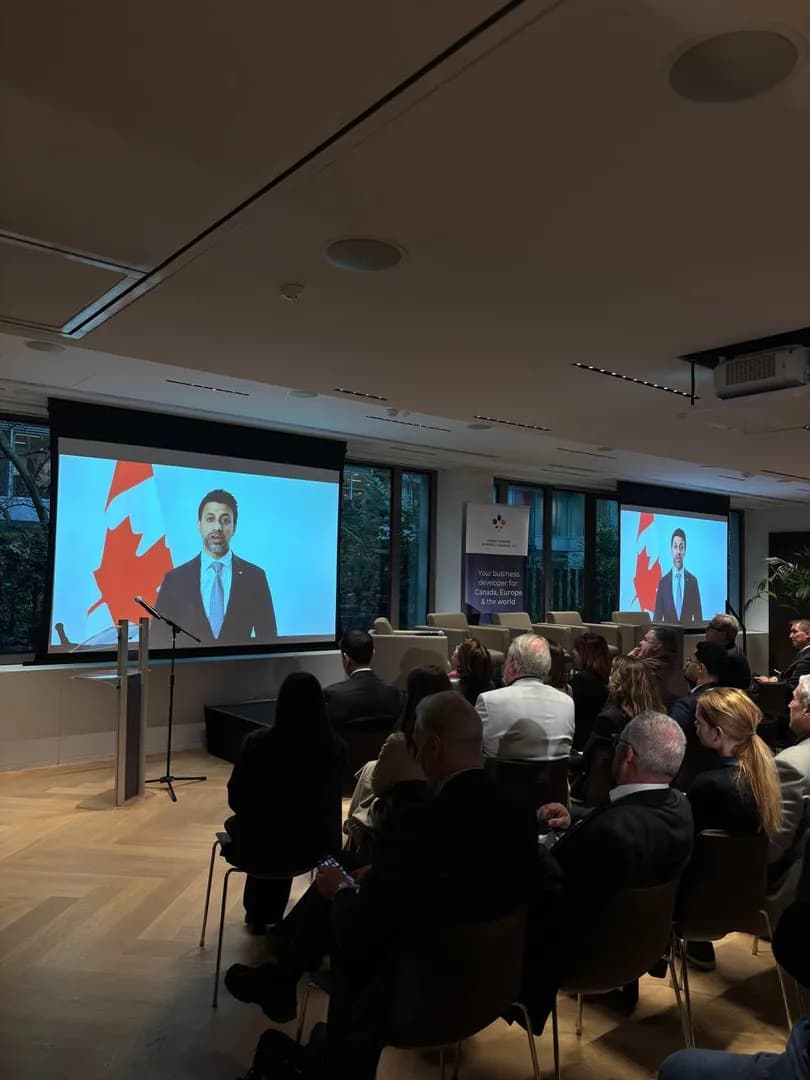
Brussels welcomed policymakers, senior executives and trade specialists on 27 November for the sixth edition of the EU-Canada Business Summit. Held at the Mission of Canada to the European Union, the gathering brought together participants from forty countries for a full day of panels, interviews and high-level networking.
This year’s edition took place against a backdrop of economic uncertainty and geopolitical recalibration. With global alliances shifting and markets adjusting to new pressures, both partners used the summit to reaffirm their intention to strengthen cooperation across defence, technology, trade and market diversification.
Opening Voices Set the Tone
The event opened with remarks from Sam Ayoub, President of the Canada-Europe Economic Chamber, and Maninder Sidhu, Canada’s Minister of International Trade, who outlined the need to consolidate shared economic and strategic interests. Their message framed the rest of the programme: a call for practical, coordinated action between Canada and the EU.
Defence Leaders Outline a Shared Strategic Outlook
The defence panel brought together senior figures who work directly at the junction of policy, capability and industry. Peter Rafferty (Galvion UK), Jean-Philippe Scherer (Airbus), Gregory W. Ivey (NATO) and Alain Alexis (Forward Global) examined how security cooperation can adapt to a tense global environment. Moderator Rick Froh (ASSIG) steered the discussion toward operational alignment, technology development and the expanding scope of NATO-EU-Canada collaboration.
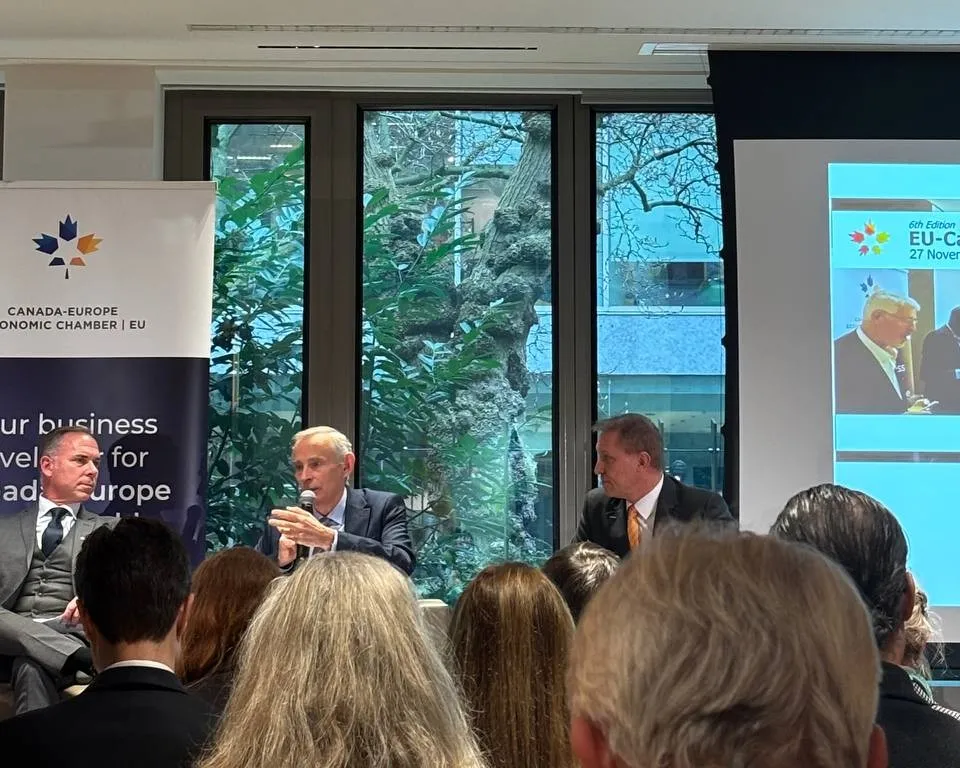
Speakers underlined that shared defence strategies are no longer abstract ambitions; they are becoming central components of transatlantic resilience.
AI Innovators Highlight Economic Transformation
The session devoted to artificial intelligence drew contributions from leaders shaping the field in both Europe and Canada. Matt Lemay (LemayAI), Kostas Rossoglou (Shopify) and Seva Matselyukh (OPT/NET) mapped out the future of innovation ecosystems that cross the Atlantic. With moderation by Bruno Herrmann (Global Minds Network), the discussion emphasised responsible development, competitive digital industries and the need for harmonised research frameworks.
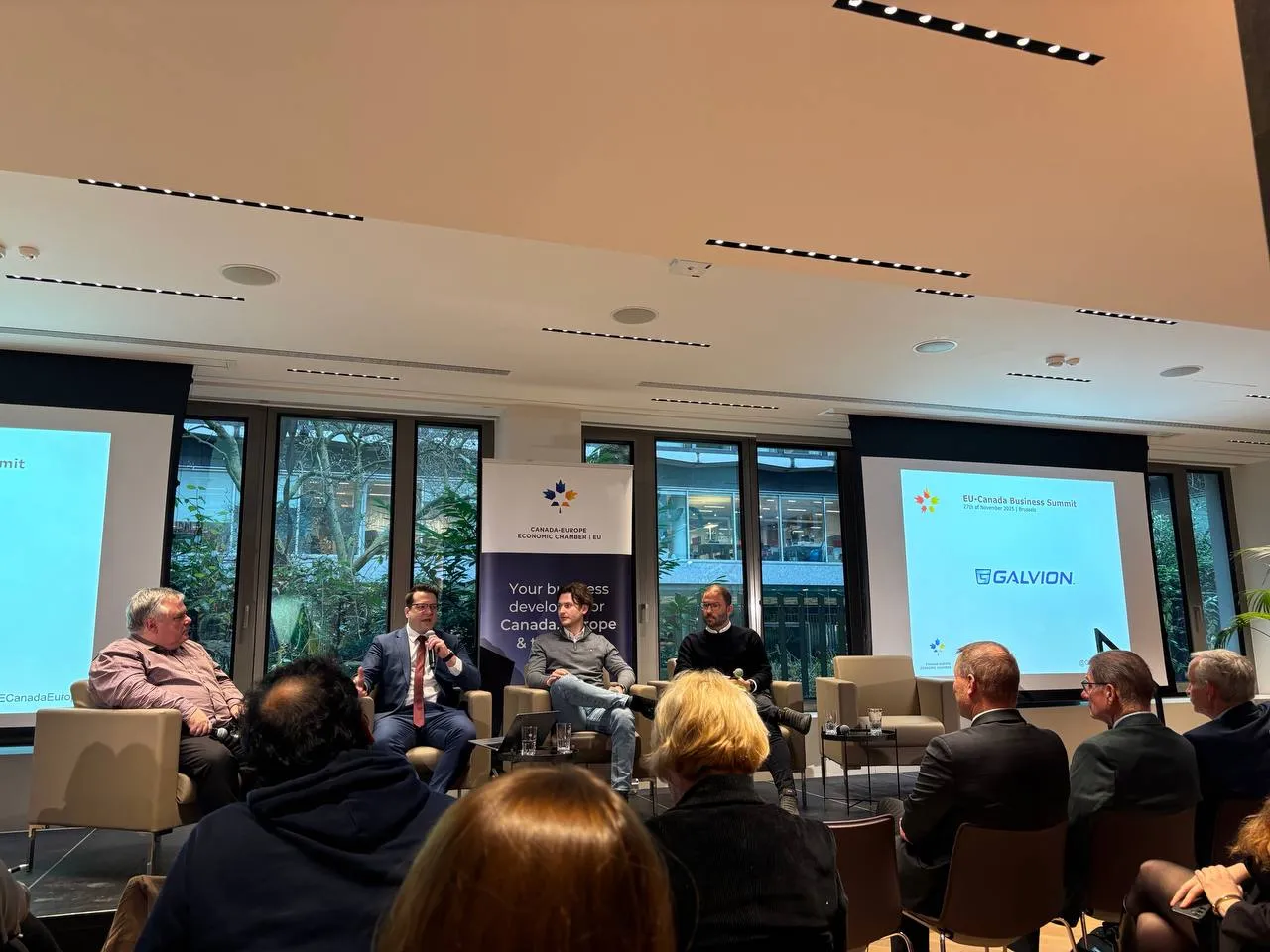
Speakers argued that AI’s economic impact is accelerating faster than regulatory coordination, making Canada-EU cooperation essential for maintaining competitiveness.
Economic Alliances Under Analytical Scrutiny
The third panel, moderated by Frederic Donck (Tamada), examined the long-term economic relationship between the two partners. Contributions from Sylvie Lemoine (CEFIC), Lorenzo Casullo (Ricardo/WSP) and Steve Milbury (Opportunities NB) highlighted the relevance of regulatory coherence and the unrealised opportunities within CETA.
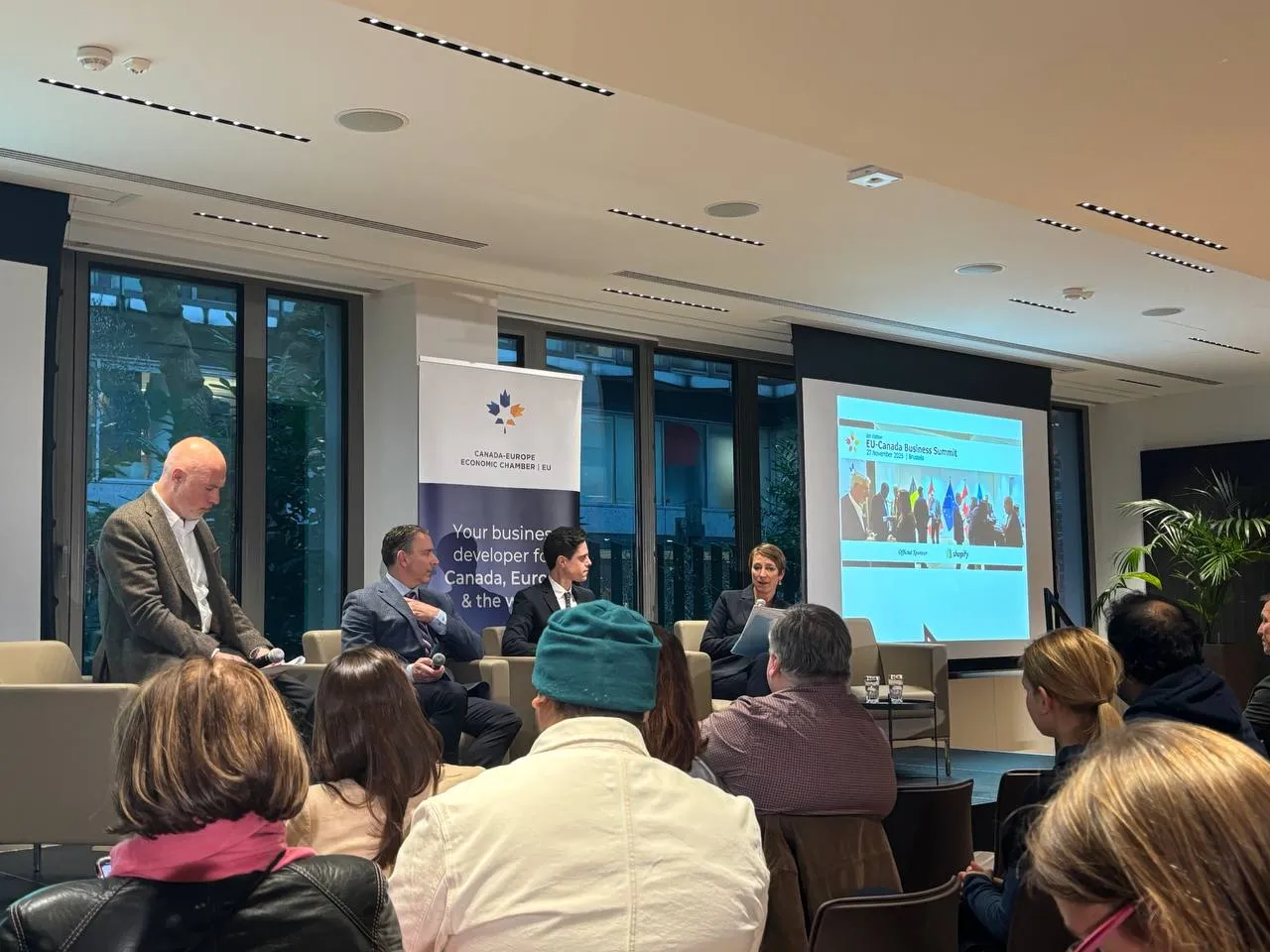
Speakers noted that a more connected regulatory environment—particularly around digital trade and innovation—would allow both economies to navigate global shifts with greater agility.
Market Diversification as Strategic Imperative
The final thematic session addressed diversification, with input from Elisabetta Coscia (Lysios), Bruno Saverys (Zingametall), Michael Zobin (Livingston International) and Ime Ekong (EDC). Moderated again by Donck, the discussion underscored that overdependence on limited markets poses mounting risks. The speakers pointed to emerging economies, sustainable trade practices and cross-border infrastructure investments as pathways to resilience.
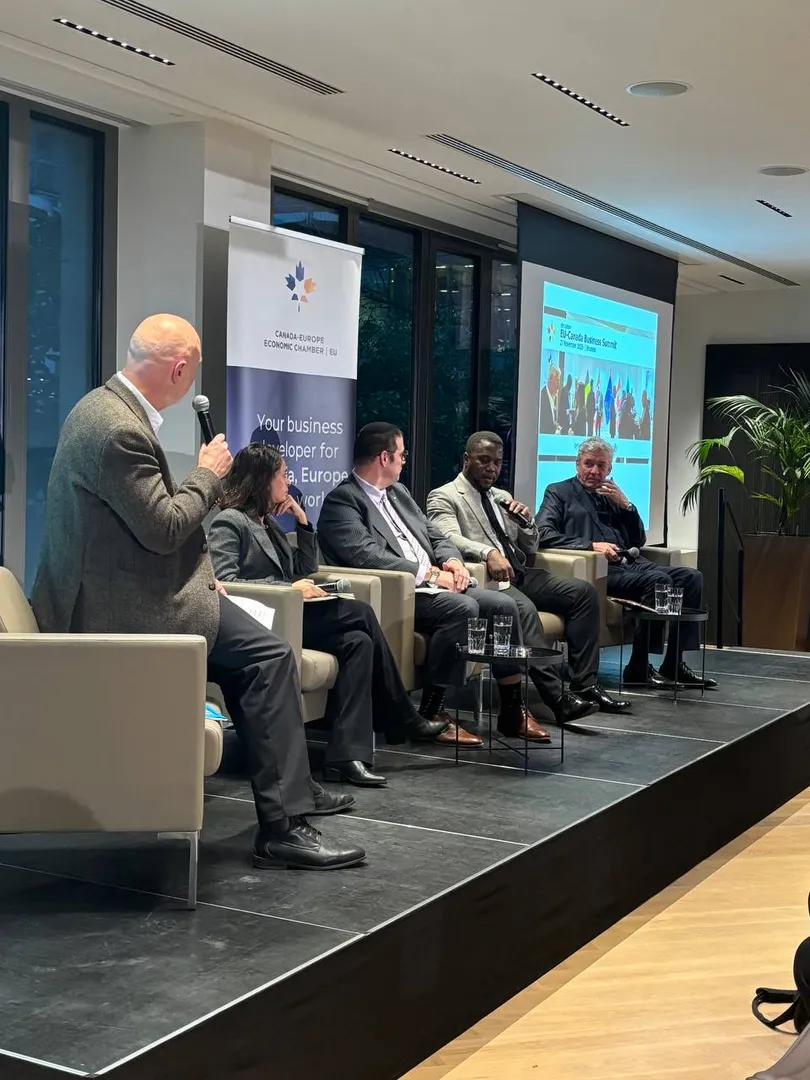
A Candid Conversation with Industry Leadership
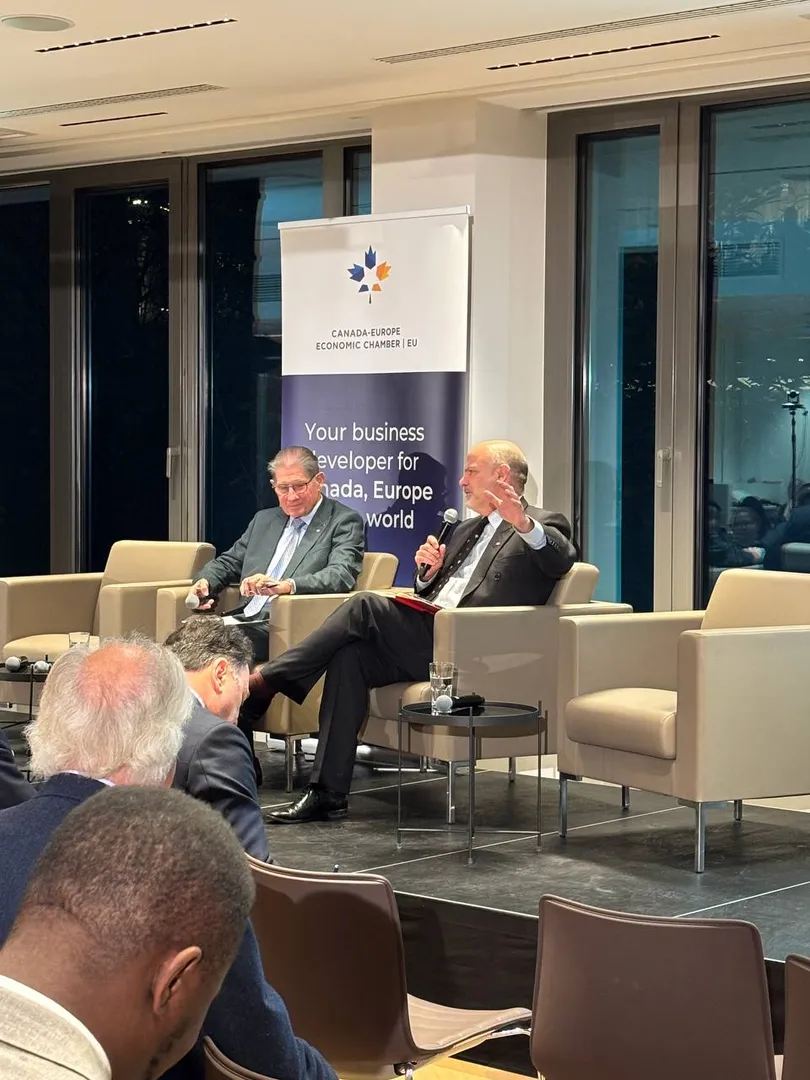
An on-stage interview with Robbie Boyd, CEO of ENCompass B.V., provided a more personal lens on industry adaptation and strategic foresight. Conducted by Rick Froh, the exchange touched on operational realities companies face as global markets reorganise.
Closing Perspectives
The day concluded with closing remarks from John Hannaford, Canada’s representative to the EU, alongside Sam Ayoub. Both noted the value of ongoing institutional dialogue and the need to translate discussions into durable policy and commercial outcomes. A high-level reception sponsored by Forward Global closed the summit.
A Partnership Entering a More Demanding Era
With the convergence of defence challenges, rapid technological development and volatile markets, the summit made clear that Canada and the EU are preparing for a more demanding global environment. The event’s speaker roster—spanning security agencies, multinational corporations, innovative technology firms and trade institutions—highlighted the breadth of the partnership and the shared recognition that the coming decade will require closer coordination than ever before.
Olha Pashchenko
Contributing writer at EUReflect.
Follow EUReflect
See more of our reporting on Google
Mark EUReflect as a preferred source and our stories are ranked higher for you in Top Stories, Discover and Google News — and carry a “preferred” badge when they are cited in AI results.
Add EUReflect as a preferred source