Central Asia: The Five Gates of Eurasia
Central Asia has long been called a bridge, a buffer, a heartland and a Silk Road region. But today, a new image is needed. “The Five Gates of Eurasia” presents Kazakhstan, the Kyrgyz Republic, Tajikistan, Turkmenistan and Uzbekistan as five complementary gateways linking Europe and Asia through modern, trusted and sustainable cooperation.
There are moments when a region needs not only investment, diplomacy or infrastructure, but a new language to describe its place in the world. Central Asia is living through such a moment.
For many years, the five countries of Central Asia – Kazakhstan, the Kyrgyz Republic, Tajikistan, Turkmenistan and Uzbekistan – have been described through many names and metaphors. They have been called the heart of Eurasia, the heartland, the Silk Road region, the C5, a crossroads, a bridge, a buffer, a transit space, or a zone between larger powers. Some of these descriptions are respectful; others are limiting. Almost all of them point to the same fact: Central Asia’s geography matters.
But geography is only the beginning of the story.
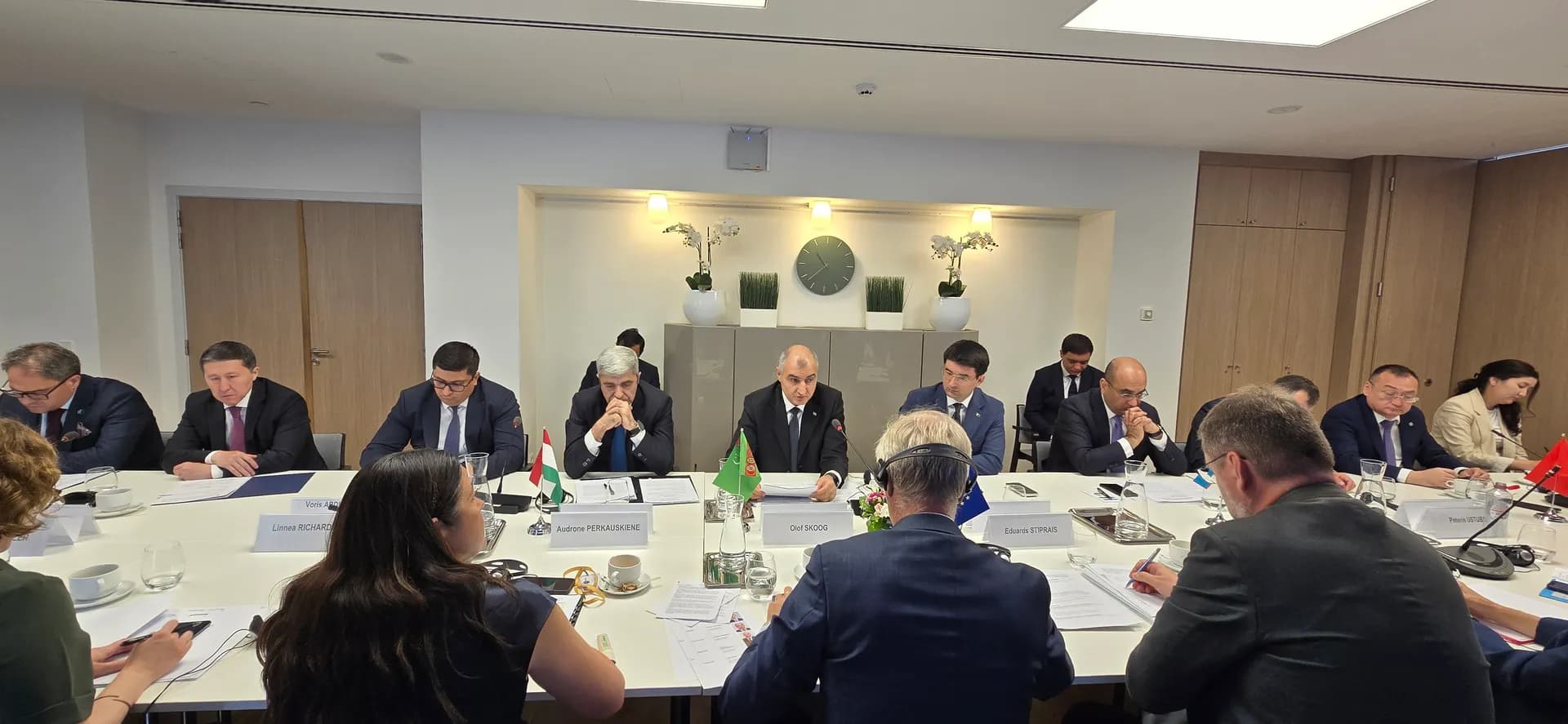
Working in Brussels and being close to the diplomatic environment around Central Asian ambassadors, I have often heard one idea expressed in different ways: the Silk Road should not remain only a memory. It should become a living, modern route of cooperation again. Some say it almost jokingly, but with a serious meaning behind it: “Make the Silk Road great again.”
The phrase is catchy because it captures something real. Across the region, there is a growing desire not only to remember the Silk Road, but to update it – through ports, railways, digital networks, energy partnerships, education, tourism, climate cooperation and people-to-people ties.
This is why the idea of Central Asia as “The Five Gates of Eurasia” deserves attention.
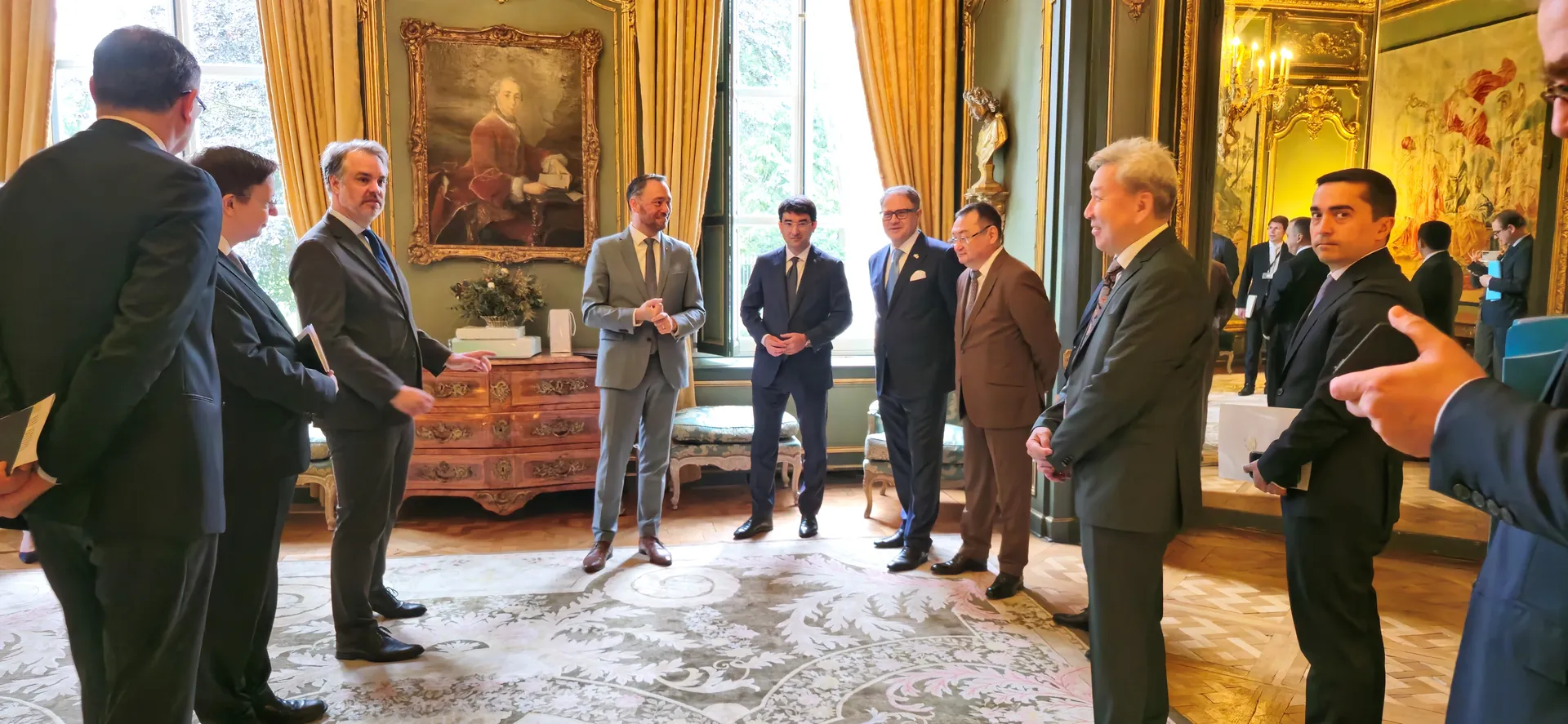
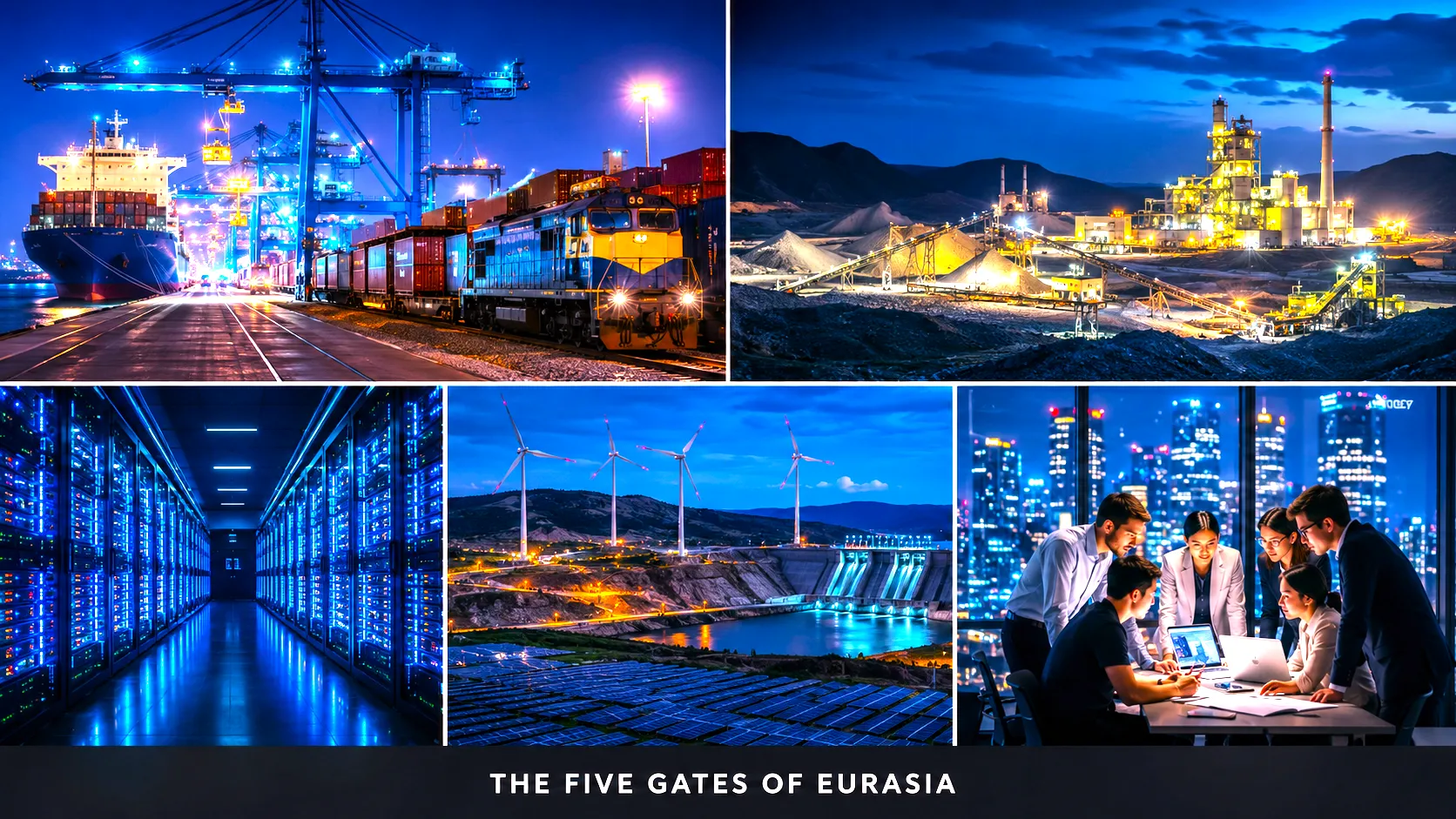
The phrase has a double meaning. First, it refers to the five sovereign states of Central Asia. Second, it points to five strategic gateways through which the region can contribute to a more connected, resilient and balanced Eurasia: transport, resources, digital transformation, climate-water-energy resilience, and human and cultural exchange.
This is not a slogan against existing frameworks. On the contrary, it is a way to give clearer regional identity to the cooperation already developing between Central Asia and the European Union. The EU’s Global Gateway strategy seeks to build smart, clean and secure links in digital, energy and transport sectors, while also strengthening health, education and research systems worldwide. In Central Asia, that logic already has a natural geography.
The first EU–Central Asia Summit in Samarkand in April 2025 confirmed this change. The leaders of Kazakhstan, the Kyrgyz Republic, Tajikistan, Turkmenistan, Uzbekistan and the European Union elevated relations to a strategic partnership, opening a new chapter in interregional cooperation. At the same summit, the EU announced a €12 billion Global Gateway investment package for Central Asia, focused on transport links, critical raw materials, digital connectivity, water and energy.
These priorities are not accidental. They are exactly the areas where Central Asia is becoming more relevant to Europe’s long-term strategic thinking.
The challenge now is to translate this momentum into a concept that is easy to understand, respectful of the sovereignty of all five countries, and strong enough to communicate the region’s value. The Five Gates of Eurasia can serve that purpose.
The Transport Gate: from geography to connectivity
The first gate is transport.
Central Asia’s geography has always mattered. But geography alone does not create influence. Roads, railways, ports, logistics centres, customs systems and predictable rules are what turn location into connectivity.
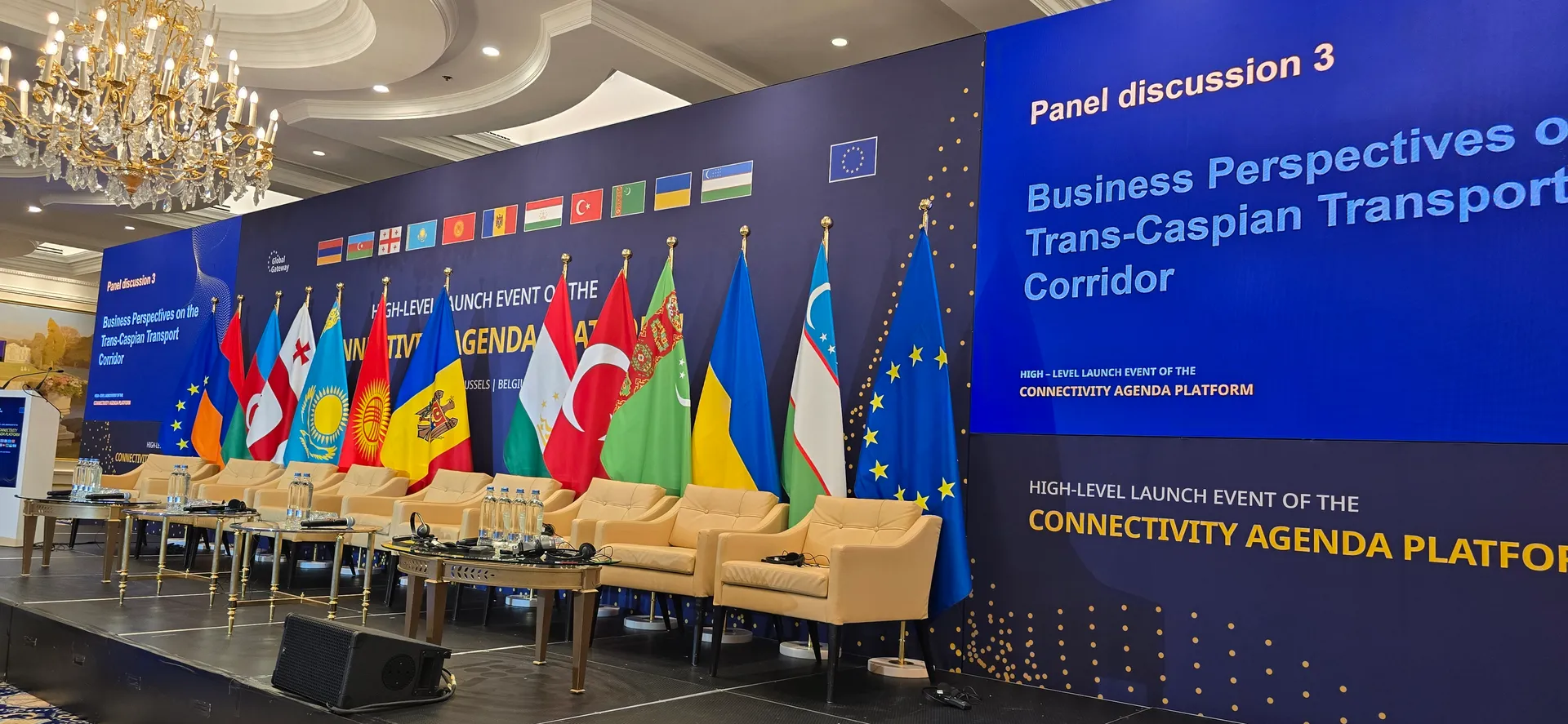
This is why the Trans-Caspian Transport Corridor, often called the Middle Corridor, has become central to the conversation between Europe and Central Asia. It links Central Asia with the Caspian Sea, the South Caucasus, Türkiye and Europe, offering a route that can support more diversified and resilient trade flows. The EU and Central Asian countries have repeatedly underlined the importance of sustainable transport connectivity, including through the Trans-Caspian route.
For Europe, this is about more than cargo. It is about resilience. Recent global disruptions have shown that supply chains cannot depend too heavily on a narrow number of routes. For Central Asia, transport connectivity is also about economic diversification, regional cooperation and access to wider markets.
The Transport Gate therefore turns Central Asia from a landlocked region into a land-linked region. It allows the five states to present themselves not as distant from world markets, but as active participants in connecting them.
The Resource Gate: beyond extraction, toward value chains
The second gate is resources.
Central Asia possesses significant potential in minerals and raw materials relevant to the green and digital transitions. For the European Union, secure and sustainable access to critical raw materials has become an economic and strategic priority. The EU’s Global Gateway package for Central Asia explicitly includes cooperation on critical raw materials alongside transport, digital connectivity, water and energy.
But the Resource Gate should not be understood only as extraction. That would be too narrow and too old-fashioned.
The real opportunity lies in sustainable value chains: geological knowledge, responsible investment, environmental standards, local processing, skills development, certification, research, and industrial partnerships. A modern resource partnership should not simply move raw materials from one place to another. It should create value in the region and trust with external partners.
This is especially important for Europe. If the EU wants reliable partnerships, it must be seen not only as a buyer, but as a partner in industrial development. Central Asia, in turn, can use resource cooperation not only to export more, but to move higher up the value chain.
In this sense, the Resource Gate is not only about what lies underground. It is about what can be built above ground: industries, expertise, jobs and long-term trust.
The Digital Gate: connecting societies, not only cables
The third gate is digital.
Digital connectivity is one of the pillars of the EU’s Global Gateway strategy. In Central Asia, this agenda has special importance because the region has young populations, growing digital markets and governments increasingly interested in e-services, innovation and technological modernization.
The Digital Gate includes secure data links, e-governance, fintech, cybersecurity, artificial intelligence, digital public services and innovation ecosystems. But it also raises an important question: what kind of digital future should connect Europe and Central Asia?
The answer should be based on trust.
Digital infrastructure is not neutral. It shapes how citizens access services, how businesses trade, how states manage information and how societies participate in the global economy. For this reason, digital cooperation between Europe and Central Asia should be built around security, openness, skills and interoperability.
The Digital Gate can help Central Asia avoid being only a consumer of external technologies. It can support local talent, regional start-ups, research cooperation, digital education and public-sector modernization. For Europe, it opens a space for partnership in a region where digital standards and trusted connectivity will matter increasingly.
If the old Silk Road moved silk, spices and ideas by caravan, the new Silk Road will also move data, innovation and knowledge.
The Climate-Water-Energy Gate: resilience as a shared interest
The fourth gate is climate, water and energy.
Few issues show the interconnected nature of Central Asia more clearly. Water, energy, agriculture, glaciers, desertification and climate adaptation are not separate questions. They are part of one regional system. What happens in one country can affect its neighbours. What happens in the mountains can affect the plains. What happens to water can affect food security, energy security and social stability.
This makes the Climate-Water-Energy Gate one of the most important pillars of the concept.
For Europe, climate and environmental cooperation with Central Asia is not charity. It is strategic partnership. A more resilient Central Asia means a more stable Eurasia. Cooperation in water management, renewable energy, energy efficiency, climate adaptation and environmental research can create practical benefits for both sides.
This pillar also gives the “Five Gates” concept an important ethical dimension. Connectivity should not only be faster. It should be sustainable. Development should not only be profitable. It should be resilient. Infrastructure should not only link markets. It should help societies adapt to a changing climate.
Central Asia’s future will depend not only on roads and pipelines, but on rivers, glaciers, deserts, farms and communities. Any serious EU–Central Asia agenda must recognise this.
The Human and Cultural Gate: the most durable bridge
The fifth gate is human and cultural exchange.
This may be the least technical gate, but it is perhaps the most durable one. Infrastructure can be built, agreements can be signed, and investment packages can be announced. But partnerships last when people understand each other.
The Human and Cultural Gate includes education, research, youth mobility, tourism, cultural dialogue, language learning, academic cooperation and people-to-people contacts. Human connections create the trust that makes all other cooperation easier.
A student from Central Asia who studies in Europe, a European researcher working with Central Asian colleagues on climate adaptation, a young entrepreneur building a digital company, a tourist discovering the heritage of the Silk Road, or a cultural institution connecting audiences across borders – all of these are part of strategic connectivity.
The first EU–Central Asia Summit and related EU documents have emphasized education, research, mobility and people-to-people contacts as part of the wider partnership. This matters because the region should not be seen only through maps of corridors and resources. It should also be seen through its people, languages, traditions and ambitions.
The Human and Cultural Gate reminds us that Eurasia is not only a space of trade. It is a space of civilizations.
Why the concept matters for Europe
For the European Union, the “Five Gates of Eurasia” concept offers several advantages.
First, it gives a simple and positive framework for a complex relationship. EU–Central Asia cooperation covers transport, energy, critical raw materials, digitalization, water, education, trade, security and culture. These areas can look fragmented. The Five Gates bring them together into one understandable structure.
Second, the concept respects the equality of the five Central Asian states. It does not present one country as the only gateway or the only strategic partner. Instead, it recognizes that Kazakhstan, the Kyrgyz Republic, Tajikistan, Turkmenistan and Uzbekistan each have distinct geography, resources, capacities and diplomatic value.
Third, it supports the EU’s own language of sustainable, secure and trusted connectivity. Global Gateway provides the investment framework. The Five Gates provide the regional identity.
Fourth, it avoids reducing Central Asia to a transit corridor. This is essential. The region is not simply a route from somewhere to somewhere else. It is a region of states, societies, economies and cultures with their own development priorities.
Finally, the concept helps communicate the strategic partnership to wider audiences. Policy documents are necessary, but they are often difficult for the public to remember. A strong idea can travel further than a technical paragraph.
A partnership of choice, not necessity
The EU and Central Asia are moving closer at a time of geopolitical uncertainty. But the strongest partnerships are not built only on external pressure. They are built on choice.
Central Asia is choosing a more active role in Eurasian connectivity. Europe is choosing to deepen relations with a region that is becoming increasingly important for trade, energy transition, transport diversification and geopolitical balance. The Samarkand Summit showed that both sides are ready to think bigger.
By Maral Rahymova
Diplomat at the Embassy of Turkmenistan in Belgium, Mission of Turkmenistan to the EU
Related Topics

Maral Rahymova
Maral Rahymova is a Turkmen diplomat and policy writer based in Brussels. Her work and research focus on diplomacy, international cooperation, peace, emerging technologies, and global affairs.
Follow EUReflect
See more of our reporting on Google
Mark EUReflect as a preferred source and our stories are ranked higher for you in Top Stories, Discover and Google News — and carry a “preferred” badge when they are cited in AI results.
Add EUReflect as a preferred source