Central Asia's Active Leadership on the International Stage
Central Asia is evolving from a peripheral region into an active geopolitical actor. Through regional cooperation, multi-vector foreign policy, and expanding transit and energy potential, the region is strengthening its role in global politics while balancing major power competition and addressing security risks linked to Afghanistan. Tojiddinov Shukurjon, Independent Young Analyst on Central Asian Regional and Security Affairs
Introduction
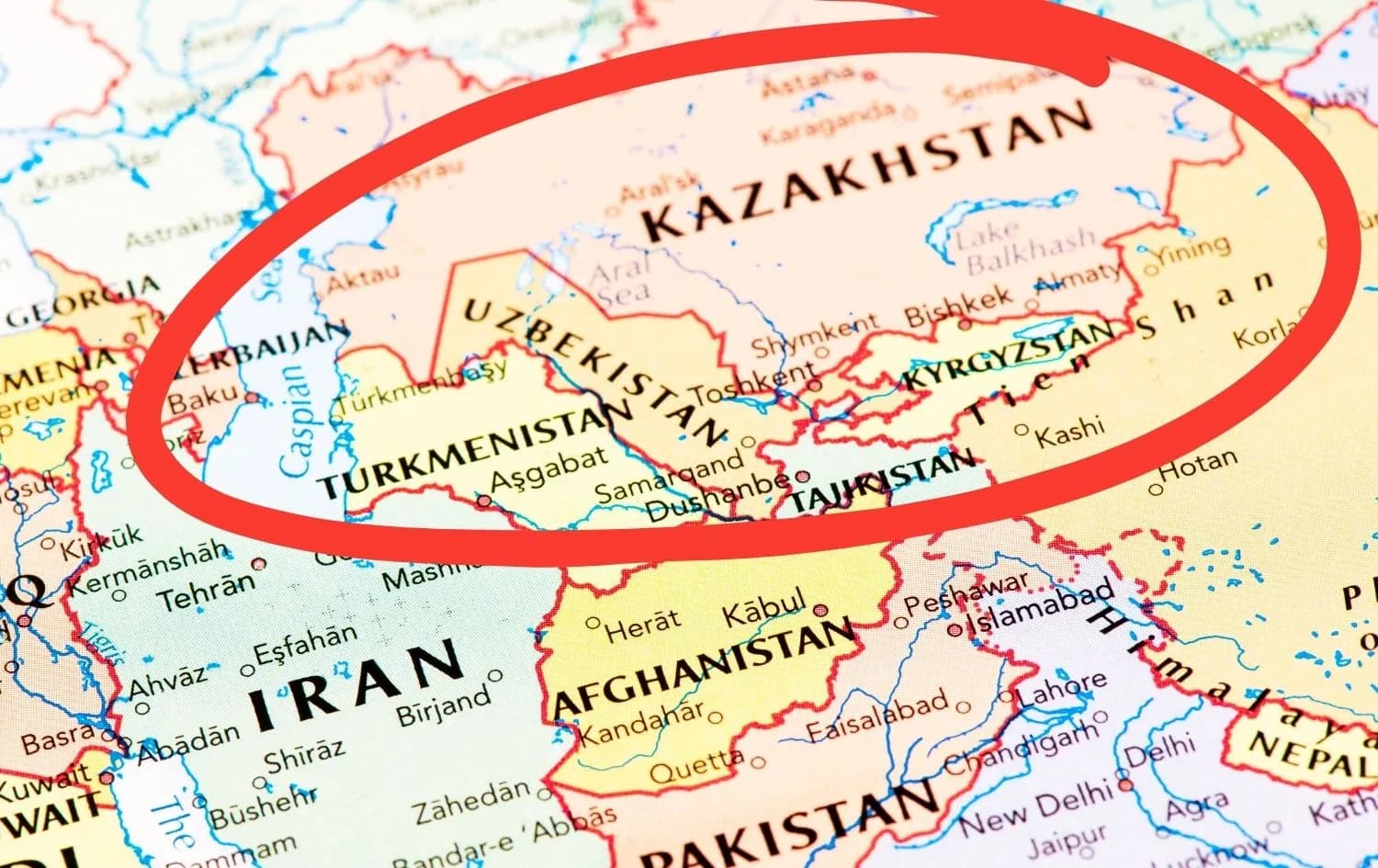
Today, the Central Asian region is transitioning from a passive periphery to an active geopolitical subject within the global political and economic system. In recent years, the states of the region have considerably strengthened their standing on the international stage through confidence-building measures, deeper regional integration, and the pursuit of a multi-vector foreign policy. In particular, the intensification of global geopolitical competition in the mid-2020s has rendered Central Asia increasingly relevant as a strategic transit, energy, and security zone.
Regional Solidarity and Political Consolidation
The Central Asian states — Uzbekistan, Kazakhstan, Kyrgyzstan, Tajikistan, and Turkmenistan — have established a format of consultative summits, developing a mechanism for resolving internal regional issues without external interference. This process has enhanced the region's political agency.
The current regional agenda prioritizes water-energy security, border delimitation and demarcation, transport-logistics integration, and the reduction of trade barriers. The gradual resolution of border disputes is laying an important foundation for long-term stability in the region.
Geo-economic Transformation and Transit Potential
Central Asia is becoming the center of a new logistics architecture as a strategic space connecting East and West, North and South. In particular, the China–Central Asia–Europe corridor and the Trans-Caspian International Transport Route are enhancing the region's geo-economic significance.
While maintaining economic ties with Russia on one hand, regional states are simultaneously expanding cooperation with the European Union, Turkey, South Korea, and the Gulf states. This multi-vector economic policy is enabling the region to balance external pressures.
In the energy sector, green transformation is rising on the agenda. While Kazakhstan and Uzbekistan are expanding renewable energy projects, Turkmenistan is seeking to diversify its gas exports. The region's energy resources continue to hold significant importance in the context of global energy security.
Security Architecture and the Afghanistan Factor
On the question of regional security, the Afghanistan factor is of decisive importance. The risk of political and social instability in Afghanistan is compelling Central Asian states toward ever-closer security cooperation.
At the same time, the regional states are advancing a concept of security ensured not solely through military instruments, but through economic integration, infrastructure projects, and trade. This approach serves to transform Central Asia from a "security consumer" into a "security producer."
Strategic Balance Amid Great Power Competition
The contemporary global system is shifting toward a multipolar configuration. The geopolitical competition among the United States, China, and Russia is resonating in Central Asia as well. Nevertheless, the regional states are avoiding open bloc alignment, instead pursuing pragmatic and balanced policies.
Tensions in the Middle East — including developments related to Iran — also carry strategic significance for Central Asia in terms of energy supply and transit corridors. For this reason, regional states are prioritizing diplomatic neutrality and economic pragmatism as their guiding orientations.
Institutional and Normative Activism
Central Asian states are also increasing their activism within international organizations. They are taking initiative on issues of global climate change, water resource management, sustainable development goals, and transport corridors — thereby enhancing the region's normative and diplomatic capital.
The region's leadership model is manifesting not as classical hegemony, but as a form of soft leadership grounded in consensus, regional solidarity, and economic openness.
Conclusion
Today, Central Asia is becoming not the periphery of global politics, but one of its important geopolitical nodes. The region's active leadership rests on three core pillars:
–internal regional consolidation;
–multi-vector foreign policy;
–effective utilization of geo-economic and logistics potential.
Should the regional states sustain mutual trust and cooperation, Central Asia has the potential to become one of the new geopolitical and geo-economic centers of the twenty-first century. In this transformative era, the region's primary task is not to become an arena for external competition, but to emerge as an independent strategic platform capable of safeguarding its own interests.
For academic feedback, proposals, and collaboration initiatives:
turoninstitute.org@gmail.com | https://t.me/turon_institute
Tojiddinov Shukurjon,
Independent Young Analyst on Central Asian Regional and Security Affairs
Tojiddinov Shukurjon
Contributing writer at EUReflect.
Follow EUReflect
See more of our reporting on Google
Mark EUReflect as a preferred source and our stories are ranked higher for you in Top Stories, Discover and Google News — and carry a “preferred” badge when they are cited in AI results.
Add EUReflect as a preferred source