New Constitution of the Republic of Kazakhstan
New Constitution of the Republic of Kazakhstan
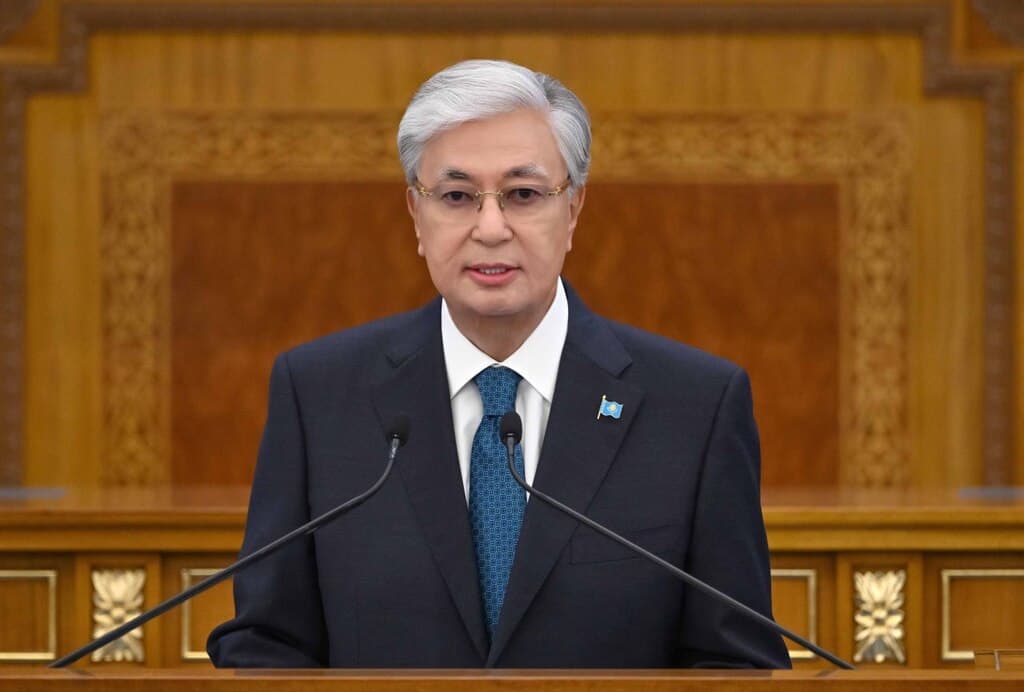
source pic: senate.parlam.kz
Kazakhstan Unveils Draft of a New Constitution: A Landmark in Political Transformation
The Constitutional Court of the Republic of Kazakhstan has published the draft of a new Constitution on January 31, marking a decisive turning point in the country’s ongoing political modernisation. Initiated by President Kassym-Jomart Tokayev, this reform represents the most comprehensive constitutional overhaul since independence, shifting from targeted amendments to a full-scale redesign of Kazakhstan’s governance model and foundational values. The final decision on adopting the new Constitution will be made by citizens through a nationwide referendum.
Background: From Reform Proposal to Constitutional Redesign
The road toward a new Constitution began on 8 September 2025, when President Tokayev proposed a transition to a unicameral Parliament during his annual Address to the Nation. This suggestion served as the catalyst for a broader reset of the political system.
To implement this vision:
1. Parliamentary Reform Working Group (October 2025 – March 2026)
A Working Group was formed in October 2025 to assess parliamentary reforms. Over six months, it received more than 2,000 proposals from citizens through the e-Otinish and eGov platforms, demonstrating substantial public engagement.
2. Establishment of the Constitutional Commission (January 2026)
A 130‑member Constitutional Commission was created, representing every region and diverse segments of society, including members of the National Kurultai, legal scholars, civil society, government officials, journalists, and local representatives.
The Commission reviewed proposals affecting 77 articles, representing 84% of the current Constitution. The depth and scope of proposed changes led to the decision to draft an entirely new constitutional text.
Importantly, all Commission meetings were open, transparent, and publicly broadcast, allowing legal experts, human rights advocates, parliamentarians, analysts, and academics to participate.
Key Institutional Changes: A Shift in Governance
1. A Unicameral Parliament (Kurultai)
The new Constitution establishes a single-house Parliament, known as the Kurultai, composed of 145 deputies elected entirely by proportional representation for a five-year term.
This shift is intended to strengthen political parties, enhance accountability, and streamline legislative processes.
2. Creation of the People’s Council of Kazakhstan
A new nationwide consultative body—the People’s Council—is introduced. As the highest consultative institution, it will:
Represent public interests
Hold the right of legislative initiative
This reflects a broader effort to deepen public participation in governance.
3. Introduction of the Vice Presidency
The executive branch is restructured with the creation of the institution of Vice President.
The Vice President will represent the President in cooperation with domestic and international socio‑political, scientific, cultural, and educational institutions.
Strengthened Rule of Law and Legal Protections
The draft Constitution significantly expands legal guarantees and procedural rights. New or enhanced safeguards include:
A dedicated constitutional article on the legal profession, ensuring protection of advocacy
Stronger intellectual property rights
Prohibition of retroactive laws that worsen legal positions or impose new obligations
Reinforced presumption of innocence
A constitutional ban on double jeopardy
Enshrinement of the “Miranda rule”, guaranteeing individuals the right to be informed of their legal rights upon detention
These reforms aim to modernise Kazakhstan’s justice system, aligning it with global standards.
Core Constitutional Values and Principles
The draft Constitution consists of a Preamble, 11 sections, and 95 articles, modernising outdated terminology and reflecting the country’s evolving political and social landscape.
1. Human Rights at the Forefront
For the first time, the Constitution declares human rights and freedoms as the highest priority of the state, forming the guiding principle of the entire text.
Other foundational values include:
Unity, solidarity, and interethnic and interfaith harmony
Sovereignty, independence, territorial integrity, and the unitary nature of the state
Justice, law and order, and stewardship of nature
Recognition of the people as the sole source of state power and sovereignty
2. Human‑Centered Development
The new Constitution places education, science, culture, and innovation at the heart of national development. This marks a strategic shift from natural resource reliance to human capital as the primary driver of growth.
3. Digital Rights
For the first time, citizens’ rights in the digital environment receive explicit constitutional protection, acknowledging Kazakhstan’s growing digital transformation.
4. Secular State Principles
The Constitution reinforces the firm separation of state and religion, reaffirming the secular character of education and public life.
5. Family and Social Values
Marriage is defined constitutionally as a voluntary union between a man and a woman, framed as a measure aimed at protecting traditional values and strengthening legal guarantees for women.
An Evolution Rooted in Experience
While introducing a fundamentally updated governance model, the draft Constitution acknowledges the important role played by the current Constitution in Kazakhstan’s state‑building. The new text positions itself as a logical evolution—reflecting institutional maturity, strengthened international image, and a forward‑looking approach to governance.
CONCLUSION
The constitutional reform process continues with active public participation.
Citizens can submit feedback via the e‑Otinish and eGov platforms.
The nationwide referendum will determine the adoption of the new Constitution.
Meanwhile, the Constitutional Commission continues refining the draft ahead of the vote.
EUReflect News
Site Administrator
Follow EUReflect
See more of our reporting on Google
Mark EUReflect as a preferred source and our stories are ranked higher for you in Top Stories, Discover and Google News — and carry a “preferred” badge when they are cited in AI results.
Add EUReflect as a preferred source