Eritrea Returns to International Football After Years of Isolation
After nearly two decades away from international competition, Eritrea is preparing to re-enter the global football scene. This return represents far more than a sporting event—it signals a broader moment of reconnection.
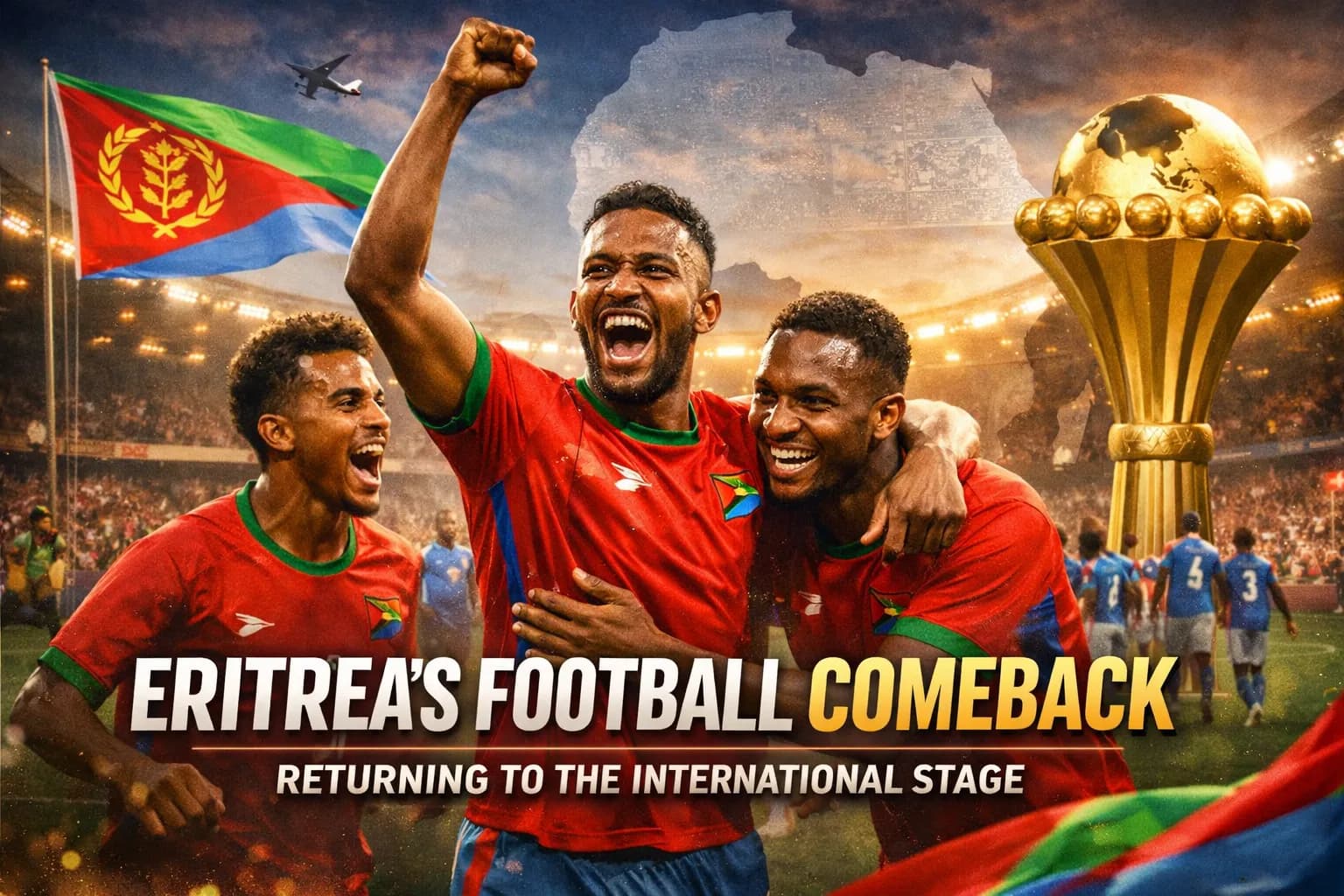
Eritrea’s national team is set to compete in the qualifiers for the Africa Cup of Nations 2027, where they will face Eswatini in a preliminary round. This marks the nation’s first involvement in the tournament since 2008, ending an absence that has lasted nearly 18 years.
Observers note that this comeback is symbolic. It reflects not only a return to football but also a renewed sense of national identity and presence on the international stage.
Football has long been one of the few unifying forces in Eritrea, offering citizens a sense of pride and shared identity. The national team, known as the Red Sea Camels, provides an opportunity for the country to reconnect with the wider African football community. Rejoining continental competition allows Eritrea to move beyond years of isolation and demonstrate its willingness to engage globally once again.
There are also practical benefits to this return. Participation in international tournaments can attract funding, sponsorship, and development support from organizations such as the Confederation of African Football. For a country facing economic and infrastructural challenges, this could lead to improvements in facilities, increased investment, and stronger international partnerships. Greater exposure may also encourage tourism and media attention, potentially benefiting the economy over time.
Eritrea’s long absence from international football has been shaped by a complex set of challenges. Concerns that players might seek asylum during overseas trips, along with the lack of FIFA-approved stadiums, led to repeated withdrawals from major competitions, including World Cup qualifiers and previous AFCON campaigns.
Now, officials confirm that Eritrea has rejoined the qualification process and plans to include players from its diaspora to strengthen the squad. Although home matches will need to be played abroad due to infrastructure limitations, the symbolic importance of competing again remains significant.
The upcoming match against Eswatini is more than just a fixture—it represents reintegration into the international football community. It also coincides with a milestone moment for African football, as all 54 CAF member associations are participating in the qualification process for the same tournament.
Despite the optimism, challenges remain. Eritrea still lacks suitable stadiums, its domestic football system requires rebuilding, and its FIFA ranking has declined due to years of inactivity. However, the decision to return suggests a commitment to addressing these issues and rebuilding its presence in global sport.
More broadly, Eritrea’s comeback highlights the power of football as a force for unity and transformation. Across Africa, the sport has played a vital role in strengthening communities and enhancing international recognition. For Eritrea, this return may mark the beginning of a new chapter—one defined by renewed engagement and opportunity.
As the team prepares to step back onto the pitch, the moment carries significance far beyond the final score. It represents resilience, reconnection, and the enduring influence of sport in shaping national identity.
Dmytro Melnyk
Contributing writer at EUReflect.
Follow EUReflect
See more of our reporting on Google
Mark EUReflect as a preferred source and our stories are ranked higher for you in Top Stories, Discover and Google News — and carry a “preferred” badge when they are cited in AI results.
Add EUReflect as a preferred source