Europe Day in Brussels: honouring 76 years of the Schuman vision and European Unity
The article covers Europe Day at the European Parliament in Brussels, marking the 76th anniversary of the Schuman Declaration. It highlights a family-friendly celebration focused on youth, inclusion, and unity, with strong citizen participation reflecting continued support for the European project.
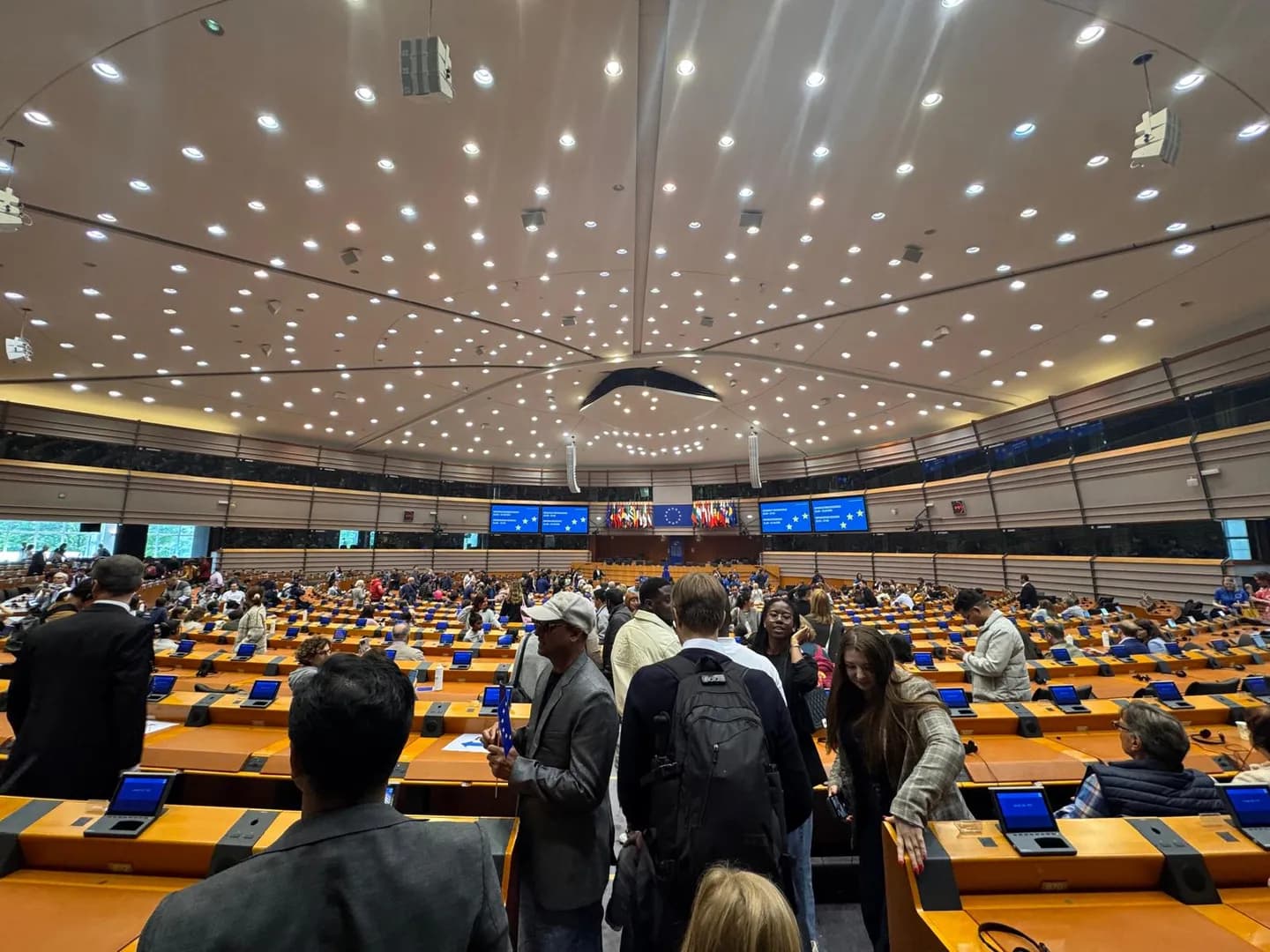
Brussels, 09 May 2026
On the 9th of May, Europe celebrates more than just a date. It celebrates a vision.
Europe Day commemorates the 76th anniversary of the 1950 Schuman Declaration, the moment that laid the groundwork for what would eventually become the European Union. At its core, the declaration put forward a bold vision: replacing conflict with cooperation and strengthening unity over division.
This year’s celebration also carried additional meaning, marking 40 years since Portugal and Spain joined the European project, as well as 40 years since Europe Day officially began to be celebrated. These anniversaries served as a reminder of how the European Union has evolved over decades, expanding not only geographically but also politically, culturally, and socially.
The corridors of the Parliament were filled with languages, cultures, and perspectives from across the continent, all coexisting under one roof. In a time marked by geopolitical tensions, disinformation, rising nationalism, and polarization, this held a deeper and stronger meaning.
What stood out most was the atmosphere created for families and children. The European Parliament was filled with activities, games, and workshops designed to help young people discover Europe in an engaging way, while promoting values such as unity, diversity, and cooperation. The inclusion of children carried a powerful importance. They embody the future of Europe. Investing in the younger generation means empowering the continuation of democratic values, intercultural understanding, and European solidarity. In a world increasingly shaped by division and uncertainty, teaching children the importance of dialogue, openness, and coexistence becomes indispensable.
Another striking aspect of the celebration was the presence of citizens from across Europe who specifically travelled to Brussels to take part in Europe Day. Their presence demonstrated that, despite growing Euroscepticism in some countries, many citizens remain deeply committed to the European project and continue to believe in the idea of a stronger and more united Europe.
Simultaneously, Europe Day was not celebrated only by European citizens. Many non-European residents and tourists were also present, participating in the celebrations and sharing this collective moment. Their presence reflected another important reality about Europe today: the European identity is increasingly multicultural, diverse, and connected to people from different backgrounds who contribute to the Union every day.
Europe today faces enormous challenges. From war on the continent’s borders to migration debates, economic instability, climate concerns, and growing distrust toward institutions, the European project is constantly being tested. Europe Day serves as a reminder that the European Union was never built during easy times. It was born precisely from crisis, destruction, and the urge need for peace.
Today, one message became clear: Europe is still an unfinished project. And perhaps that is exactly what makes it important. Its future will depend not only on politicians and institutions, but also on its citizens, who continue to believe in the values of coexistence, democracy, inclusion, and hope for the generations to come.
Saadia Ajbaili
Contributing writer at EUReflect.
Follow EUReflect
See more of our reporting on Google
Mark EUReflect as a preferred source and our stories are ranked higher for you in Top Stories, Discover and Google News — and carry a “preferred” badge when they are cited in AI results.
Add EUReflect as a preferred source