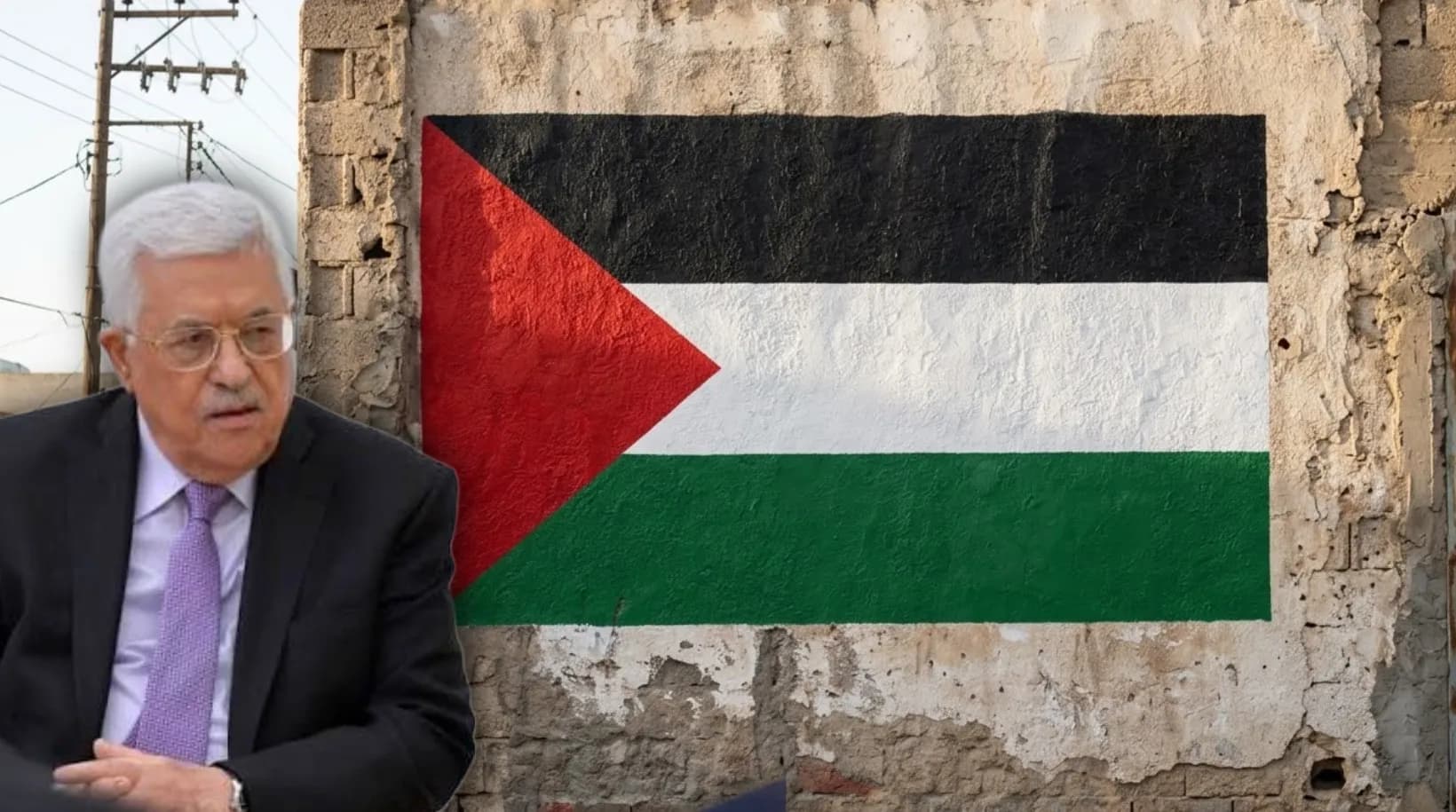
FOR WHOM THE BELL TOLLS? A BRIEF ASSESSMENT OF THE EU’S POLICY TOWARDS PALESTINE
The Palestinian issue has remained one of the most complex and enduring problems in the international system since the early 20th century. Understanding the European Union’s policy on Palestine requires examining not only the balance of power in the Middle East but also Europe’s own value system.
The Palestinian issue has remained one of the most complex and enduring problems in the international system since the early 20th century. Understanding the European Union’s policy on Palestine requires examining not only the balance of power in the Middle East but also Europe’s own value system. Europe, on the one hand, positions itself as a “normative power” defending the principles of human rights, democracy, and international law, while on the other, it tends to maintain its economic and strategic relations with Israel. This dual structure often places Europe’s role in the Palestinian issue in a position caught between “values” and “interests.” The EU, which maintains regular contacts with the EU High Representative and the Special Representative for the Peace Process in the Palestinian territories, has evolved over time from an observer to a diplomatic power providing significant financial support during the Israeli-Palestinian War.(1)
The Venice Declaration and initial stance
The EU’s first stance on the Palestinian issue was set forth in the Venice Declaration prepared by the European Community on 13 June 1980. Article 6 of the Venice Declaration emphasized the need to find a just solution to the Palestinian problem and to ensure that the Palestinian people are able to fully exercise their right to self-determination. Article 8 declared that no unilateral attempt to change the status of Jerusalem would be accepted.(2) The partnership between the EU and Palestine dates back to the Interim Partnership Agreement on Trade and Cooperation signed with the Palestine Liberation Organization on behalf of the Palestinian Authority in 1997. The EU-Palestine Action Plan, part of the European Neighborhood Policy, was recently extended for another three years, until 2025. The 2017-2022 Palestinian National Policy Agenda was adopted in December 2016, followed by the adoption of the 2021-2024 European Joint Strategy for Palestine, which aligns with this project, on 22 November 2022. This project focuses on democracy, the rule of law and human rights, climate change, access to self-sufficient water and energy services, and sustainable economic development. EU cooperation in the Palestinian territories takes various forms, including direct financial support, support for Palestinian refugees, and development programs. The EU’s financial resources for Palestine under the 2021-2024 Joint European Strategy have been announced at €1.177 billion. The EU, the largest donor of foreign aid to Palestine, proposes a negotiated two-state solution to the Israeli-Palestinian War, with Jerusalem as the future capital of both states. The EU supports the Palestinian Authority’s efforts to strengthen transparency and accountability, as well as to ensure greater control, autonomy, and the capacity to take responsibility for Palestinians in preparation for future statehood.(3)
Financial support and budget assistance
On July 19, 2024, the EU and the Palestinian Authority signed a Letter of Intent to address the financial situation and critical budget of the Palestinian economy. The Letter of Intent outlined a two-stage approach: the distribution of €400 million in emergency financial support to the Palestinian Authority between July 2024 and February 2025, and the 2025-2027 Comprehensive Programme for Palestine. The first High-Level Political Dialogue meeting between the EU and Palestine was held on April 14, 2025. At the meeting, the European Commission proposed a €1.6 billion multiannual Comprehensive Support Programme to support Palestinian recovery and resilience. This meeting, considered the beginning of a new era in bilateral relations, addressed issues such as the humanitarian crisis in Gaza, Israel’s settlement policies, and the reform process. With this program, the EU reiterates its unwavering support for the Palestinian people and its commitment to a lasting and sustainable peace based on a two-state solution. The project, which will cover the period between 2025 and 2027, is structured around three pillars: support for services to the Palestinian people, support for the recovery and stability of the West Bank and Gaza, and support for the private sector.(4) The EU expressed its deep concern at the high level of violence in the West Bank, underlined its opposition to Israel’s settlement policy in the Palestinian territories, and reminded the EU of the sanctions that will be imposed on violent settlers. Deeply concerned about the civilian casualties and the humanitarian situation in Gaza, the EU calls on Israel to impose a ceasefire, resume humanitarian aid, and release the hostages.(5)
Parliamentary recognition resolution
On September 11, 2025, the European Parliament adopted a non-binding resolution by 305 votes to recognize the State of Palestine. Having previously supported recognition of the State of Palestine in principle, the European Parliament, with this resolution, calls for direct action and calls on EU member states to consider recognizing the State of Palestine as a means of achieving a two-state solution. In addition to recognizing Palestine, the resolution discussed whether the term “genocide” should be used to describe Israel’s attacks on Gaza, and ultimately, it was decided not to use the term.(6) It appears that EU countries are divided on the issue of recognizing Palestine. Bulgaria, the Czech Republic, France, Sweden, Spain, Ireland, Slovenia, Portugal, Malta, Luxembourg, Cyprus, Poland, Romania, and Hungary have officially declared their recognition of Palestine as a state, while Belgium, the Netherlands, and Denmark have provided conditional support to Palestine. Greece, Austria, Italy, Germany, Finland, Lithuania, Latvia, Estonia, Croatia and Slovakia are the countries that have considered recognizing Palestine as a state but have not yet made an official statement on this matter. (7)
International conference on two-state solution
On September 22, 2025, the High-Level International Conference for the Peaceful Solution to the Palestinian Question and the Implementation of the Two-State Solution was held with the support of France and Saudi Arabia. This conference, which aimed to recognize Palestine and establish a sovereign, democratic, and economically sustainable State of Palestine in peace and security with Israel, facilitated the adoption of the New York Declaration, which was adopted by the General Assembly with a supermajority of 142 votes. This ambitious declaration, which reaffirms the unwavering international commitment to the two-State solution, outlines an irreversible roadmap to build a better future for all peoples in the region, especially Israelis and Palestinians. The New York Declaration offers a principled yet realistic alternative to the endless cycle of wars and violence. The conference underscored that the time had come for the international community to move beyond words to action, emphasizing the need to end the Israeli occupation and achieve a lasting and just peace between Palestinians and Israelis based on relevant UN resolutions.(8) The EU supports the commitment made by US President Donald Trump to end the war. This commitment includes the principles of ending the devastating conflict in the region, achieving an immediate ceasefire and the release of hostages, ensuring full humanitarian assistance to the Gaza Strip, ending the occupation of Gaza, preventing the displacement of Palestinians, a disarmed Hamas with no role in any future governance, and eliminating any threat to Israel and its people.(9)
Critique of symbolic policies
While the EU’s policies toward Palestine focus on diplomatic recognition, financial support, and political reforms, it appears to be critical of Israel’s settlement policies. However, most of these policies remain symbolic, unfortunately failing to achieve true unity among member states. As previously mentioned, the European Union’s role in the Palestinian issue is caught between “values” and “interests.” The EU, seeking to maintain trade and economic relations with Israel, is a diplomatic force distinguished by its financial support rather than a mediator in the Israeli-Palestinian War. In a general assessment, it would not be inaccurate to say that the EU’s policy toward Palestine embraces a two-state solution model, humanitarian aid to the region, a balanced criticism of Israel, and a policy based on international law.
Bibliography
Roby Nathanson, Ariel Indenbaum, Redefining European Engagement In The Israeli– Palestinian Conflict From Financial Aid To Institution Building, The Foundation For European Progressive Studies, https://feps-europe.eu/wp-content/uploads/2024/05/Redefining-European-engagement-in-the-Israeli-Palestinian-conflict.pdf, 08.10.2025.
Venice Declaration June 13 1980, https://ecf.org.il/media_items/1476, 07.10.2025.
Palestine, European Commission, https://enlargement.ec.europa.eu/european-neighbourhood-policy/countries-region/palestine_en#eu-and-palestine, 08.10.2025.
Commission Announces Multiannual Programme For Palestinian Recovery And Resilience Worth Up To €1.6 Billion, European Commission, https://ec.europa.eu/commission/presscorner/detail/fi/ip_25_1055, 08.10.2025.
Filistin: Avrupa Birliği ile Filistin Yönetimi Arasındaki Yüksek Düzeyli Diyalog Hakkında Yüksek Temsilci Tarafından Yapılan Açıklama, Avrupa Birliği Türkiye Delegasyonu, https://www.eeas.europa.eu/delegations , 08.10.2025.
Vincenzo Genovese, L’assemblea Dell’ue Ha Votato A Favore Di Una Risoluzione Non Vincolante, Concordata Dai Gruppi Della Maggioranza Centrista, https://it.euronews.com/my-europe/2025/09/11/il-parlamento-europeo-chiede-il-riconoscimento-dello-stato-di-palestina, 07.10.2025.
Simone De La Feld, France And Four Other EU Countries Ready, States That Recognise Palestine Almost 160, Eunews, https://www.eunews.it/en/2025/09/22/france-and-four-other-eu-countries-ready-states-that-recognise-palestine-almost-160/, 08.10.2025.
International Conference For The Implementation Of The Two-State Solution (22 September) Statement Of The Co-Chairs Of The Conference (25 September 2025), Ministry for Europe and Foreign Affairs, https://www.diplomatie.gouv.fr/en/country-files/israel-palestine/news/2025/article/international-conference-for-the-implementation-of-the-two-state-solution-22, 08.10.2025.
Government Offices of Sweden, Israel/Palestine: Statement By The High Representative On Behalf Of The European Union On Gaza, https://www.government.se/statements/2025/10/israelpalestine-statement-by-the-high-representative-on-behalf-of-the-european-union-on-gaza/, 08.10.2025.
Dr. Esra Sezer
Contributing writer at EUReflect.
Follow EUReflect
See more of our reporting on Google
Mark EUReflect as a preferred source and our stories are ranked higher for you in Top Stories, Discover and Google News — and carry a “preferred” badge when they are cited in AI results.
Add EUReflect as a preferred source