From ASEAN to BRICS: Malaysia’s Next Diplomatic Step
Malaysia has declared its readiness to join BRICS “as early as tomorrow,” signaling a major diplomatic shift toward the Global South. Prime Minister Anwar Ibrahim’s remarks during the ASEAN Summit in Kuala Lumpur underscore the country’s ambition to balance ASEAN pragmatism with broader multipolar engagement. Supported by Brazil and welcomed by Russia and China, Malaysia’s prospective accession could mark a turning point in Southeast Asia’s participation in global governance. The move highlights Malaysia’s evolving foreign policy — one defined by strategic autonomy, south-south cooperation, and a growing voice in reshaping the international order.
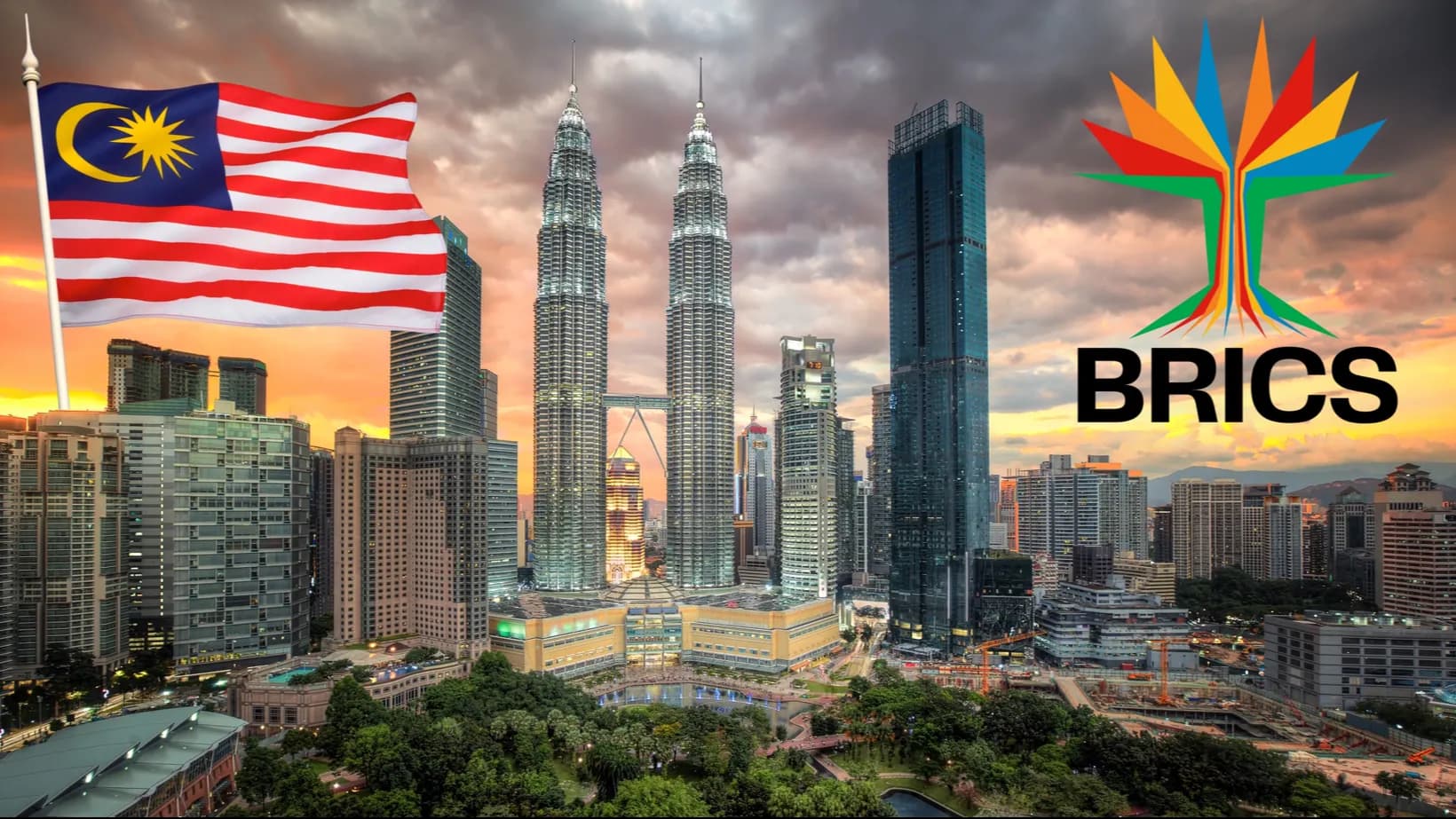
Malaysia’s Prime Minister Anwar Ibrahim has declared his country’s readiness to join the BRICS alliance “as early as tomorrow,” reaffirming Kuala Lumpur’s ambition to play a greater role in the emerging multipolar world. Speaking to Sputnik on the sidelines of the 47th ASEAN Summit, Anwar said Malaysia’s intention remains firm: “If we are accepted tomorrow, we will join tomorrow.”
The statement came amid growing speculation about Malaysia’s accelerated diplomatic pivot toward the Global Southand its increasing participation in alternative multilateral frameworks. The Russian Deputy Prime Minister Alexey Overchuk, attending the East Asia Summit in Kuala Lumpur, echoed this sentiment, saying Malaysia “fully meets BRICS criteria,” which emphasize sovereignty, mutual respect, and consensus-based cooperation.
“BRICS is an association of sovereign states that base their relations on respect and consensus. In this sense, Malaysia certainly fits that profile,” Overchuk said, as quoted by BERNAMA and TV BRICS.
BRICS and ASEAN: Overlapping Circles of Influence
During ASEAN-related events, Overchuk highlighted that BRICS and ASEAN share a common foundation — both blocs are grounded in principles of sovereign equality and mutual respect. Analysts suggest that Malaysia’s potential accession could serve as a bridge between Southeast Asia’s economic dynamism and the Global South’s growing political influence.
Brazilian President Luiz Inácio Lula da Silva also voiced strong support for Malaysia’s membership bid, calling the country a “natural partner with shared values and growing potential.”
“Malaysia will have the support of Brazil to become a full member of BRICS,” Lula said during his official visit to Kuala Lumpur.
Lula’s remarks, reported by Malay Mail and Reuters, came as Brazil seeks to strengthen south-south economic networks, particularly in Asia. The Brazilian leader also urged businesses from both countries to “act boldly” in exploring trade and investment, noting that bilateral trade currently stands at around US$12 billion — a modest figure given the scale of both economies.
China’s Position: A Broader Vision for the Global South
When asked about China’s stance, Foreign Ministry spokesperson Guo Jiakun stated that BRICS “welcomes Malaysia and other like-minded partners” willing to participate in its cooperative framework.
According to Xinhua News Agency, Guo described BRICS as “an important platform for cooperation among emerging markets and developing nations,” one that injects “momentum into the democratization of international relations.”
Beijing’s endorsement is critical. China has consistently championed BRICS expansion as part of a larger strategy to reshape global governance and dilute Western institutional dominance. Malaysia’s entry would mark another Southeast Asian step toward this evolving architecture, following similar signals from Thailand and Indonesia.
Strategic Context: From Partnership to Full Membership
Malaysia became an official partner country of BRICS in October 2024, joining 12 other nations seeking eventual membership. This status, while short of full participation, allows Kuala Lumpur to attend select BRICS forums and engage in economic initiatives aligned with the bloc’s development agenda.
Observers note that Anwar Ibrahim’s foreign policy — characterized by a “non-aligned pragmatism” — seeks to balance Western economic ties with Global South solidarity.
As The Diplomat and East Asia Forum have argued, this approach positions Malaysia as a middle power leveraging multipolarity, not choosing sides.
What’s Next?
The question now is how quickly Malaysia’s BRICS ambitions will materialize — and what form its participation will take. According to regional analysts, several diplomatic and procedural steps still stand between Malaysia’s current partner status and full membership. The BRICS framework, while expanding, remains guided by the principle of consensus; thus, Kuala Lumpur’s accession will depend on collective approval from all five founding members and the new entrants under the BRICS+ format.
For Malaysia, the most likely path is a gradual one. Rather than a sudden leap into full membership, Kuala Lumpur is expected to deepen its engagement through working groups on trade, technology, and sustainable development — areas where Malaysia already enjoys strong credentials within ASEAN. This incremental integration would allow the country to align its domestic economic priorities with the broader BRICS agenda while maintaining its traditional balance between East and West.
At the same time, Malaysia’s move is likely to prompt strategic recalibrations within Southeast Asia. As the first ASEAN nation poised for BRICS membership, Kuala Lumpur could redefine the region’s diplomatic posture, especially as other countries such as Thailand and Indonesia have expressed interest in closer cooperation with the bloc. Such a development may also influence ASEAN’s collective engagement with emerging multilateral platforms, reinforcing its role as a bridge between the Global North and South.
Ultimately, the pace of Malaysia’s entry will reflect not only technical readiness but also political timing. With Brazil, Russia, India, China, and South Africa all signaling openness, the process could accelerate in the coming year. If realized, Malaysia’s accession would mark a new stage in the evolution of BRICS — one that expands beyond its traditional geographic and ideological boundaries to include Southeast Asia’s dynamic voice in the architecture of global governance.
Strategic Outlook
Malaysia’s announcement is more than diplomatic enthusiasm — it reflects a calculated move toward multipolar alignment. By positioning itself at the intersection of ASEAN pragmatism and BRICS activism, Malaysia is signaling a new chapter in its foreign policy: one where sovereignty, strategic balance, and south-south solidarity define its global identity.
If accepted, Kuala Lumpur would not only reshape the BRICS map but also introduce a Southeast Asian dimension to the bloc’s global voice — a development likely to reverberate through both Western and Eastern corridors of power.
Botakoz Unbayeva
Contributing writer at EUReflect.
Follow EUReflect
See more of our reporting on Google
Mark EUReflect as a preferred source and our stories are ranked higher for you in Top Stories, Discover and Google News — and carry a “preferred” badge when they are cited in AI results.
Add EUReflect as a preferred source