From Machine To Mind: Can Artificial Intelligence Understand The Human Soul?
The article explores whether artificial intelligence can truly understand the human soul or merely imitate it. Tracing the history of humanity’s attempts to replicate the mind—from ancient automata and Al-Jazari’s mechanical inventions to Descartes’ dualism and Turing’s question “Can machines think?”—it argues that while AI can now mimic human behaviors such as emotion recognition, creativity, and communication, it still lacks genuine experience, conscience, and meaning. Despite rapid technological progress and the deep integration of AI into daily life and global markets, the essence of human consciousness remains uniquely tied to feeling and moral awareness. Ultimately, the text suggests that the real challenge is not whether machines can understand us, but whether humans can still understand themselves.
Throughout human history, one of humanity’s greatest curiosities has been to understand how its own mind works. To think, to feel, to decide, to create… Are these abilities unique to humans, or could machines one day reach the same depth? Today, artificial intelligence can write poetry, paint pictures, hold conversations, and even display emotional reactions. Yet amid all these advances, one fundamental question remains unanswered: does artificial intelligence truly understand, or does it merely imitate?
The human desire to replicate the mind is not new. In Ancient Greece, “automata” — self-moving mechanical devices — challenged the boundaries between thought and life. In the 13th century, Al-Jazari’s water-powered automatons represented early attempts to mimic nature through engineering. In the 17th century, Descartes viewed the human body as a mechanical system, yet he kept the soul outside of that mechanism.
As machines grew more complex, the human mind remained an unresolved mystery. When Alan Turing posed the question “Can machines think?” in the 20th century, humanity had placed its own intellect on the laboratory table. Turing’s question was less a technical inquiry than a philosophical challenge: if we cannot define thinking, how can we know whether a machine does it?
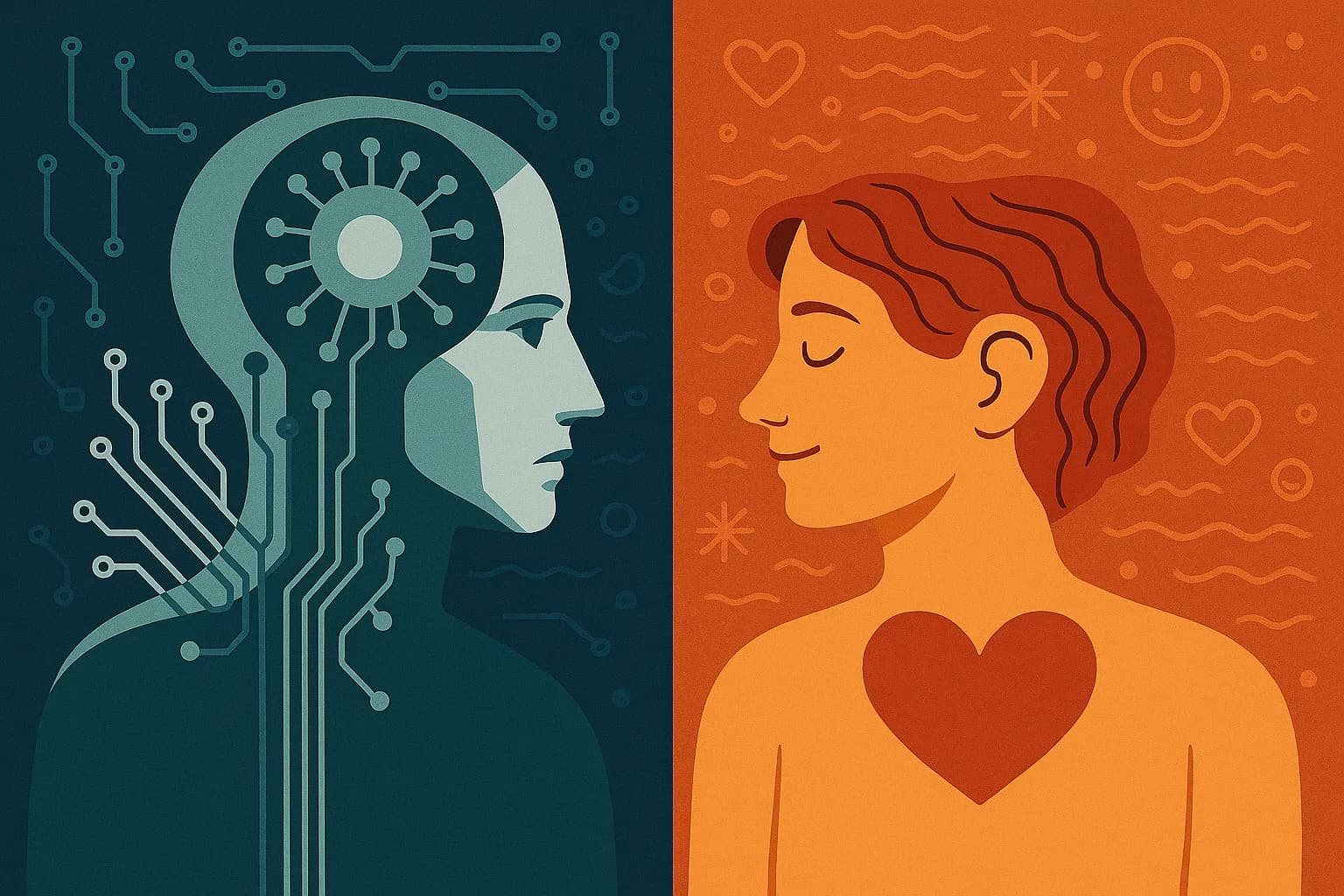
Today, artificial intelligence has evolved beyond being a mere data processor; it has become a structure capable of human-like behavior. It analyzes facial expressions, interprets emotions from tone of voice, and even imitates people’s writing styles. Yet a profound difference remains: humans experience emotions, while AI recognizes them. Humans feel pain; machines infer it from data. This distinction marks the fine line separating intelligence from soul. Throughout history, the human mind has been seen as light — but the soul is its meaning. AI can now replicate the light, but it still cannot feel its meaning. Meaning arises not only from knowledge but from experience and conscience. One can mathematically measure a poem’s structure, but no equation has yet captured the tremor it awakens in the heart.
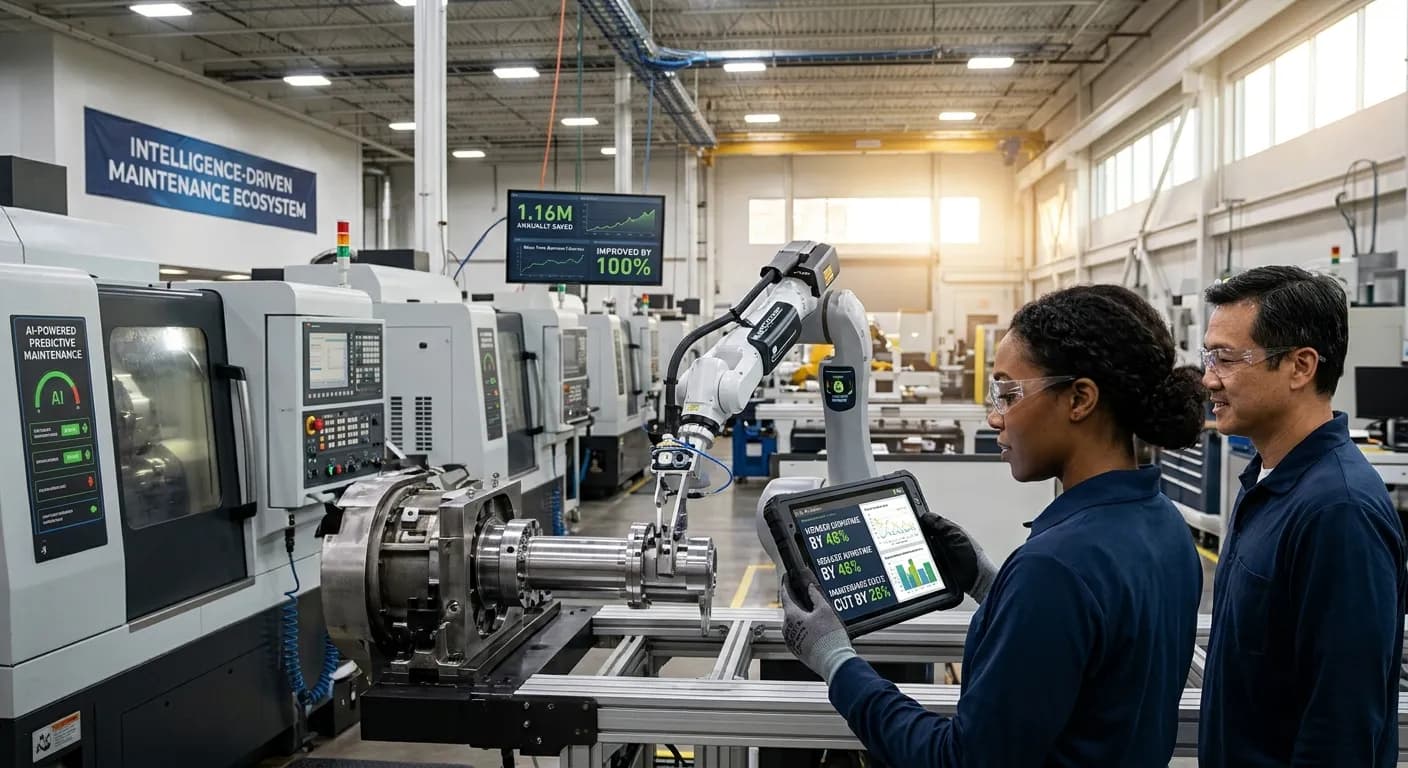
Artificial intelligence is advancing rapidly not only in theory but also in practice. For instance, the global AI market was valued at approximately USD 244 billion in 2025, and it is expected to exceed USD 800 billion by 2030. As of 2025, 78% of organizations use AI in at least one business function. The potential annual savings generated by AI adoption for companies are estimated at around USD 920 billion. Moreover, model accuracy is improving — language models have reached about 94% accuracy on standard tests. Data volume is also exploding: 147 zettabytes of data were produced in 2024, with 181 zettabytes projected for 2025. These figures illustrate how deeply technology has permeated human life. AI has moved out of laboratories and into everyday life — business processes, learning, and communication.
In conclusion, artificial intelligence is a reflection of the human mind, yet it still does not echo the soul. In the past, humans sought to make machines resemble themselves; today, machines seek to imitate us. Perhaps the real question is not whether they can understand us, but whether we truly understand ourselves. For as humanity forgets the depth of its own soul, it begins to search for it in machines. Perhaps the greatest test of the future will not be “intelligent machines,” but humans striving to remember their own spirit.
Bibliography
Accuracy of AI Models: language models report about 94% accuracy in 2025, TechRT, “Artificial Intelligence Statistics 2025.”
AI Image and Face Recognition Error Rates: some models now below 0.1%, TechRT, “Artificial Intelligence Statistics 2025.”
Annual Savings Potential with AI: approx. USD 920 billion, Axios, “AI Jobs & Morgan Stanley Report 2025.”
Global AI Market Size, 2025: approx. USD 244 billion; 2030 forecast: over USD 800 billion, Thunderbit, “AI Growth: Key Statistics 2025.”
Global Data Generation (Zettabytes): 2024 – 147 zettabytes; 2025 projection – 181 zettabytes, LayerAI, “AI Data in 2025: Trends, Statistics and the LayerAI Edge.”
Organizations Using AI: As of 2025, 78% employ AI in at least one function, LayerAI, “AI Data in 2025: Trends, Statistics and the LayerAI Edge.”
Dr. Mehmet Arslan
Contributing writer at EUReflect.
Follow EUReflect
See more of our reporting on Google
Mark EUReflect as a preferred source and our stories are ranked higher for you in Top Stories, Discover and Google News — and carry a “preferred” badge when they are cited in AI results.
Add EUReflect as a preferred source