From Vision to Strategy: Türkiye’s Sixteen-Article Manifesto for the Future
The Century of Türkiye represents neither a transient political slogan nor a temporary electoral narrative, but a comprehensive, long-term project of national construction.
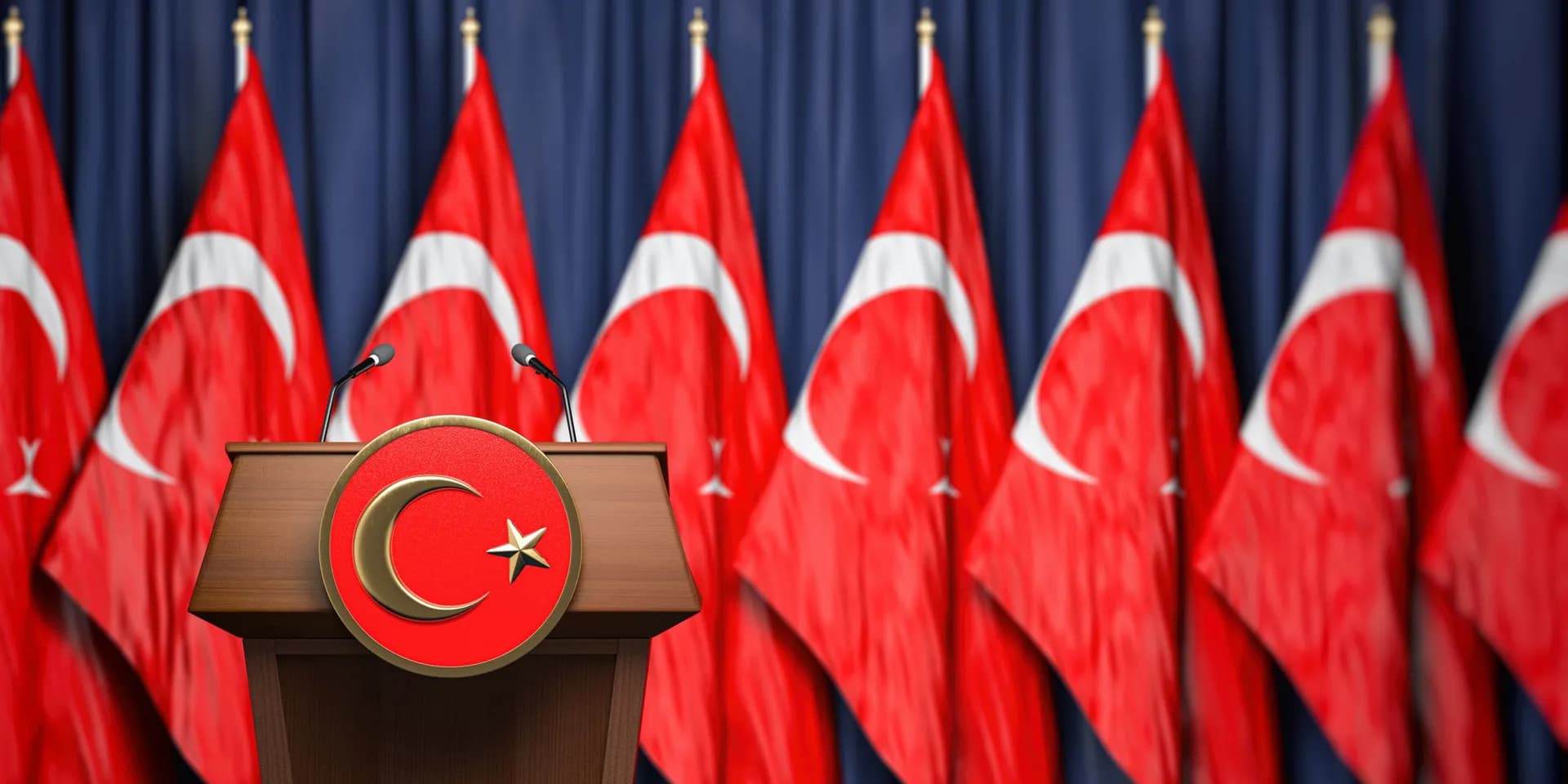
The Century of Türkiye is not merely a compilation of political promises; rather, it constitutes the principal framework for the nation’s long-term vision. Defined also as the “Turkish Era,” it outlines the strategic trajectory and objectives Türkiye aims to achieve in the coming decades. Although the framework comprises only sixteen core themes, each serves as a cornerstone in constructing the new Türkiye. These pillars are designed not only to consolidate national strength but also to position the country as a significant and proactive actor in the evolving global order. The Türkiye envisaged in this vision is not a passive participant in international affairs, but an active player on the global chessboard — one that not only makes calculated moves but, when necessary, reconfigures the very structure of the game.
Understanding this vision is essential to interpreting Ankara’s actions in strategic theatres such as Syria, Libya, the Caucasus, and Africa. These initiatives are not ad hoc responses or coincidental policy choices; rather, they represent components of a coherent, long-term strategy aimed at transforming Türkiye from a regional power into one of the principal architects of global politics and security.
In the realm of defence and security, the Turkish Armed Forces and the national defence industry have achieved a technological and operational capacity unprecedented since the late Ottoman period. Advanced unmanned aerial vehicles such as Bayraktar and Anka are reshaping the principles of modern warfare, while the amphibious assault ship TCG Anadolu reasserts Türkiye’s position as a formidable maritime power. Military and diplomatic manoeuvres in critical regions signal the country’s transition from a participant to a rule-maker in international affairs.
The nation’s technological transformation is anchored in artificial intelligence, 5G infrastructure, and space exploration. The launch of Türksat 6A signifies not only an achievement in aerospace engineering but also the establishment of digital sovereignty in space, enhancing Türkiye’s strategic capabilities in data security, communication, and defence. Complementing this technological leap, a comprehensive network of cultural diplomacy — from TRT World to the Yunus Emre Institute — amplifies Türkiye’s ability to project its identity, values, and cultural heritage globally.
Türkiye’s humanitarian diplomacy reinforces its image as a “state of conscience,” extending from Somalia to Gaza, and from the Rohingya refugees to Sudan. The assertion that “the world is bigger than five” has evolved into a broader call for reforming the global governance system, particularly the structure of the United Nations. In foreign policy, Türkiye increasingly employs “smart power” rather than relying solely on hard power, as evidenced by normalisation efforts with Syria, balanced political engagement in Libya, and mediation between Azerbaijan and Armenia.
Scientific advancement constitutes another critical dimension of this vision. New universities, the rising number of international students, and increased investment in research and development position Türkiye as an emerging hub for scientific production and innovation, attracting talent not only from the Muslim world but also from Europe. The sustainable development agenda integrates green energy projects, electric mobility solutions, and waste recycling initiatives into broader energy corridor strategies, transforming routes such as the Trans-Caspian into channels of environmental as well as economic diplomacy.
Economic achievement in this framework is measured not only by growth rates but by the cultivation of renewed national self-confidence. Defence and diplomatic successes have dismantled long-standing assumptions that certain goals are beyond Türkiye’s reach. Stability and security are reinforced through a flexible alliance strategy that balances active engagement with both NATO and the Shanghai Cooperation Organisation, alongside domestic political reform and financial resilience measures.
Industrial and technological production, exemplified by the national electric car Togg and domestically manufactured medical devices, is central to reducing import dependency and increasing the export of high value-added goods. Efficiency principles guide governance, with e-government platforms, smart cities, and AI-driven public administration aimed at optimising resource management. Major infrastructure, healthcare, education, and housing projects serve not only developmental purposes but also contribute to Türkiye’s global image as a modern, capable state.
This modernisation process is firmly rooted in cultural continuity. Figures such as Yunus Emre, Mevlânâ, and Hacı Bektaş Veli are elevated as enduring pillars of Türkiye’s soft power. The commitment to justice, framed by the principle that “right makes might” rather than “might makes right,” is particularly evident in Ankara’s stance on the Palestinian question. Energy, defence, and technological self-sufficiency remain core strategic objectives, with recent natural gas discoveries in the Black Sea and Mediterranean marking significant progress toward these aims.
A central role is assigned to youth, who are regarded not merely as custodians of the future but as active participants in shaping the present. Initiatives such as start-up ecosystems, creative industry hubs, and the Teknofest technology festival nurture a generation of innovative entrepreneurs.
Ultimately, the Century of Türkiye represents neither a transient political slogan nor a temporary electoral narrative, but a comprehensive, long-term project of national construction. President Erdoğan has described it as a “manifesto of national ascent.” While critics view it as an expression of “neo-Ottoman” ambition, supporters see it as a historic opportunity for Türkiye to reclaim a position among the world’s leading powers. Regardless of perspective, the reality is clear: Türkiye now operates on the global stage with the conviction that its decisive “hour of destiny” has only just begun.

İsmail Polat
Ph. D. in International Relations
Follow EUReflect
See more of our reporting on Google
Mark EUReflect as a preferred source and our stories are ranked higher for you in Top Stories, Discover and Google News — and carry a “preferred” badge when they are cited in AI results.
Add EUReflect as a preferred source