Governance, Order, and National Harmony
For me, as a member of the Assembly of the People of Kazakhstan, the emphases directly related to strengthening social cohesion, civic responsibility, and a culture of unity are of particular importance.
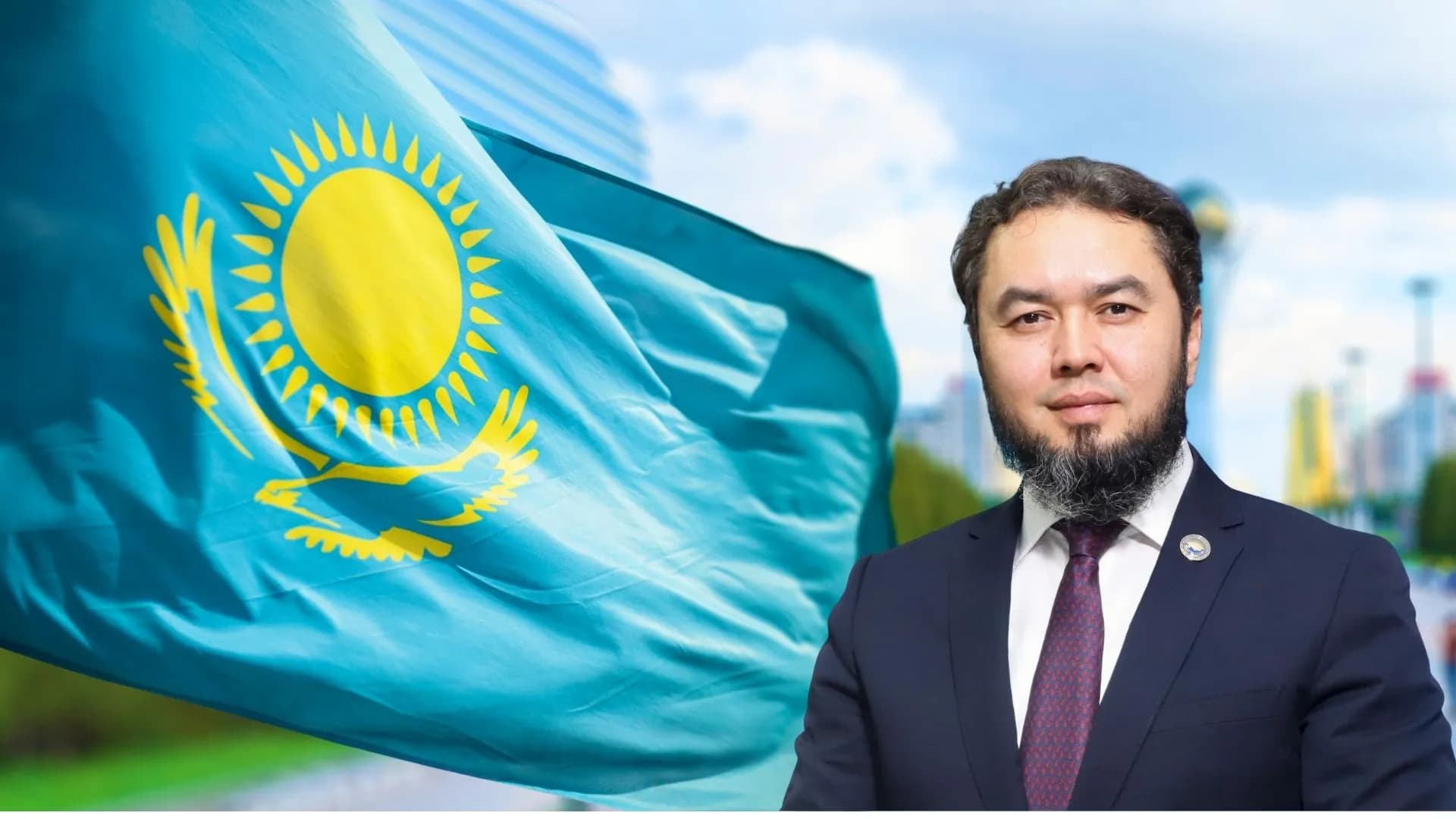
Peace be upon you. I wish everyone the very best in the new year.
Dear colleagues, I have carefully reviewed the interview given by the President of the Republic of Kazakhstan, Kassym-Jomart Kemelevich Tokayev, to the newspaper Turkistan. For me, as a member of the Assembly of the People of Kazakhstan, the emphases directly related to strengthening social cohesion, civic responsibility, and a culture of unity are of particular importance.
The President has articulated with great precision that patriotism is not defined by loud rhetoric or demonstrative emotionality, but by concrete actions undertaken for the benefit of the country. He identified genuine patriots as people of labor—engineers, workers, teachers, physicians, farmers, military personnel, and cultural figures—those who contribute daily to the construction and strengthening of the state. This position fully corresponds to the practical approach promoted by the Assembly of the People of Kazakhstan: respect for labor, care for citizens, order, and responsibility in every sphere of activity.
A particularly significant point for the consolidation of social harmony deserves special attention. The President emphasized that patriotism must not be replaced by extremes—neither radical nationalism nor slogans that are not supported by the rule of law. Historically, Asia has developed a formula for peaceful coexistence based on legality and order, often described as “harmonious balance.” For Kazakhstan’s polyethnic society, this principle constitutes a fundamental guideline: unity in diversity, mutual respect, moderation, and a strong legal culture. It is especially encouraging that these principles are also embedded in the Concept for the Development of the Assembly of the People of Kazakhstan until 2030, “Unity in Diversity,” approved by Presidential decree at the end of December 2025.
In the context of the 35th anniversary of Independence, the President recalled the extensive and challenging path Kazakhstan has traversed. In the early 1990s, many skeptics argued that success would be unattainable due to demographic conditions, inherited economic structures, and political risks. Nevertheless, Kazakhstan has disproved these predictions, emerging as a successful state with a developing economy and a respected position in the international arena. At the same time, a substantial volume of work still lies ahead—tasks that must be undertaken jointly by experienced generations and the youth.
Special emphasis was placed on the role of young people. The President described them as a generation of hope, energy, and optimism, characterized by a strong sense of civic identity. However, he also stressed the importance of ensuring that youth do not confuse aspirations with reality, remain grounded in real-world conditions, cultivate discipline and a strong work ethic, and refrain from expecting rapid or effortless success. This constitutes a clear and timely message aimed at fostering mature civic consciousness.
Addressing the outlook for 2026, the President outlined a new stage of political transformation and economic reform, while underscoring the necessity of adapting to the realities of a new era. Symbolically, 2026 has been declared the Year of Digitalization and Artificial Intelligence, reflecting new opportunities for advancing economic development, governance, education, and overall quality of life.
Of particular relevance is the President’s assertion that the anniversary of Independence should not be reduced to a superficial campaign. Rather, it should serve as an opportunity for a critical reassessment of the path taken and for setting new strategic objectives, while maintaining internal discipline and a clear orientation toward tangible results.
The initiative “Taza Kazakhstan,” which the President has stated he will personally oversee, also warrants special attention. This initiative should not be understood merely as an environmental campaign. It represents a broader normative framework encompassing responsible resource management, moral integrity, the rejection of idleness, self-development, collective responsibility, benevolence, and charitable engagement. As emphasized by the President, cleanliness should become a foundational element of the national mindset—an ideational construct with strong integrative potential, capable of uniting individuals regardless of their origin, language, or religious affiliation.
I am confident that if each individual, within their respective role, lives and works according to these principles—order, labor, respect, responsibility, and cleanliness—social cohesion will be further strengthened, and Kazakhstan will continue to grow as a resilient and prosperous state.
Sherzod Pulatov
Contributing writer at EUReflect.
Follow EUReflect
See more of our reporting on Google
Mark EUReflect as a preferred source and our stories are ranked higher for you in Top Stories, Discover and Google News — and carry a “preferred” badge when they are cited in AI results.
Add EUReflect as a preferred source